.png)

Asia Stocks Retreat as Oil, Geopolitical Risks Rise
Here’s your quick read to start the day: a chatty, no-fuss look at overnight moves, the big story, what’s on the docket, and the tickers you need to watch.

Nandinee Keluskar is an independent financial journalist.
September 10, 2026 at 2:17 AM IST
Global Mood: Cautiously Risk-off
Drivers: Iran-US tensions, Brent near $102
Asian markets turned risk-off on Thursday, with equities falling as surging oil prices and escalating US-Iran tensions heightened concerns over inflation, growth and monetary policy. The S&P/ASX 200 fell 1.38%, Nikkei 225 declined 0.71%, and KOSPI dropped 0.50%, while SGX Nifty futures were down 0.1%, signalling a mildly weaker opening for Indian equities.
Brent crude settled above $100 a barrel for the first time since May, while WTI closed near $96, as disruptions to energy flows through the Strait of Hormuz deepened. Iran’s reported attacks on shipping, following US strikes on Iranian oil tankers, have raised the risk of a broader energy and freight shock. Lower oil flows through Hormuz and higher refined fuel prices are adding to inflation risks, potentially limiting expectations for monetary easing. Rising Treasury yields are another headwind for equities. Wider regional tensions and renewed Russia-Ukraine strikes are further weighing on risk appetite.
THE BIG STORY
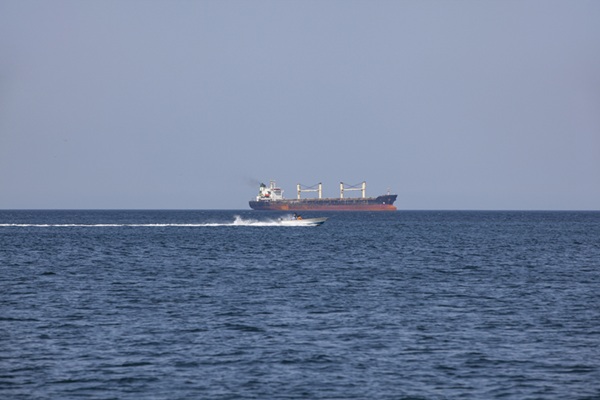
Iran and the US entered the most intense wave of attacks on shipping since the war began, with Tehran saying it struck 10 vessels near the Strait of Hormuz after Washington destroyed five Iranian oil tankers. At least one seafarer was killed, and another was missing, while several merchant ships were reportedly hit in the northern Gulf and Gulf of Oman and an LNG tanker was damaged at Khor Fakkan. Brent breached $100 a barrel for the first time since July, as flows through Hormuz reportedly fell to as low as 2 million barrels per day from 8–9 million bpd before fighting resumed on August 30. Iran also fired missiles at a US base in Jordan, while threatening to expand its maritime exclusion zone and target further shipping, raising the risk that the conflict could move from a crude-supply disruption into a broader physical energy and freight shock. The surge in refined fuel prices is already sharper, with US diesel reaching a record above $5.94 a gallon.
The escalation is also widening the regional and geopolitical fault lines. Pakistan has warned Iran to restrain the Houthis after attacks on Saudi oil infrastructure, while Riyadh has responded with strikes in Yemen and deepened defence coordination with Pakistan and Turkey, raising the risk that a proxy conflict could evolve into a broader regional confrontation. Washington meanwhile appears committed to maintaining its blockade of Iran despite President Donald Trump's prediction that the war could end after the November US midterm elections; reports that senior White House advisers privately expect the conflict could last much longer underscore the uncertainty around that outlook. Beyond West Asia, Russia resumed heavy strikes on Kyiv after a brief pause for US peace envoys, while a Russian drone strike on a shopping centre in Sumy killed two and injured 20, highlighting the persistence of geopolitical risks across multiple theatres and keeping pressure on global energy, freight and risk markets.
Data Spotlight
The 30-year US fixed mortgage rate rose to 6.85% in the week ending September 4th, a 15-month high, as renewed West Asia tensions and stronger labour market data reinforced September rate hike expectations. Rates have climbed nearly 80 basis points since strikes against Iran began in late February. Total mortgage applications fell 2.7%, with refinancing dropping 6.2% and purchase applications edging down 0.2%.
API data showed US crude inventories fell 300,000 barrels in the week ending September 4th, continuing a 21-week drawdown trend that has seen commercial stocks excluding the SPR decline by over 48 million barrels. A further 1.2 million barrels were released from the SPR, bringing total reserves to 285.4 million barrels, their lowest level since 1982.
China's annual inflation rose to 0.8% in August from July's six-month low of 0.5%, in line with expectations, as transport costs surged to 2.5% on higher fuel prices and travel demand. Food prices fell for a fifth consecutive month, while core inflation edged up to 1.0%. Monthly consumer prices rose 0.4%, the highest reading since February.
Takeaway: Rising mortgage rates hitting 15-month highs and persistent SPR drawdowns highlight the dual pressure of tightening financial conditions and energy supply vulnerability in the US. China's modest inflation pickup, driven by fuel and travel costs, points to a gradual demand recovery, though food deflation underscores continued consumption softness.
WHAT HAPPENED OVERNIGHT
US stocks fall as Brent tops $100 and Treasury yields hit highest since November 2023
- The S&P 500 lost 0.48%, Nasdaq dropped 0.64%, and the Dow fell 0.77%, with energy the sole S&P 500 sector to gain as Brent crossed $100/bbl for the first time since July.
- Alphabet fell 2.3% after announcing a $15.1 billion AI infrastructure investment in Finland, including a major nuclear power deal, as investors continued to scrutinise hyperscaler capex.
- Apple ended down 0.3% after holding its first product launch under new CEO John Ternus, while the Philadelphia Semiconductor Index rose 0.37% with AMD gaining 3%.
- Dow Inc fell 0.6% after Bloomberg reported it was considering exiting its $20 billion partnership with Saudi Aramco.
- September Fed hike odds held at 60%, with Thursday's PPI and Friday's CPI the decisive data ahead of next week's FOMC meeting.
- The S&P 500 is now 2% below its August 13 record high and up 12% year-to-date, with declining stocks outnumbering advancers by a 4.1-to-1 ratio.
US Treasury yields rise toward 4.85%, highest since November 2023, as structural pressures persist despite buyback expansion
- The Treasury tripled its buyback to $6 billion in off-the-run securities from Bessent's earlier $4 billion announcement, adding to Washington's growing toolkit for suppressing long-maturity yields.
- War-driven energy inflation, over $1.5 trillion in AI company debt issuance, and repeated Japanese yen defence Treasury selling continued to dominate the long-end selloff.
- The 10-year yield recouped some gains after the fresh auction stopped through by 1.5bps, suggesting underlying demand remains present despite the supply pressure.
US Dollar steadies at 98.8 as markets await PPI and CPI data ahead of next week's Fed decision
- The dollar paused its recent decline with August PPI due today and CPI on Friday as the final key inputs before the September 15-16 FOMC meeting, with hike odds at 60%.
- Treasury yields surged after the $6 billion buyback announcement disappointed those expecting a larger operation, adding to dollar uncertainty from conflicting yield signals.
- Rising oil prices from intensifying US-Iran hostilities kept inflation concerns elevated, reinforcing the case for near-term Fed tightening.
- Weekly jobless claims and existing home sales data are also due today, rounding out a busy pre-FOMC data week.
Oil crosses $100 in biggest wave of tanker attacks since the war began, settling at highest since May 22
- Brent settled at $101.21/bbl, up 3.4%, and WTI at $96.05, up 3.25%, both at their highest since May 22, as Iran attacked 10 ships near Hormuz and the US sank five Iranian oil tankers in the sharpest single-day escalation of the six-month war.
- Six commodity vessels transited Hormuz on Tuesday, down from nine the prior day and below the 10-day average of 12, with flows falling below 2 million bpd from 8-9 million bpd the week before fighting resumed.
- Ship-to-ship transfers in the Gulf of Oman, a key workaround for global supply, face growing disruption risk as tanker attacks intensify, with a seafarer killed on the Gibraltar-flagged Hercules Star off Dubai.
- Houthi attacks on Saudi energy facilities have set oil installations ablaze, threatening to extend disruption beyond Hormuz to the Red Sea alternative route that has kept Gulf crude flowing.
- The EIA raised its oil price forecasts for 2026 and 2027 as global stockpiles fall rapidly under pressure from lost West Asian supply.
- Physical dated Brent has been above $100/bbl since September 3, while US gasoline averages $4.22/gallon and diesel is nearing a record $6/gallon as the refining crunch compounds crude price pressures.
Day’s Ledger*
Economic Data
- India August AMFI Data
- Germany August CPI
- OPEC Monthly Report
- US August PPI Data
- US Initial Jobless Claims
- US August Existing Home Sales
Corporate Actions
- Earnings: Gaja Alternative Asset Management
- Ajmera Realty & Infra India to consider fundraising
Policy
- ECB September Interest Rate Decision
Tickers to Watch
- HINDUSTAN ZINC signs a six-year transportation contract with MFL India to deploy 30 electric trucks to move zinc and lead concentrate from the Rampura Agucha mine to Rajasthan smelting facilities.
- COAL INDIA subsidiary Northern Coalfields accelerates coal production and dispatch as rainfall eases; production up 67% and supply up 75% as of September 8, versus September 1-3 average.
- ICICI Prudential Asset Management Company receives RBI approval to acquire up to 9.95% stake or voting rights in four banks.
- EQUITAS SMALL FINANCE BANK board to meet on September 16, 2026, to consider raising capital via unsecured, subordinated Tier II bonds (NCDs) on a private placement basis.
- WIPRO launches a cybersecurity command centre with CrowdStrike to help companies detect and respond to cyber threats, including AI-enabled ones.
- INDIAN BANK proposes to divest up to 1.5 million equity shares, representing a 17.91% stake in NSE, through an offer-for-sale as part of NSE's proposed IPO, subject to regulatory approvals.
Must Read
- India’s GDP Numbers Reveal a Growth Upshift, Not a Statistical Mirage
- Varun Beverages Is Betting Alcohol Can Do What Pepsi Cannot
- SEBI Needs a Stronger Framework for Measuring Regulatory Performance
- India’s Industrial Future Cannot Be Rented
- BRICS Supplies 42% of India’s Imports, but Buys Only 22% of Its Exports
- When Banking Rules Aren’t Enough, India Needs Risk Enforcement
- Treasury Department to buy back up to $6 billion in longer-term debt, triple the normal level
(*Compiled from various media sources)
See you tomorrow with another edition of The Morning Edge.
Have a great trading day
More From BasisPoint