.png)

Asia Markets Surge as US-Iran Ceasefire Triggers Risk-on Rally
Here’s your quick read to start the day: a chatty, no-fuss look at overnight moves, the big story, what’s on the docket, and the tickers you need to watch.

Richard is an independent financial journalist who tracks financial markets and macroeconomic developments
April 8, 2026 at 1:52 AM IST
GLOBAL MOOD: Cautious Risk-On
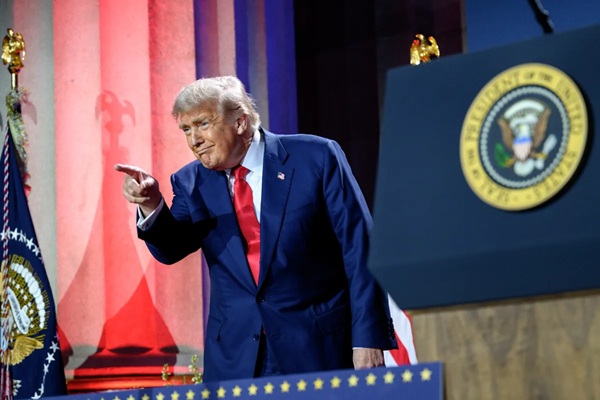
Asian equity markets surged on Wednesday following a breakthrough agreement between the US, Iran and Israel on a two-week ceasefire aimed at enabling negotiations to end the war. The move by Donald Trump to delay planned strikes on Iranian infrastructure, alongside Iran’s decision to reopen the Strait of Hormuz temporarily, significantly eased immediate geopolitical risks. Regional markets responded strongly, with South Korea and Japan rallying over 5% and 4% respectively, while Australia gained more than 2%.
TODAY’S WATCHLIST
- RBI MPC Meeting Outcome
THE BIG STORY
The agreement marks a notable de-escalation after a day of intense rhetoric, where Trump had warned of catastrophic consequences if Iran failed to comply with US demands. The abrupt pivot suggests a tactical use of escalation to force negotiations, with both sides now opening a narrow diplomatic window. Talks are expected to continue, with delegations likely to meet in Islamabad, keeping the possibility of a more durable settlement on the table.
Despite the temporary relief, the episode underscores how close the situation had come to a broader conflict. Global reactions to the earlier threats were sharply critical, reflecting concerns over escalation risks. For markets, the ceasefire offers short-term stability, but the underlying geopolitical fault lines in West Asia remain unresolved, leaving risk sentiment sensitive to further developments.
Data Spotlight
US consumers are increasingly pricing in higher inflation, with one-year-ahead expectations rising to 3.4% in March 2026 from 3.0% in February, the highest this year. The surge was led by gasoline price expectations, which jumped sharply to 9.4% from 4.1%, alongside increases in food (6.0%) and rent (7.1%) expectations. Longer-term expectations remain relatively stable at 3.1% (3-year) and 3.0% (5-year), suggesting anchoring for now. However, sentiment has deteriorated meaningfully, with the economic optimism index falling to 42.8 from 47.5, well below the neutral 50 mark.
On the activity side, demand indicators are softening. US consumer credit rose by $9.48 billion, below expectations, reflecting cautious borrowing behaviour. Durable goods orders declined 1.4% month-on-month to $315.5 billion, marking a third consecutive drop, driven by weakness in transport equipment, although core orders rose 0.8%.
Takeaway:
WHAT HAPPENED OVERNIGHT
- US stocks end mixed as deadline tensions keep sentiment fragile
- Dow Jones declined 0.1%, while S&P 500 gained 0.2% and Nasdaq edged up 0.1%.
- Markets remained volatile ahead of US deadline for Iran to reopen Strait of Hormuz.
- Early losses driven by escalation fears, including US strikes on Kharg Island and sharp rhetoric from Donald Trump.
- Late-session recovery followed diplomatic signals, with Pakistan indicating progress in negotiations and urging deadline extension.
- Tech performance mixed: Broadcom surged 6.3% on AI deal expansion, while Apple fell 2.1% on product delay concerns
- Broader sentiment remained defensive despite modest improvement in consumer credit growth.
- Dow Jones declined 0.1%, while S&P 500 gained 0.2% and Nasdaq edged up 0.1%.
- US Treasury yield ease as safe-haven demand offsets inflation concerns
- The 10-year yield declines below 4.30%, near three-week low amid flight to safety.
- Earlier spike towards 4.37% reversed following escalation rhetoric from Donald Trump.
- Geopolitical uncertainty around Strait of Hormuz drives demand for government bonds.
- Late-session sentiment improves after Pakistan proposes two-week extension for diplomatic talks.
- Inflation concerns persist, with forecasts pointing to a sharp rise in March CPI driven by energy shock.
- Focus shifts to upcoming US CPI data for clearer direction on inflation trajectory.
- The 10-year yield declines below 4.30%, near three-week low amid flight to safety.
- US Dollar holds near 100 as geopolitical risks offset directional moves
- The US dollar index hovers around 100 as markets assess escalating West Asia tensions.
- Support from safe-haven demand amid uncertainty around Strait of Hormuz.
- Donald Trump reiterates deadline for Iran, warning of strikes on key infrastructure.
- Escalation rhetoric intensifies risk sentiment, limiting downside in the dollar.
- Reports of Iran halting negotiations reduce near-term prospects of de-escalation.
- Currency moves remain range-bound as markets await clarity on geopolitical outcome.
- The US dollar index hovers around 100 as markets assess escalating West Asia tensions.
- Oil mixed as growth concerns offset supply risks ahead of deadline
- Brent crude declines 0.5% to $109.27 per barrel on concerns that elevated energy prices could slow global growth.
- WTI crude rises 0.5% to $112.95, highest since 2022, supported by supply risk premium.
- Price action remains volatile, with WTI coming off intraday highs of over $5 per barrel.
- Markets remain focused on US deadline for Iran to reopen Strait of Hormuz.
- Supply disruption risks from West Asia continue to underpin crude despite demand-side concerns.
- Brent crude declines 0.5% to $109.27 per barrel on concerns that elevated energy prices could slow global growth.
Day’s Ledger*
Economic Data
- Euro PPI
- Euro Retail Sales
- India M3 Money Supply
Corporate Actions
- Jan-Mar Earnings: Jindal Leasefin, Kesar India,
- Bosch board to consider fund raising
Policy
- ECB Non-Monetary Policy Meeting
- Fed Jefferson Speech
- Fed Daly Speech
- RBI MPC Meeting Outcome
- US FOMC Minutes
Tickers to Watch
- Nexus Select Trust to acquire Kolkata's Diamond Plaza mall for ₹347.5 cr
- CCI clears Advent to acquire 14.3% stake in Aditya Birla Housing Finance
- Coforge appoints Sunil Fernandes as COO to lead delivery, AI push
- M&M, Tata Motors, Hyundai in fierce race for No. 2 spot in PV market
- India to be priority market post-Fortis deal, IHH eyes cluster expansion
- Ola Electric launches LFP cell for EVs, rollout to begin next quarter
- Mahindra and Swaraj hike tractor prices amid rising input costs
- Tata Steel India clocks record crude steel production of 23.48 mt in FY26
Must Read
- Retail sector buoyant in Q4, led by jewellery demand, say analysts
- Sebi considers infusing fresh life into Indian Depository Receipts
- India turns to Russia, Venezuela for crude supplies amid West Asia crisis
- Sebi considers infusing fresh life into Indian Depository Receipts
- LPG crisis may reduce India's sugar consumption by 400K tonnes: ISMA chief
- Bank credit growth to rise 13% in FY27, led by MSME and retail demand
See you tomorrow with another edition of The Morning Edge.
Have a great trading day
𝐑𝐮𝐩𝐞𝐞 𝐖𝐞𝐚𝐤𝐧𝐞𝐬𝐬 𝐓𝐞𝐬𝐭𝐬 𝐑𝐁𝐈, 𝐛𝐮𝐭 𝐑𝐚𝐭𝐞 𝐀𝐜𝐭𝐢𝐨𝐧 𝐌𝐚𝐲 𝐖𝐚𝐢𝐭
Rupee pressure is building again, with crude rising and capital flows thinning. The instinctive question is whether the RBI will step in with rate hikes to defend the currency.
Anubhuti Sahay writes, history suggests it can, and has. But the current macro setup is different. Inflation is still within the target band, growth risks are rising, and the central bank has multiple tools beyond rates to manage currency volatility.
For now, policy may favour patience over reaction. Rate hikes remain a risk, but not an inevitability.
(*Compiled from various media sources)
More From BasisPoint