.png)


T.K. Arun, ex-Economic Times editor, is a columnist known for incisive analysis of economic and policy matters.
December 12, 2025 at 11:14 AM IST
Intel was one of the technology companies whose bosses met Prime Minister Narendra Modi recently to announce investment plans in India and sing praises of India’s sagacious policy leadership in the technology sector. When Intel CEO Lip-Bu Tan says that the company would join hands with the Tatas to make advanced semiconductors in India, we should cheer, right? Wrong: this could well have the effect of scuppering indigenous efforts to design and manufacture advanced silicon in India.
To appreciate why, take a look at the Trump regime’s recent decision to permit NVIDIA to sell some of its advanced, but not the most advanced, chips to China, diluting an earlier ban.
Trump began restricting export of high-end technology products to China in his first term as President. The Biden administration carried this policy forward and refined it. All advanced graphic processor units that can be used to develop artificial intelligence have been subjected to a three-tier system of export restrictions, since the Biden administration’s final weeks.
Tier 1 comprises America’s 18 close allies, apart from the US itself. These include the Asian allies, Japan, South Korea, Australia, New Zealand and Taiwan, Canada and major West European powers. Advanced chips can be sold to any entity in these nations, apart from companies that are subsidiaries or joint ventures of companies from other nations. Tier III has some two dozen countries that the US counts as adversaries, such as China and Russia, Iran, Cuba, and North Korea.
All other countries, including India and America’s East European allies, are clubbed together in Tier II. These have quantitative limits on the computing power and advanced chips that can be sold to them.
GPUs were originally designed and built to generate high-end graphics, particularly for video games, by solving intricate mathematical problems. These are capable of massive parallel processing, making them ideal for developing AI. However, their uses transcend AI by far. While the US strategic aim underlying the export controls is to maintain US dominance of AI, and deny adversaries advanced AI capability, the chip ban has also served to impede the ability of large nations like India and Brazil to run high-end optimisation tasks or develop cutting edge graphics at scale.
It should be noted that the Biden administration excluded India alone, among members of the Quadrilateral Security Dialogue or Quad, from Tier 1. This was attributed to India’s collaboration with Russia in the manufacture of ordnance.
So, why did the Trump administration permit sale of advanced Nvidia chips to China? Earlier, the government permitted Nvidia to sell the Chinese a class of chips called H20, far less powerful than the H200 chips that have recently been opened up for export to China. However, Beijing rejected these chips, and intensified its efforts that began in 2018 after the US ban on Huawei and ZTE, Chinese telecom giants, to develop indigenous substitutes for American high-tech.
A number of Chinese startups have been working, with the support of the Chinese government, to develop the entire ecosystem of advanced chip manufacture. The ecosystem has several components, ranging from chip design to the complex process of creating nanometre-thin circuits on silicon wafers. Extreme ultra-violet laser is focused using specially designed lenses to burn ultra-thin grooves on silicon wafers, and vaporized copper allowed to settle in the grooves to form circuits. Assorted Chinese companies have now developed, built and assembled most of the kit required to manufacture advanced silicon in China. It is no mean feat to create local substitutes for the likes of the Dutch maker of laser lithography machines, ASML, the German maker of the specialised lenses and optics used in ASML machines, ZEISS, and Tokyo Electron, which makes equipment to thin, trim, bond, debond and package wafers. The Chinese companies are refining their products to catch up with the role models.
The Chinese government discouraged Chinese companies from buying and deploying watered down H20 chips from Nvidia. China is the biggest market for advanced silicon after the US. Being shunted out of that market would represent major commercial loss. So, the US government has relented on its ban on sale of H200 chips to China. Nvidia has, in the meantime, developed even more advanced families of chips, named Blackwell and Rubin.
Nvidia’s Jensen Huang argues that for the US to withhold H200 chips from China is to encourage Chinese companies to innovate and produce the most advanced chips on their own. One factor behind the ubiquity of Nvidia chips in AI is that the company did not just produce the chips but also created software, dubbed CUDA, to coordinate the functioning of the chips. The company and other experts have been warning the US government that to encourage the Chinese to develop their own families of advanced silicon and alternatives to CUDA is to lose the US edge in AI.
It is to keep Chinese AI developers working on American supplied chips that the Trump administration lifted the ban on exporting H200 chips to China.
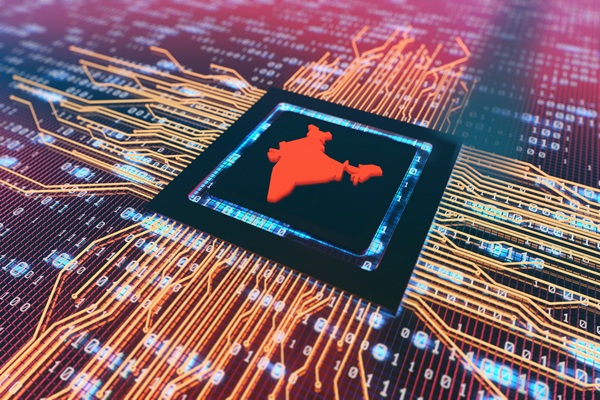
India is one country that, apart from China, can aspire to design and fabricate chips on its own, creating all the tech and the kit needed for the process. It makes sense for America to keep supplying India with chips or chip tech that would allow Indian entities to have fairly advanced semiconductor to run, and so remove the urgency of creating self-reliance in chip design, programming and manufacture.
It is in this light that we should see Intel’s offer to collaborate with Indian companies to set up indigenous chip manufacture, assembly and testing. The offer is welcome, provided it does not scupper programmes for indigenous development of cutting-edge chips, but, on the contrary, accelerates that process by deploying the chips that are allowed to be exported to, or made in, India to generate the wherewithal for indigenous chip development and manufacture.
Simply because Tata is a local collaborator does not mean that the chips the joint venture with Intel makes would freely be available to Indian defence companies. If the US decides, for example as a result of partisan one-upmanship on national security, to ban sale of advanced semiconductors that embodies or incorporates American technology to any entity outside the Tier 1 grouping of companies, on pain of sanctions, the Tatas, with extensive business in the US, would be forced to comply.
When the chips are down, only your own companies that wield your own technology can be relied on with absolute certainty. The glamour of collaboration with firms like Intel or even Nvidia should not divert India from the path to self-reliance in areas of advanced technology that is critical to national security and strategic competitiveness.
More From BasisPoint