.png)


Groupthink is the House View of BasisPoint’s in-house columnists.
February 10, 2025 at 3:31 AM IST
For financial markets, first impressions of central bank governors carry weight. Everything about them is scrutinised—content, communication cadence, body language, and above all, their perceived credibility. These impressions form the bedrock of the relationship between markets and central banks.
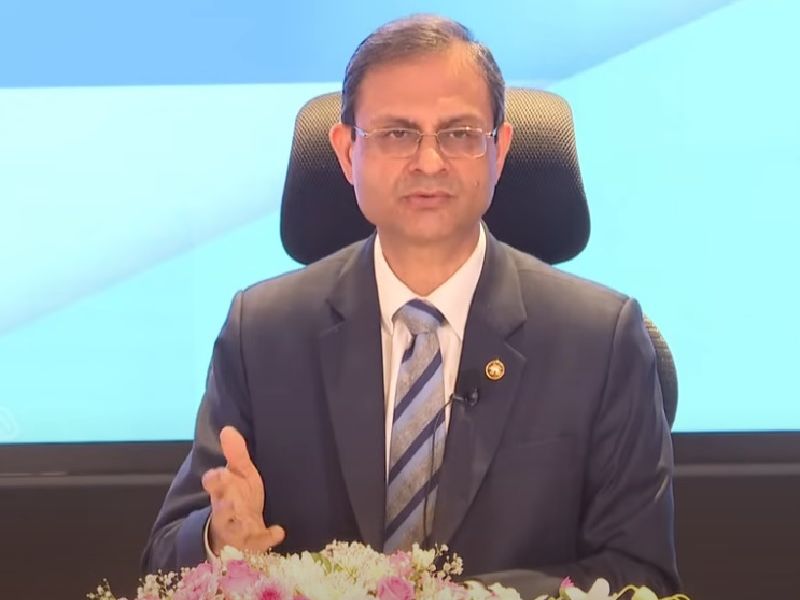
Unsurprisingly, all eyes were on Sanjay Malhotra’s debut Monetary Policy Committee press conference. More than the policy announcement—where a 25-basis-point rate cut was already factored in—the real test was how he engaged with markets in India and overseas through the media.
Malhotra made a decisive first impression, handling questions with precision and candour.
He did not resort to a glib, templated response to obfuscate concerns about the weakening rupee. Instead, he admitted he was worried about the uncertainty stemming from global developments, which could hurt investment decisions and, consequently, growth.
At even used rhetorical counter-questioning to navigate one tricky moment.
His response to inflation targeting—where he likened it to aiming for high marks in an exam rather than merely passing—underscored that he would stay true to RBI’s commitment to the 4% goal rather than any convenient sub-zone in the broader 2-6% band.
His not underscoring the 4% aim would have implied that the central bank was diluting its stance on inflation.
Malhotra was more self-assured when addressing regulatory matters, including consumer protection, liquidity coverage ratio, and Expected Credit Loss rules. His extensive finance ministry experience probably made this a natural strength.
A welcome change, upfront in the press conference, was Malhotra’s decision to skip opening comments summarising the policy. Instead, he chose to use the time to take more questions from the media.
He did not treat the conference as a ritual he had to get through.
On broader economic and market dynamics, he has room to improve but will likely sharpen his reading of monetary signalling and market expectations in the coming policy cycles. By his second or third policy meeting, his approach to macroeconomic communication could become more polished.
One instance of this learning curve came when he could have handled a question on GDP growth projections with greater finesse. Just hours after the RBI projected 6.7% growth for 2025-26, Malhotra was baited by the media into suggesting that a 7%+ rate was also possible. Should the market, therefore, price in a 6.7% rate of growth or something higher?
A more seasoned central banker might have referred to the fan chart in the MPC resolution, which accounts for a range of possible outcomes. Rather than leaving room for speculation, he could have clarified that while 7% was within the probability bands, it was not yet the central bank’s estimate.
A deputy governor with monetary policy experience would have been an asset here.
Critical Gap
The government’s decision to leave the deputy governor position vacant following Michael Patra’s retirement in January was an avoidable misstep. Malhotra, while highly capable, is stepping into a role where institutional memory and advisory depth matter significantly. A strong deputy governor would have strengthened his grasp of central bank communication, beyond policy formulation.
The transition from the finance ministry to Mint Road has precedents, and history suggests that ex-bureaucrats eventually adapt to the RBI’s distinct role. The institution asserts itself, and the finance ministry’s shadow recedes. Malhotra will traverse this trajectory, refining his central bank-speak, just as his predecessors did.
His effortless switch between English and Hindi is a clear advantage, something not all previous governors have managed. This bilingual fluency will serve him well in connecting with diverse audiences, including average bank customers and policy watchers in India and overseas.
Interestingly, he handled most of the questions without relying on other deputy governors, although he is barely two months into the job.
He left little doubt that he was not one for off-the-record briefings.
As the press conference wrapped up, a journalist sought a private clarification, a common post-event practice. Malhotra’s response, reportedly, was: “Nothing I say is off-record. Everything is on record.”
This may mean there will not be any leaks.
A strong start for Malhotra.
Or is it too early to pass any judgement?
More From BasisPoint