.png)


Ajay Srivastava, founder of Global Trade Research Initiative, is an ex-Indian Trade Service officer with expertise in WTO and FTA negotiations.
February 3, 2026 at 1:08 AM IST
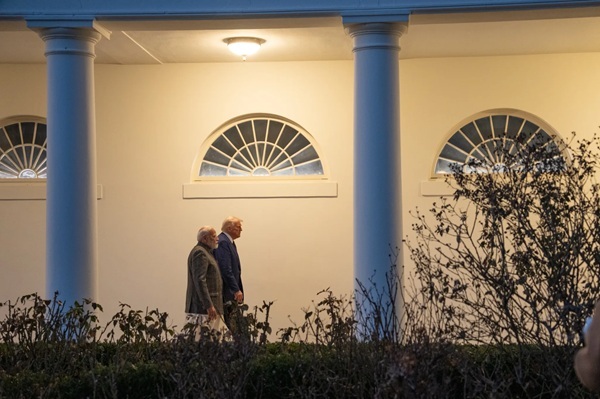
The announcement of a US–India trade deal following a phone call between Donald Trump and Narendra Modi has generated predictable excitement, but the substance behind the rhetoric remains thin.
For now, the declaration looks more like a political signal than a concluded agreement.
President Trump’s statement on Truth Social claimed that Washington would cut its so-called reciprocal tariff on Indian goods to 18%, while India would move to eliminate tariffs and non-tariff barriers on US products. He also said India would stop buying Russian oil and sharply raise purchases from the United States and potentially Venezuela, including more than $500 billion of US energy, technology, agricultural and other goods. The scale and sweep of these claims warrant careful scrutiny rather than instant applause.
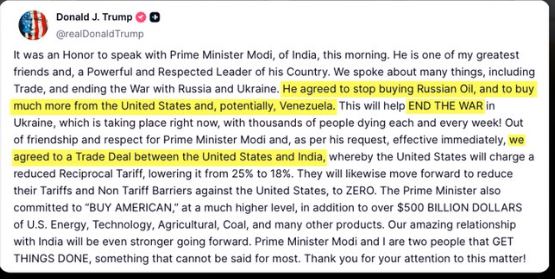
Even on the US side, the offer is not straightforward. The headline tariff cut was initially described as a reduction from 25% to 18%, but references to punitive duties linked to Russian oil purchases created confusion about whether the effective cut was from 50%. Subsequent clarification suggested the higher base applied. Even then, the reduction sits in a broader pattern of US trade deals over the past year, with reciprocal tariffs of 10% for the UK, 15% for the EU and Japan, and close to 20% for several Asian exporters. These levies typically sit on top of existing most-favoured-nation tariffs, with limited exceptions.
Crucially, the deal does not appear to touch US Section 232 tariffs. Duties of 50% on steel, aluminium and copper, and 25% on certain auto components, would remain in place. Zero tariffs already applicable to pharmaceuticals, aircraft and some electronics would also continue. The result is a partial easing at best, not a comprehensive opening of the US market.
On India’s side, the commitments attributed to New Delhi raise even more questions. Trump’s claim that India would cut tariffs and non-tariff barriers to zero offers no clarity on product coverage or timelines. India has historically resisted opening sensitive areas such as food grains, genetically modified products and heavily regulated imports. A blanket move to zero barriers across the board would mark a radical departure from long-standing policy and would require extensive domestic consultation and legal change.
The much-touted $500 billion figure illustrates the problem. India’s current annual imports of goods and energy from the United States are below $50 billion. Reaching $500 billion would take decades at present trade flows, suggesting an aspirational long-term number rather than a binding commitment. Without a timeframe, enforcement mechanism or sectoral breakdown, the figure adds more theatre than certainty.
Until there is a joint statement, a negotiated text and clarity on what each side is actually offering and conceding, this announcement should be treated with caution. Markets and policymakers would do well to see it as an opening move in a longer negotiation, not as a finished deal. Celebration can wait.
More From BasisPoint