.png)

How to and How Not to Privatise Airports
When airport privatisation rewards revenue maximisation without cost discipline, passengers end up paying the price through rising fees and opaque regulatory pass-throughs.

T.K. Arun, ex-Economic Times editor, is a columnist known for incisive analysis of economic and policy matters.
December 23, 2025 at 3:24 AM IST
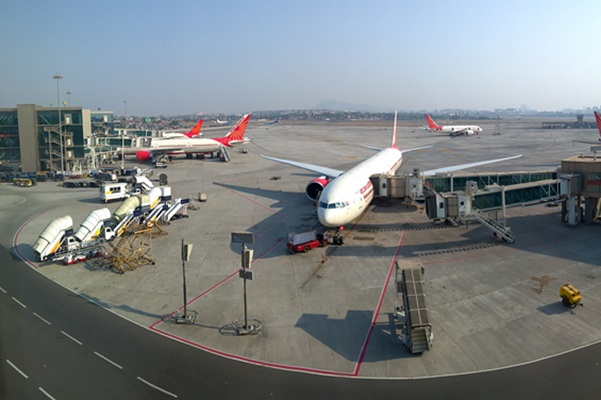
Airports are local monopolies, for the most part. Who gets to operate them and on what terms matter to the public at large. Sure, there is a regulator, the Aeronautic Economic Regulatory Authority of India to regulate aeronautical and other charges at any given airport. However, that has not prevented the levies on passengers using the airport going up sharply of late, particularly at airports that had been privatised.
It is in this context that we have to see the Adani group’s blithe announcement that it intends to operate 12 more airports, and is setting aside ₹1 trillion for the purpose. The infrastructure major’s interest in developing and operating more airports is entirely valid. However, its confidence that it would be the operator of 12 more airports, in addition to the eight it already has under its belt, over the next five years needs explanation.
After all, it is the government that decides how many airports are to be built, where, with what capacity and by whom, within some overall framework, if not quite a plan, of a reasonable distribution of these key pieces of transport infrastructure across India’s geography and an eye on growing business centres that need connectivity directly to destinations around the world or to domestic hubs that have such connectivity. If the Adanis are making a linear projection of their success in recent airport privatisation bids, that would explain their confidence. But it would be a cause for alarm for the travelling public.
This is because some of the steepest increase in user development fees that raise the overall component of aeronautical and non-aeronautical charges that smuggle into the taxes and fees that inflate airfares have been at the airports won by Adani in privatisation bids.
The point here is not that Adani won the airport bids because of some special favour shown by the government. Rather, the Adanis bid the most aggressively to win, and cornered the airports. This is where the bid parameter needs careful scrutiny.
In the Delhi and Mumbai airport privatisation bids, the bid parameter was the percentage share of the revenue the would-be private operator would hand over to the government. The winner would be the highest bidder.
In the more recent instances of airport privatisation, the bid parameter was not share of revenue, but a charge per passenger to be handed over to the government. Adani bid aggressively, promising, for example, to pay the government 155% more per passenger than its closes rival was prepared to bid for Mangalore: Adani bid ₹115 per passenger, and the nearest competitor bid ₹45 per passenger. This was a public sector entity and could have won the bid, if it had agreed to match the highest bid, provided the bids differed by 10% or less. The bidding was open and unconstrained. The highest bidder won. The government stands to get a lot of money from the operator. Why should anyone crib?
Adani could bid without restraint on the per capita fee it would pay, because it had the clout to make the regulator AERA see reason when it asked for an appropriate increase in user development charges to recoup the fee it pays the government. AERA is asked to take into account the investments undertaken, the cost of maintenance and constant upgradation, the nature of the concession granted by the central government, and any other factor, while fixing the permissible aeronautical and other charges the airport could foist on the planes landing and taking off from there. The per passenger fee Adani has to pay the government is a legitimate cost that AERA has to take into account while fixing airside charges.
The problem, clearly, is with the bid parameter. Instead of something that only serves to increase the government’s take from the airport, the parameter chosen to select the would-be operator of the airport should have been a composite parameter that included one or more elements that constrain costs.
The airport’s revenue comes in two segments, tills in the jargon. Till one consists of the aeronautical charges the airlines pay, and recover from passengers as part of the fare. The rentals and profit share, if any, that retail stores on airport premises pay, revenue from advertising displays and parking fees constitute a second till. If a share of the revenue from the non-aeronautical till is diverted to the first till, the burden of aeronautical charges, including user development fee, on airlines could be reduced.
Suppose we construct a hypothetical bid parameter, the share of Till 2 revenue the operator is prepared to divert as Till 1 revenue, to minimise charges recoverable from airlines/passengers.
Add another possible element: (100 – the cost of airport operations as a percentage of the total revenue). The more the cost eats up the revenue, the smaller this factor. The operator who promises to minimise costs gets the largest boost from this element.
Suppose the bid parameter is a weighted average of these three elements. No one can win just by bidding the highest per passenger fee to the government and then using his clout to get the regulator to accept this as cost that must be recovered as user development fees.
You can think up many more such composite bid parameters that mix revenue maximisation for the government with cost minimisation for passengers.
If the Adanis win more airport privatisation bids using composite indices, no one can accuse it of benefitting from favouritism, and fliers would not face unconstrained increase in user development charges.
More From BasisPoint