.png)


Ajay Srivastava, founder of Global Trade Research Initiative, is an ex-Indian Trade Service officer with expertise in WTO and FTA negotiations.
May 7, 2026 at 1:40 PM IST
India should withdraw the Quality Control Orders on fasteners because they are raising costs, reducing supply, and disrupting production without clear quality gains. Industry bodies have warned that the policy is already cutting MSME output and could trigger supply bottlenecks across key sectors like automobiles and infrastructure. With fasteners being critical but low-cost inputs, even minor disruptions are beginning to ripple through manufacturing supply chains, raising broader concerns for “Make in India.”
Fasteners are produced in small batches but in a huge variety, often on the same machine, yet the QCO imposes a rigid “one-product-one-licence” system that creates duplication, delays, and uncertainty.
By requiring separate BIS certification for numerous variants—based on size, grade, and coating—it significantly raises compliance costs. As a result, many foreign suppliers have exited the market, enabling the few certified firms to charge higher prices. This has also led to shortages, particularly of specialised or low-volume fasteners, even though these are essential inputs across multiple sectors.
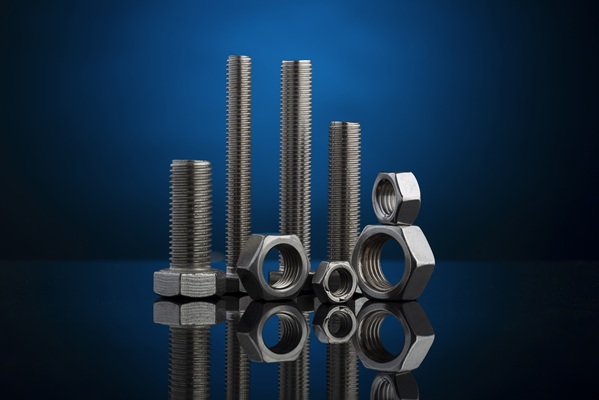
Fasteners include bolts, nuts, screws, washers, rivets, and studs, made in countless variants based on size, strength (grade), coating, and application. They are used across almost every sector of the economy—automobiles, construction, machinery, electronics, railways, aerospace, and infrastructure. Fasteners account for less than 1% of production cost, but their absence can halt entire assembly lines or delay infrastructure projects, showing how a small input can disrupt large industries.
The cost burden on MSMEs is extremely high. As President of Fastener Manufacturers Association of India has pointed out, compliance may involve ₹80,000 to ₹100,000 per licence, ₹22,000 to ₹25,000 per variant test, and ₹3-4 million for in-house lab facilities—pushing annual compliance costs far beyond profit levels. The industry is highly fragmented, with one machine often producing many variants and a single product needing multiple licences under different standards, making the idea of “one standard, one licence” unrealistic in practice.
Shaunak Rungta, Central Executive Committee Member, Federation of Indian MSMEs, has observed that quality cross recessed screws, particularly drywall and chipboard screws, are not presently available in India, leaving firms without viable domestic sourcing options. He notes that even after the DGTR’s suo motu investigation found no dumping from China, and despite the Gauba Committee’s recommendation to remove the fastener QCO, the policy remains unchanged. According to him, this has already reduced his firm’s turnover by around 50%, and continued delays risk closure.
The problem is compounded by port delays due to HS code confusion, adding uncertainty and transaction costs.
At the same time, QCOs are unnecessary for many applications—sectors like railways, defence, and power already follow strict quality checks, while existing duties and standards address substandard imports.
In effect, the policy is reviving licence-style controls in a sector that depends on flexibility and speed, weakening “Make in India.” A better approach would be a simple, risk-based system focused only on critical safety items, while allowing easier compliance for standard products.
India’s fastener trade clearly reflects a capability-based, two-way specialization rather than a simple import dependence. With exports worth $882.3 million, India supplies a wide range of standard and mid-grade fasteners to major markets such as the U.S. (29.8%), Netherlands (9.4%), UAE (9.3%), and Germany (8.5%). These countries rely on India for cost-effective, large-scale production of commonly used fasteners across sectors like construction, automobiles, and general engineering.
At the same time, India imports $1.13 billion worth of fasteners from countries like China (24.6%), Japan (13.3%), South Korea (9.9%), and Germany (9.8). These imports typically consist of high-precision, specialised, or technology-intensive fasteners required for advanced manufacturing segments such as electronics, high-end machinery, and automotive components. This pattern shows that India exports what it produces efficiently and imports what it needs but does not produce competitively.
Given this interdependence, free and frictionless trade in fasteners is essential. Fasteners account for less than 1% of the final product cost, but their absence can halt entire production lines. Any delay—whether due to regulatory barriers, certification bottlenecks, or supply disruptions—can disproportionately impact industries like automobiles, infrastructure, and electronics. Restricting trade in such a low-value but high-utility input raises overall production costs and undermines manufacturing competitiveness. Policies must therefore ensure seamless trade flows so that industries have timely access to the full range of fasteners needed to sustain efficient production.
More From BasisPoint