.png)

When Homes Become Assets, Shelter Turns Psychological Crisis
Treating homes as assets, not sanctuaries, has warped markets and minds alike, fueling anxiety, and a deeper crisis of belonging.

Kirti Tarang Pande is a psychologist, researcher, and brand strategist specialising in the intersection of mental health, societal resilience, and organisational behaviour.
April 25, 2026 at 5:01 AM IST
Where’s the space that I can call home?
We are trying to solve the global housing crisis as a supply problem, when it’s a cognitive disturbance: we think of homes as financial assets, eroding the psychological and social infrastructure economies depend on.
Yet for Liza in Boston, her shoebox apartment paints her mood blue, driving her to swipe endlessly on Tinder just to escape it. Seth, a 40-year-old tech professional in London, shares a flat and has decided against having children because there simply isn’t space. Leo in Paris spends most of his time at the café downstairs because his apartment offers no sunlight or balcony. In Lisbon, 49-year-old marine biologist Nunno sublets his three-bedroom flat (unknown to the owner) to two others just to cover the rent. And in Pune, a family huddles around the television on rainy days, not by the window or balcony, because their only view is another high-rise construction, so they keep everything shut against the dust and noise.
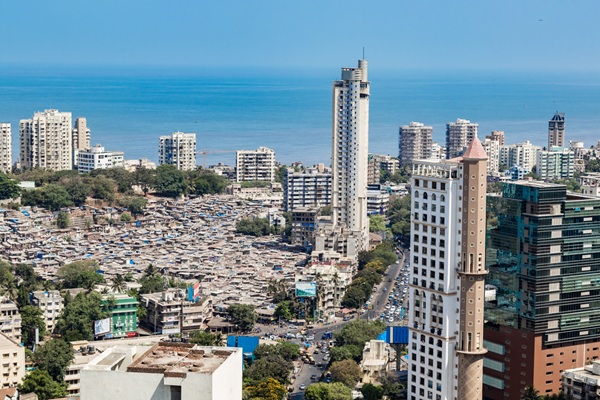
How did we end up here? From sprawling lawns, gardens, and traditional aangans to cramped pigeonholes that cost everything we have and more? Why do families in Mumbai squeeze into apartments that feel like vertical storage units rather than living spaces? Why do young professionals in London with “good jobs” measure success by square feet they cannot afford? Why do locals in Lisbon watch their neighbourhoods morph into investment portfolios? Globally, like frogs slowly boiling, the middle class is adjusting its expectations downward from ownership, to renting, to co-living, to lingering uncertainty.
We call this a housing crisis. And that framing is our first mistake. The market is not broken; it is doing exactly what an asset market is designed to do, that is to seek the highest return.
But what is “home” doing in an asset market at all? Home sits at the base of Maslow’s hierarchy, a primary human necessity alongside food and safety. Why have we repositioned it to solve a secondary, deeply psychological need of wealth preservation? We no longer build places for grandpa’s stories, grandma’s lullabies, or mumma’s mock protests that the children are being overly pampered. We are minting gold bars in the shape of apartments. This category error has distorted not just prices, but perception itself.
Cognitive Distortion
So why are we calling it a housing crisis, when it is a cognitive one?
Even if we somehow gained Vishwakarma’s mythical powers and built at that scale, we would still be solving the wrong problem. Those units would not enter the market as homes, but as financial instruments.
In India, developers have pivoted toward premium and luxury projects. Affordable housing offers thin margins, while luxury condos for wealthy investors deliver far higher returns. In global cities, new supply is absorbed not by residents but by investors seeking yield. Capital flows into residential real estate as an asset class, pushing up prices and turning homes into strategic holdings for those with deep pockets.
It is a thriving global financial system, succeeding brilliantly, but on the wrong terms. This is not an evil of capitalism; it is a failure of frameworks to keep pace with the psychology of financialisation.
That is why, to solve the problem, we must step outside economics and into psychology.
A home, at its core, provides what psychologists call ontological security. It is a sense of stability, continuity, and rootedness in an unpredictable world. It is where identity settles, where the nervous system rests, and life feels coherent.
But when a home becomes a retirement plan, it stops being a sanctuary and becomes a high-stakes asset. And assets demand vigilance—tracking prices, timing markets, maximising returns. A place meant to reduce anxiety becomes its source.
This is the modern middle class’s cognitive dissonance. The very object meant to anchor life is now destabilising it. We are, quite literally, living inside our investments.
This distortion scales up because housing is not just a private good; it is the hardware of social capital. Trust, civic participation, community life—even mental health—are the “software” that run on the stability of where and how people live.
When the hardware becomes prohibitively expensive, the software begins to glitch. People delay families, communities fragment, social trust thins and anxiety rises.
Productivity, innovation, and demographic decline are not separate challenges. They are downstream of one foundational strain. If it is too expensive to simply exist in a city, it becomes impossible to meaningfully belong to it.
Then there is the psychology of aspiration. Why do millions still crowd into cities like Delhi, Bengaluru, London, or Paris despite the crushing costs? The reflexive answer is “jobs,” and it is partly correct but incomplete. These places also serve as identity accelerators. To live there is to feel closer to opportunity, relevance, and recognition. Housing becomes more than shelter; it becomes a gateway to a desired self.
Which is why the market is drifting toward luxury. Developers are no longer selling square footage; they are selling entry into the elite. A status-gating is masquerading as a housing shortage.
For decades, the implicit social contract was simple: study hard, get a good job, and you can buy a home that will be your place for stability, your happily ever after.
Today, a 25-year-old can do everything “right” and still be locked out of ownership in most global cities. Do you still think this is only an economic barrier?
Unaffordable housing becomes a tax on hope. Over time, this breeds learned helplessness at scale. Why participate fully in an economy whose most basic promise feels unattainable? This is the collapse of incentive.
So where does that leave policy? Certainly not with more of the same.
Because building more supply into a system that treats homes as assets will simply create more assets.
Why not think in terms of redirecting capital? As long as real estate remains the safest, most attractive store of value, money will continue to flow into it rather than into productive sectors that drive long-term growth: technology, manufacturing, research, innovation. This is not just a housing problem; it’s a global capital misallocation problem. Why can’t we grow through innovation instead of inflation?
Second, why not shift the language from home ownership to housing security? Countries like Germany and Switzerland offer a useful model, where long-term renting does not signal failure and dignity is not tied to ownership. Decoupling identity from titleship may be one of the most important cultural shifts ahead.
Can we also rethink aspiration geographically? If prestige remains concentrated in a handful of megacities, so will pressure. But if digital infrastructure, institutional investment, and narrative-building can create distributed prestige—where smaller cities offer not just jobs, but identity and dignity—the system can breathe again.
Finally, can we innovate ownership itself? The binary of rent versus buy is outdated. Equity-sharing and graded ownership models can allow individuals to build stakes over time without the psychological and financial shock of massive upfront commitments.
At the end of the day, we must reflect on how we assign value. Until we stop asking housing to deliver wealth, status, and identity simultaneously, we will keep building—yet fail to restore what homes were always meant to provide.
More From BasisPoint