.png)


Ajay Srivastava, founder of Global Trade Research Initiative, is an ex-Indian Trade Service officer with expertise in WTO and FTA negotiations.
June 3, 2026 at 5:21 AM IST
The Office of the United States Trade Representative launched two separate Section 301 investigations on March 11 and 12, 2026, covering 60 economies over concerns related to forced labour and excess industrial capacity.
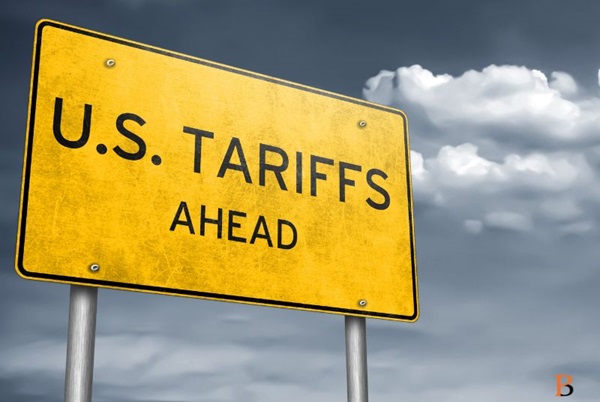
USTR has issued its findings in the forced labour investigation and proposed additional tariffs on imports from 54 economies. The proposal includes a 10% tariff on imports from Canada, Ecuador, the European Union, Indonesia, Mexico, and Pakistan, and a 12.5% tariff on imports from 48 other economies, including India and China.
Lower tariffs have been proposed for textiles, although specific rates have not yet been finalised.
The measure remains a proposal and has not yet been finalized. The proposal has now entered the consultation phase. Interested parties can submit requests to appear at hearings and summaries of testimony by June 22, 2026, while written comments are due by July 6. USTR is scheduled to hold hearings on July 7. A final decision is expected in late June or July, potentially before the expiry of the temporary Section 122 tariffs @10% on July 24, 2026. Once finalized, the tariffs could take effect almost immediately.
India Must Challenge
The current investigation exceeds the scope of Section 301 which deals with market-access barriers faced by the US firms in country being investigated and not what it import and from where.
The investigation is not based on allegations that Indian exports are produced using forced labour. Rather, the USTR action focuses on whether countries prohibit imports made with forced labour in third countries.
India must argue that the United States is attempting to impose its preferred import-control framework on other countries through unilateral trade measures, this is outside the scope of section 301.
India may also argue that concerns regarding forced labour, particularly in countries such as China, are often product-specific and that the United States itself remains a major importer of many of the products at issue. Hence, broad country-wide tariff actions are an inappropriate response when problem could be limited to few products.
Pressure for BTA
New Delhi should treat the Bilateral Trade Agreement (BTA) negotiations and the Section 301 investigations as separate matters. For doing this India must be prepared to fight and pay section 301 tariffs like other countries.
The rationale for the BTA has disappeared after the U.S. Supreme Court's February 20 ruling that struck down the reciprocal tariff framework. The proposed BTA now appears increasingly one-sided, with India being asked to make significant concessions while receiving no benefits in return.
India should reassess its participation and consider stepping away from the BTA, as Malaysia has done.
More From BasisPoint