.png)


Groupthink is the House View of BasisPoint’s in-house columnists.
March 26, 2026 at 5:13 AM IST
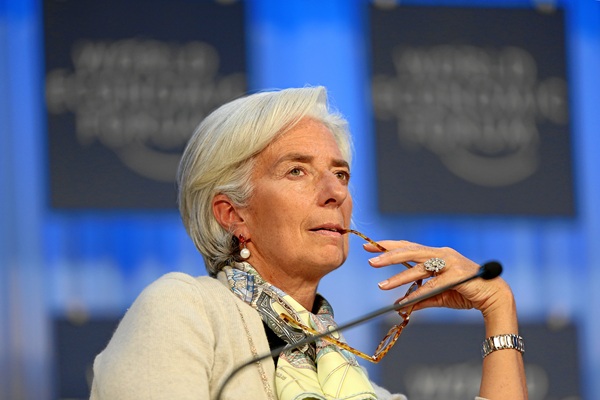
Christine Lagarde, President of the European Central Bank, has set out an interesting framework today for how central banks should respond to the current energy shock, one that is less about reacting to prices and more about managing how those shocks spread through the economy. While the macroeconomic context varies across jurisdictions, the principles she outlined offer a useful guide for policymakers, including those at the Reserve Bank of India.
The first is a diagnostic discipline in which policymakers must assess the nature, size, and persistence of the shock before acting. Monetary policy cannot bring down energy prices, but it must judge when higher costs risk spilling into broader inflation through wages, margins and expectations.
For the RBI, the key lies in how it assesses the West Asia situation. Far too often, the impulsive response has been to treat oil shocks as largely transitory. That assumption is becoming less reliable. A weaker rupee and fiscal spillovers increase the likelihood that external price shocks feed into core inflation. The focus, therefore, shifts from the immediate impact of oil to whether second-round effects are beginning to take hold.
The second principle articulated by Lagarde is a move from baseline forecasting to risk management. Inflation dynamics are no longer linear. Policymakers must work with scenarios and focus on risks, especially early signs that shocks are embedding themselves in broader price behaviour.
In India’s case, this means that headline CPI alone cannot guide policy. The RBI will need to track more granular indicators such as services inflation, wage trends and corporate pricing power. These channels determine whether inflation becomes persistent. Acting only once inflation is visible in the data risks falling behind the curve.
This approach also raises the importance of communication. When policy is driven by risks rather than realised outcomes, clarity on what the central bank is watching becomes essential for anchoring expectations.
The third principle, according to the ECB President, is a graduated response. Policy action should depend on the intensity, duration and transmission of the shock. Small, short-lived disturbances can still be looked through. But as deviations from the inflation target widen or persist, the case for intervention strengthens.
For the RBI, this argues for flexibility in the policy toolkit.
Rate moves may not always be the first response. Liquidity conditions will play a central role in shaping transmission. Adjusting liquidity allows the central bank to lean against emerging inflation pressures without committing prematurely to a rate cycle, while also preserving space to support growth if shocks dissipate.
This is particularly relevant in India, where financial conditions are influenced as much by liquidity as by the policy rate. A calibrated approach allows the RBI to respond proportionately to evolving risks.
Taken together, these principles point to a broader anchoring in central banking. The focus is no longer on inflation outcomes alone, but on the risk of inflation becoming embedded in behaviour.
For the RBI and other policymakers, the challenge is not to decide whether a shock is temporary. It is to ensure that temporary shocks do not become permanent features of the inflation process.
More From BasisPoint