.png)

India’s Market Rally Masks Rupee Stress and a Deeper Policy Drift
Equity exuberance is obscuring currency weakness and rising external risks, as policy complacency risks amplifying shocks in an already fragile global setting.
Gurumurthy, ex-central banker and a Wharton alum, managed the rupee and forex reserves, government debt and played a key role in drafting India's Financial Stability Reports.
April 29, 2026 at 6:16 AM IST
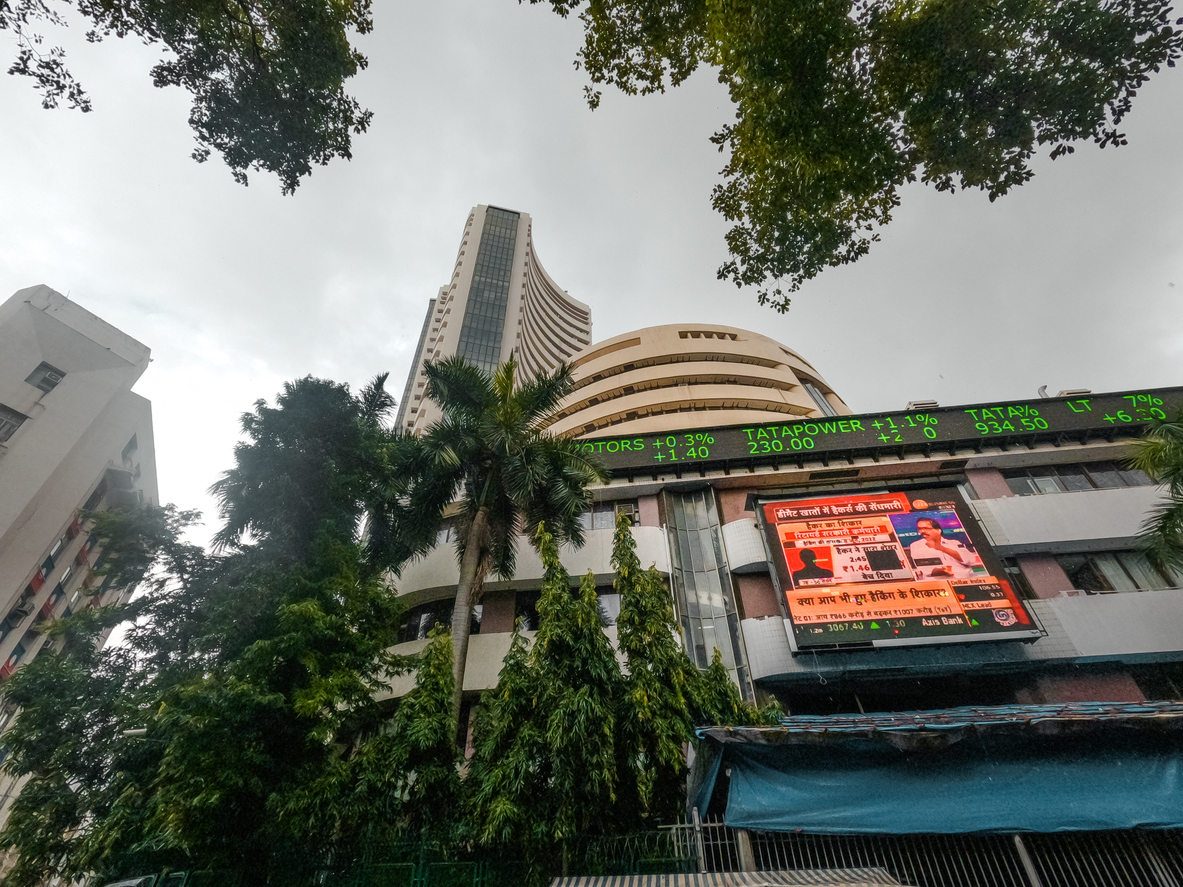
April has been kind to India’s broader stock market, at least on the surface. Screens glow green, midcaps and smallcaps swagger, retail investors rediscover their genius, and policymakers can point to rising indices as evidence, much like Pam Bondi invoking the Dow Jones’ all-time high at a House Judiciary Committee hearing, that all is well in the republic of capital.
Yet beneath this celebratory ticker parade, the rupee has quietly resumed its descent, external vulnerabilities remain unresolved, foreign portfolio investors continue to sell into strength, oil’s strategic significance has been numbed more by fatigue than by fundamentals, and geopolitical tensions, from Iran’s shadow to US President Donald Trump’s recurring global disruptions, have not vanished so much as been selectively ignored by markets.
This is not resilience. It may instead reflect sedation.
India today risks sleepwalking towards the cliff, not because danger is invisible, but because enough participants have convinced themselves that looking down is no longer necessary.
Markets, by nature, can often appear wiser than governments, yet they can also be spectacularly delusional. A rising stock market amid weakening currency dynamics is not always a sign of confidence; at times, it reflects liquidity searching for temporary shelter while deeper anxieties migrate elsewhere. Equity exuberance can coexist with macro fragility for extended periods, until it cannot.
The rupee’s renewed weakness should, at a minimum, temper the self-congratulation. Currency depreciation in an oil-importing nation is not merely an exchange-rate statistic; it is a real-time barometer of external stress, imported inflation risk, and capital sensitivity. If global crude oil remains one geopolitical shock away from resurgence, the suggestion that oil no longer matters, simply because markets have grown desensitised, is akin to dismissing monsoon risks because the sky is temporarily clear.
Complacency Trap
The world has not solved its geopolitical problems. It has simply become inured to them.
Iran remains central to regional instability, maritime chokepoints remain vulnerable, and global supply chains are still hostage to strategic overreach by powers whose domestic politics increasingly shape international volatility. Trump’s political theatre, whether seen as shenanigans or strategy, continues to carry implications for trade, tariffs, currency markets, and alliances. Yet, much like the pre-2008 belief that housing prices only rose, investors appear willing to believe that noise is not risk, simply because catastrophe has not yet arrived.
India’s policymakers and regulators, meanwhile, seem content to watch this theatre from the balcony.
There is an unmistakable complacency in the broader posture. The government continues to enjoy the optics of buoyant markets, while regulators, having mastered the language of surveillance and caution, often appear more reactive than anticipatory. Speculative excess in segments of the market periodically attracts sermons, but structural issues, including shallow bond market depth, retail froth, currency vulnerability, dependence on foreign flows, exposure to external commodity shocks, and the rigidities embedded in capital gains and securities transaction taxes, remain inadequately confronted.
It is easier to celebrate demat account growth than to ask whether the public is being ushered deeper into volatility under the illusion of democratised wealth.
It is easier to praise India’s relative macroeconomic outperformance than to ask whether “relative” strength is becoming a substitute for absolute prudence.
And it is certainly easier to let rising indices serve as a political endorsement than to acknowledge that financial markets can levitate even as underlying cracks widen.
Policy Drift
A complacent state does not falter because it lacks warnings; it falters because repeated warnings fade into background noise.
History is littered with examples, from currency crises to asset bubbles, where institutional confidence turns vigilance into ritual. The cliff rarely announces itself with fanfare; more often, it emerges after long stretches of reassuring momentum, when the guardians of stability begin to confuse temporary calm with strategic control.
India’s challenge is not that it faces a unique danger. Every major economy today navigates fractured geopolitics, volatile commodities, and financialised optimism. The real danger lies in the temptation to believe India can sustainably outperform gravity while ignoring the tectonic plates beneath it.
This does not mean panic is warranted. India’s growth story remains real, its domestic market substantial, and its strategic positioning stronger than many peers. But optimism without discipline can evolve into narrative addiction.
The task before policymakers is not to suppress markets, nor to sermonise against speculation after enabling it. It is to restore seriousness, strengthen currency credibility, deepen fixed-income markets, improve regulatory foresight, reduce imported vulnerability, and acknowledge that global instability cannot simply be priced out through patriotic bullishness.
Because cliffs do not become less dangerous merely because markets rally on the way towards them.
For now, India’s investors may continue dancing through April, regulators may continue monitoring dashboards, and governments may continue mistaking buoyancy for immunity. But if the rupee weakens while risks compound and governance confuses calm with competence, the broader system may discover too late that it was never marching confidently toward prosperity.
It was merely sleepwalking towards the cliff.
More From BasisPoint