.png)

A Lot Can Happen Over Rajma Chawal
Coffee may spark a conversation, but what shapes how deep it goes?
Kalyani Srinath, a food curator at www.sizzlingtastebuds.com, is a curious learner and a keen observer of life.
March 28, 2026 at 5:28 AM IST
They say a lot can happen over coffee. And it is true.
Coffee has always had that reputation. A neutral ground. A first meeting. A quiet corner for difficult conversations. It carries the weight of possibility. People sit across each other, cups in hand, and something shifts. Barriers lower. Words come easier.
But sometimes, the real magic does not happen over coffee. Sometimes, it happens over a simple plate of rajma chawal.
Two old friends, the kind who have seen each other through phases of life that feel like entirely different lifetimes. Through early jobs, heartbreaks, small victories, long silences, and reconnections that pick up as if nothing changed decide to host dinner. Not a formal one, not something elaborate or intimidating. Just a meal at home.
The kind where the third wheel — a newly minted acquaintance — is told to come as they are.
This time, though, there is something new. Each of them is bringing along family. For one, it is a pet recently woven into their life. For the other, it is someone stepping into unfamiliar territory, quietly taking in everything. It is not just dinner. It is an introduction. A merging of worlds.
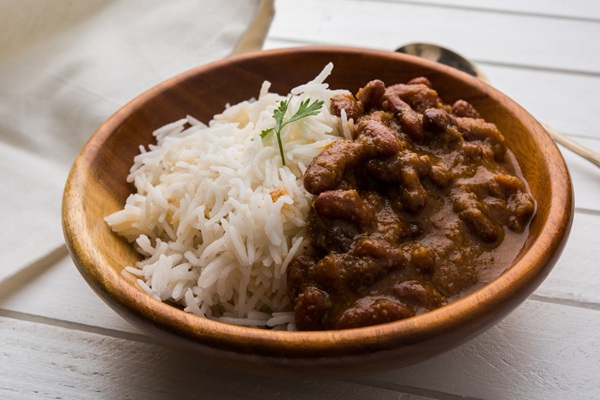
The menu is comforting, almost nostalgic. Rajma chawal, slow-cooked and rich, the kind that fills the house with a familiar aroma hours before anyone arrives. There are other dishes too, carefully prepared, each carrying a piece of the host’s and guest’s warmth. Nothing feels performative. Nothing feels like it is trying too hard.
When the door opens, the evening begins in the simplest way possible. Smiles that are slightly tentative at first, followed by those small pauses where people size each other up without really meaning to. And then, slowly, the room softens.
Chips appear on the table. Alongside them, homemade dips that someone insisted on making instead of ordering in. It is a small detail, but it matters. It always does. It says effort without announcing it.
Phones are still within reach, but they are no longer the centre of attention. The television stays off. The hum of the air conditioner fills the silence between conversations, but it never feels intrusive. It simply exists, like background music that no one notices.
And then, without anyone quite realising when it happens, the conversation begins to flow.
At first, it is predictable. Work. Traffic. The usual complaints that make for easy entry points. But those are just the surface layers. They are not the reason people stay.
There is something deeply comforting about being in a room where you do not feel the need to perform. No one is trying to impress. No one is carefully choosing words to fit a version of themselves. There is no pressure to be entertaining, or witty, or even particularly interesting.
You are simply there. And that is enough.
The host moves in and out of the kitchen, never really leaving the conversation. Plates are filled, refilled, adjusted. Someone insists you take more. Someone else laughs and says they cannot possibly eat another bite, only to give in a few minutes later.
Rajma chawal takes centre stage, as it always does. There is something about it that refuses to be overshadowed. It is not fancy. It does not try to be anything other than what it is. But it carries a kind of emotional weight. It reminds you of home, of simpler days, of meals that were less about the food and more about who you shared them with.
And maybe that is why it works so well here.
As the night deepens, conversations shift. They move from the safe to the slightly uncomfortable. Stories that are not usually shared in casual settings begin to surface. Not in a dramatic, heavy way. More like a gentle unfolding.
Someone talks about a difficult phase they went through. Another admits to something else they have never quite been able to articulate. There are moments of silence, but they are not awkward. They are necessary.
This is where something changes.
Because it takes a certain kind of environment for people to open up without hesitation. It requires trust, yes, but also something less tangible. A sense that you will not be interrupted. That your words will not be dismissed or analysed or turned into advice unless you ask for it.
There is a quiet power in being listened to without judgement.
In being allowed to speak without feeling the need to defend yourself.
In knowing that the person across from you is not waiting for their turn to talk, but is actually hearing you.
And when that happens, something softens inside. The walls that people carry with them, often without realising, begin to lower. Not all at once, not completely, but enough to let something real pass through.
There is laughter too. It finds its way in between the heavier moments, balancing the evening.
Old memories resurface. Stories that have been told a hundred times are told again, but they still land the same way. Maybe even better.
There is a particular kind of laughter that comes from shared history. The kind that does not need explanation. The kind that makes others in the room smile, even if they are hearing the story for the first time.
And then there are the hugs.
Not the quick, polite ones exchanged at the door. These are different. They come later, when the evening has settled into something deeper. They are tighter, longer, carrying with them a sense of understanding that words cannot fully capture.
For the new additions to this circle, these moments matter the most. This is where acceptance quietly takes shape. No formal declarations, no grand gestures. Just a feeling that says you belong here now.
The hosts, in their own way, become the anchors of the evening. Moving between roles without effort. Making sure everyone is comfortable, making sure the conversation never feels forced, making sure the food keeps coming without overwhelming anyone.
It is a delicate balance, and they carry it effortlessly.
By the time the night begins to wind down, no one is really looking at the clock. There is no rush to leave, no sense of an ending that needs to be acknowledged. People linger.
Conversations trail off and pick up again. Someone reaches for the last bit of dessert. Someone else starts stacking plates, only to be told to sit back down.
It is in these moments that you realise something important.
Some connections are not built in grand settings or over carefully planned experiences. They are built in living rooms, over simple meals, in the quiet presence of people who choose to show up for each other.
Coffee may start conversations. It always will.
But sometimes, it takes something more grounded, more familiar, to carry those conversations into places that matter.
That evening, it was rajma chawal.
But more than that, it was the willingness to create a space where people could just be. Without filters. Without expectations. Without the constant pull of distraction.
A space where listening mattered as much as speaking.A space where new relationships were not just introduced, but gently welcomed.
Some things cannot be measured or planned.
They happen in the in-between moments. In the pauses. In the shared silences.
More From BasisPoint