Historically, the outcome of war has mostly been determined by size. The side that possessed larger armies, superior industrial capacity, better logistics and the ability to sustain prolonged campaigns usually prevailed. Military power was measured in divisions, fleets, artillery concentrations and the depth of national resources available to support conflict. Technological superiority mattered, but it was generally concentrated in the hands of major powers, reinforcing existing hierarchies of strength.
It is that equation which is changing. The rapid diffusion of precision technologies is quietly transforming the nature of warfare and, in many ways, empowering the weaker side. The battlefield of the twenty-first century is increasingly demonstrating a paradox; advanced military technology, once the preserve of powerful states, is now enabling relatively weaker actors to impose disproportionate costs on stronger adversaries. The democratisation of lethality is redefining traditional military asymmetry.
The End of Mass Dominance
The twentieth century was the age of industrial and resource warfare. Victory in conflicts such as the Second World War depended upon production capacity, manpower reserves, mechanisation and the ability to absorb losses over time. Even during the Cold War, deterrence rested primarily on strategic nuclear capability and the industrial infrastructure needed to sustain military competition.
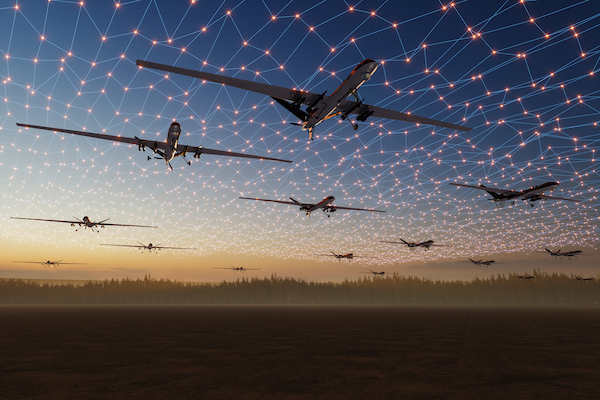
Precision technology is fundamentally altering long-held assumptions about military power. The decisive factor is no longer merely the quantity of force available, but the precision and effectiveness with which that force can be applied. Precision-guided munitions, armed drones, loitering systems, long-range missile capabilities, AI-enabled targeting systems and commercially available surveillance technologies are steadily narrowing the gap between stronger and weaker military actors.
A force possessing limited resources can now generate battlefield effects that were once achievable only through overwhelming conventional superiority. Equally significant is the question of organisation and operational integration. Increasingly, we are witnessing a striking convergence in strike capability between non-state actors, and fully developed state militaries, demonstrating that technological access, when combined with effective organisation and intent, can compensate for the absence of traditional military strength.
This does not imply that advanced precision technologies have become universally affordable or equally accessible. Rather, the real transformation lies in the lowering of technological entry barriers, enabling weaker actors to assemble sufficiently effective precision capability without possessing the industrial depth traditionally associated with military power.
The New Economics of War
One of the most striking features of modern conflict is the inversion of military economics. Traditionally, stronger powers could outspend weaker opponents and thereby dominate the battlefield. Today, the cost equation increasingly works in reverse.
A relatively inexpensive armed drone costing a few thousand dollars can force the deployment of sophisticated air defence systems whose interceptors may cost hundreds of thousands, or even millions. Low-cost loitering munitions can threaten expensive tanks, aircraft, warships or command centres.
In simple terms, the weaker side today possesses the capacity to compel a stronger adversary, or even a coalition supporting it, to incur disproportionately high defensive and operational costs. The objective is not necessarily outright military victory in the conventional sense; rather, it is the imposition of economic, operational and psychological burdens that gradually erode strategic advantage over time.
The ongoing conflict in Ukraine offers an important lesson. Although conventionally weaker, Ukraine’s sustained resistance has demanded unprecedented levels of ammunition expenditure, forcing not only continuous Western military assistance but also exposing limitations in NATO’s own stockpiles and defence production capacities, necessitating urgent replenishment from external suppliers. The strategic lesson is clear: modern conflict increasingly allows relatively weaker actors to impose burdens on stronger powers at levels that challenge logistics, industrial resilience and long-term sustainability. This emerging inversion of military economics may well prove to be among the defining characteristics of contemporary warfare.
From Guerrilla Warfare to Precision Disruption
Historically, weaker powers compensated for military inferiority through insurgency, guerrilla warfare and protracted conflict. Time itself was treated as a weapon. The weaker side avoided direct confrontation while gradually exhausting the stronger opponent.
Modern technology has changed that model. Weak actors no longer need prolonged conflict to generate strategic effect. Precision capability allows immediate disruption. Today, a relatively weaker force can strike airbases hundreds of kilometres away, damage critical infrastructure, target logistics hubs or challenge naval movements far beyond its immediate geography. This represents a profound shift in military theory. Battlefield asymmetry is no longer defined solely by endurance but increasingly by technological reach and accuracy.
Lessons from Contemporary Conflict
Recent conflicts offer some of the clearest demonstrations of this transformation. Ukraine, despite significant conventional disadvantages, has repeatedly used precision strike systems, drones and distributed battlefield intelligence to impose costs on a numerically superior adversary. Deep strikes against logistics nodes, command centres and military infrastructure have shown how technology can partially offset conventional imbalance.
The Red Sea crisis offers another example. The Houthis, a relatively weak non-state actor operating from Yemen, have managed to disrupt one of the world’s most critical maritime trade corridors using drones and anti-ship missile systems. The strategic consequences have extended far beyond the immediate theatre, affecting global shipping routes, insurance costs and forcing major naval powers into prolonged deployments.
Similarly, Hezbollah’s ability over the years to maintain deterrent pressure through stand-off precision systems has repeatedly demonstrated that technological sophistication is no longer monopolised by established state militaries.
The Rise of Non-State Capability
Perhaps the most concerning dimension of this transformation is the growing access of non-state actors to advanced military technologies. Commercial satellite imagery, encrypted communications, civilian drone platforms, artificial intelligence applications and open-source intelligence networks have dramatically lowered barriers to entry. Capabilities once restricted to advanced national militaries are now increasingly available to proxy organisations, insurgent groups and terrorist entities.
The distinction between state and non-state military capability is consequently becoming blurred, carrying serious implications for national security planners worldwide. Conventional deterrence models developed in the twentieth century may prove increasingly inadequate against dispersed adversaries equipped with precision strike capabilities.
India’s Strategic Imperative
For India, the challenge is particularly relevant, given the continuing possibility that Pakistan-backed proxy groups, sustained by support from elements of the Pakistani establishment, could eventually acquire and employ such asymmetric technological capabilities with potentially serious security consequences. Swarm drones, stand-off precision weapons, autonomous systems and technology-enabled irregular warfare are no longer distant possibilities.
India must, therefore, focus simultaneously on two fronts.
First, accelerating indigenous development of precision strike capability, autonomous systems, artificial intelligence assisted targeting and drone warfare through institutions such as the Defence Research and Development Organisation and the expanding private defence sector.
Second, building robust defensive systems capable of countering low-cost precision threats directed against critical infrastructure, military installations and civilian population centres.
The challenge lies not merely in acquiring technology but integrating it intelligently into doctrine, force structure and strategic planning.
Yet one caution remains necessary. Technology can alter battlefield equations, but it does not independently determine victory.
History repeatedly demonstrates that wars are ultimately decided by political purpose, leadership, national resilience, morale and strategic clarity. Precision technology may allow the weak to strike like the strong, but it cannot substitute for coherent strategy.
What therefore, is unfolding before us is not the end of military power, but its redefinition.
The Nuclear Asymmetry Angle
The most disturbing extension of this evolving asymmetry lies in the nuclear domain. The prospect of proxy actors or fourth-generation warfare entities gaining access to miniature nuclear devices for clandestine deployment in densely populated urban centres represents perhaps the ultimate asymmetric threat. While this does not yet directly relate to precision technology, the possibility of future innovation enabling non-state actors, or even smaller militaries, to deploy drone-delivered compact tactical nuclear devices for clandestine deployment cannot be entirely dismissed. Although such scenarios currently remain within the realm of science fiction, they represent the kind of conflict-driven chaos that strategic planners can ill afford to ignore. The future of warfare has repeatedly demonstrated that what appears improbable today can rapidly emerge as tomorrow’s defining security challenge.
For centuries, strength in war was measured by size and endurance. The emerging battlefield is increasingly rewarding accuracy, speed of decision and intelligent application of affordable technology. Precision systems are enabling weaker powers to challenge stronger adversaries in ways previously unimaginable.
The lesson for military planners is unmistakable. In the wars of the future, mass may matter less than precision — and technology may increasingly allow the weak to fight with the reach, confidence and disruptive potential once reserved only for the strong.
.png)