.png)

What a Modi-Xi Meeting Should Focus on Now
A Modi-Xi meeting can reset economic ties if both sides prioritise predictable investment, market access and practical technology cooperation.

Deep Pal is Director, Geopolitics and Policy, at Koan Advisory Group.
September 12, 2026 at 6:29 AM IST
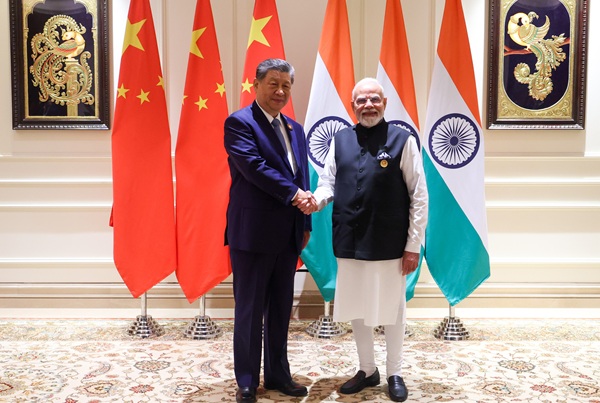
Chinese leader Xi Jinping’s visit to Delhi for the BRICS summit is his first to India in nearly seven years. It comes soon after Ajit Doval and Wang Yi agreed on measures to keep the border quiet during the 25th round of boundary talks in August. A leadership-level meeting now is the clearest sign that India and China want to move past the post-Galwan impasse.
As both countries weigh how to make the most of a steadier relationship, the economic and commercial aspects offer the greatest prospects for progress, provided they are not necessarily tied to the political track. External Affairs Minister S. Jaishankar said as much recently, acknowledging that India “has to do business” with China even as it builds its own manufacturing capacity. He was referring to the almost two-thirds of India’s imports from China that are clustered in electronics, machinery, computers and organic chemicals, inputs that feed directly into Indian manufacturing.
China supplies over 40% of India’s electronics imports and its machinery and computer imports. It supplies more than 80% of India’s lithium-ion battery imports. India imports 70% of the bulk drugs and key starting materials behind its pharmaceutical industry from China. And India’s solar programme still sources almost all of its wafers and polysilicon from China. Essentially, the sectors India most wants to build cannot be developed without China. China, meanwhile, stands to gain from India’s large market at a time when several of its export routes are under pressure.
For this to work, though, both countries will have to commit to a specific list of deliverables.
Predictable Environment
Another aspect is a predictable investment regime. India has taken the first step by identifying seven priority categories and a 60-day fast track in Press Note 3 guidelines for FDI proposals from land-border countries. Approval of Chinese proposals is believed to have picked up pace since then, particularly in cases that demonstrate clear benefits to Indian manufacturing, jobs or technology absorption.
Consistently honouring the 60-day window would do more to attract Chinese capital than any further loosening of the approval threshold.
The confidence problem, however, runs in both directions. For several years, Beijing has discouraged its manufacturers from relocating production elsewhere, wary of hollowing out its industrial base. China has treated India as a sensitive destination for outbound investment, leading to complex processes even for relatively simple investments. As a starting point, the Chinese government must therefore give its backing to proposals to commit capital in India.
Any Chinese company seriously considering India has to plan for a much longer horizon. Localising, building supply chains and forming joint ventures are not decisions made for one election cycle. Firms, from China or elsewhere, would need to stay invested for a decade or more before their investments begin to show results.
At the same time, New Delhi wants to be assured that its dependence on Chinese companies will not be weaponised if the political relationship sours again. This explains the focus on JVs with majority Indian ownership rather than wholly owned subsidiaries. India can make this more attractive by committing not to change the rules governing Chinese investors who localise for a fixed period. China, in turn, could signal to its companies that this is a window it wants them to use.
Trade Deficit
Moreover, as the Indian side has repeatedly highlighted, Chinese manufacturers benefit from state subsidies and an integrated domestic supply chain that allow them to price and scale in ways Indian producers cannot easily match. That, in turn, is part of the case for building domestic capacity.
A more durable fix has two parts. India needs to build local production and value addition for the inputs it currently imports in non-sensitive sectors, using Chinese capital equipment and process technology. This will allow Chinese suppliers to stay in the game as manufacturers here rather than losing the business as India substitutes away from imports.
At the same time, India must push China for reciprocal market access in the areas where it is genuinely competitive. Ambassador Vikram Doraiswami has already made this case publicly on pharmaceuticals, arguing for durable, long-term registration and licensing arrangements for Indian formulations, rather than one-off approvals, in a market India could credibly serve.
Economic Dialogue
This may include identifying and agreeing on a limited number of working groups based on key interests, and working towards producing at least one sector-specific investment or technology framework within a set timeframe. The economic dialogue could jointly identify projects to prioritise within fixed timelines, identify roadblocks and resolve them, and use lessons learned to develop a roadmap for future cooperation.
The SED’s technology joint working group could serve as a vehicle for this coordination. Beijing has broadened its dual-use export control catalogue in response to global developments, tightening the definition of controlled technology and restricting access without licences. However, a mutually agreed JV that actually builds and operates in India can bring engineering know-how, supplier relationships and trained personnel.
The working group can help identify specific components on a case-by-case basis, from display modules to battery management systems and EMS sub-assemblies, where China’s own rules still leave room for an Indian JV to access the technology. In return, India could offer clear, contractually binding IP protections for any technology transferred in this manner, assuaging the concerns of Chinese firms.
None of this needs to be settled by the time Modi and Xi sit down. A summit like this is not where sectoral details are worked out. Both governments have already agreed that this meeting is necessary to move the relationship forward.
The real challenge will begin the day after the meeting, when progress, at least on the economic front, will require ambition, creativity and a willingness to identify goals that both sides can accept.
More From BasisPoint