.png)

Saibal Dasgupta is an author, veteran journalist, and noted China expert who has reported from Beijing since 2005 and contributes to global media and think-tanks.
May 6, 2026 at 6:57 AM IST
Long before election results for West Bengal were declared, sections of the political and media spectrum in Bangladesh expressed concern about the chances of a BJP victory. Rangpur MP Akhter Hossen, a member of the newly formed National Citizen Party, stood up in the Bangladeshi Parliament to warn his colleagues that a BJP victory could trigger a refugee crisis, with people expelled from Indian territory potentially being pushed across the border.
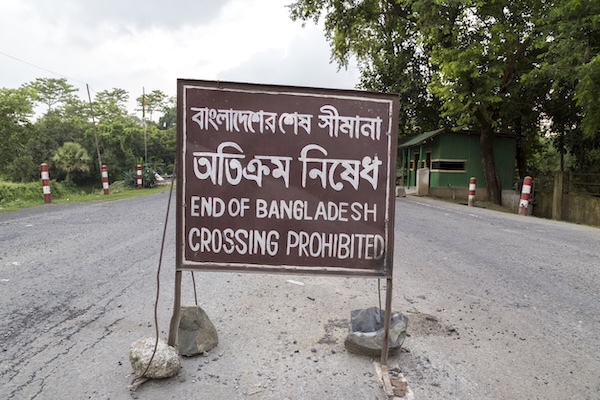
Political changes in West Bengal are bound to impact life and politics across the border. West Bengal shares a 2,217 km border with Bangladesh, more than half of the 4,096 km boundary between the two countries. It also shares linguistic and cultural ties with Bangladesh. Both sides watch some of the same popular television programmes. Rabindranath Tagore, whose birth anniversary on May 9 has been chosen as the day of swearing-in in Kolkata, is highly respected in Bangladesh.
This is evident in editorials and op-eds published in Bangladeshi newspapers after the results showed that the BJP had secured a significant victory. “If millions removed from voter lists under SIR are labelled ‘Bangladeshis’ by political actors in Bengal and subsequently pushed across the border, what stance will Bangladesh adopt? The situation raises complex diplomatic and humanitarian questions,” an article in Pratham Alo said.
However, Bangladesh’s official response was measured. The Tarique Rahman government is keen to improve ties with India, marking a departure from the antagonistic stance of the earlier Mohammad Yunus-led government. Though the Rahman government asked for the deportation of former Bangladesh prime minister Sheikh Hasina to face trial in Dhaka, it did not make it a prestige issue.
Bangladesh depends heavily on India for several reasons, including power supply and sharing of river waters from the Teesta and Ganga. India has reduced its financial assistance to Bangladesh to a 12-year low, with the 2026–27 Union Budget allocating ₹600 million, a 50% cut from the previous level. This reflects the strained ties under the previous government, which the Rahman administration is seeking to improve.
Junior Foreign Minister Shama Obaed Islam said that Dhaka’s foreign policy is guided by a “Bangladesh First” approach and would not change based on political developments in neighbouring states. “No matter which government is in another country, it does not change our foreign policy,” she said.
At the same time, she expressed hope that India would relax its tourist visa policy, particularly for Bangladeshis travelling for medical treatment. She also referred to ongoing discussions on renewal of the Ganga water-sharing treaty, which is due to expire in December this year.
In his victory speech after the West Bengal results, Prime Minister Narendra Modi said that infiltrators would be removed. This remains a key area of friction, as local populations in Bangladesh, particularly in border regions, are opposed to the return of migrants, who would compete for land and jobs.
Even the government in Dhaka is reluctant to accept an additional burden. The number of people that New Delhi may seek to repatriate could run into several hundred thousand if the National Register of Citizens is implemented. Past experience suggests that returning migrants often bring financial resources, which can create tensions with local communities.
Bangladesh is dependent on power supply from India for about 15–17% of its requirements, with India supplying 2,500–2,650 MW. A significant portion comes from the Jharkhand plant of Adani Power. Given oil supply disruptions linked to tensions in theStrait of Hormuz, Dhaka also requires Indian supplies of refined petroleum products.
Bangladeshis may have been critical of Chief Minister Mamata Banerjee for her reluctance to share Teesta waters, but many would still have preferred continuity in West Bengal compared to a BJP government, which has made opposition to illegal migration a key electoral issue. The BJP has also consistently raised concerns about the safety of Hindus in Bangladesh.
The Teesta agreement has been delayed due to West Bengal’s concerns over water sharing. There is uncertainty over whether a new government in Kolkata would agree to Bangladesh’s demands. It also remains unclear whether the Ganga water-sharing agreement will continue without modification.
Overall, it is in Dhaka’s interest to maintain stable relations with India. Its main strategic option lies in deepening engagement with China, and there are indications that Beijing may support projects such as nuclear power development in Bangladesh.
India remains cautious about any shift towards China, particularly given concerns over potential naval access in the Bay of Bengal. Similar concerns arose earlier over developments in Colombo port, prompting diplomatic intervention. This suggests that bilateral negotiations between India and Bangladesh may intensify in the coming period.
More From BasisPoint