.png)

Bobby Ghosh is a New York-based journalist and geopolitics expert. He was formerly a member of the Editorial Board of Bloomberg News.
April 30, 2026 at 10:36 AM IST
By the time the United Arab Emirates announced on Tuesday that it was leaving OPEC and OPEC+, the surprise was less in the decision than in the timing. Abu Dhabi has been signaling its desire to quit the cartel for at least five years. The Wall Street Journal reported in March 2023 that the Emiratis were debating it; the UAE denied it on the record and stayed put. The frustrations that produced that rumor — the UAE wants to produce much more oil than OPEC quotas allow — have only deepened in the years since.
What the war on Iran didn’t change the UAE’s calculus. It reduced the immediate political and economic cost of acting on it.
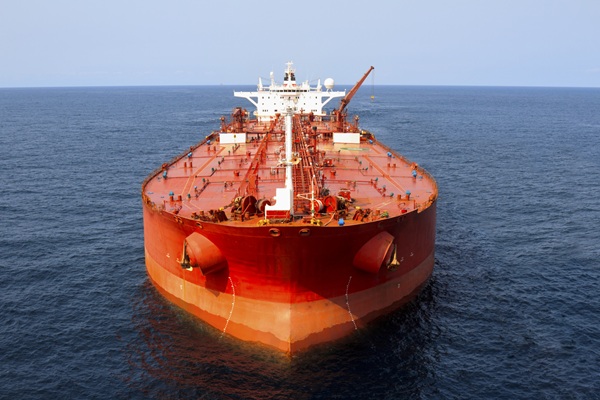
This is the first thing to understand about Suhail al-Mazrouei’s announcement. The Emirati energy minister was at pains to insist his country’s exit, effective Friday, would have “minimum impact on the price… minimum impact on our friends at OPEC and OPEC+.” On any other day that line would be diplomatic boilerplate. But with the Strait of Hormuz effectively closed, shipping at roughly 5% of pre-war volumes, and OPEC production having collapsed by 7.88 million barrels a day in March, it happens to be true. The UAE may be freed from quotas, but at the moment it is in no position to exercise that freedom. The damage to OPEC’s price-setting authority is a story for next year, not next week. Abu Dhabi picked its moment with care.
What the UAE is doing now, in public, it has been doing for years in private: untying itself from a Saudi-led order that no longer serves its interests. The war against Iran is the alibi.
Consider where Saudi-UAE relations were on December 29, the day before Riyadh bombed what it described as a UAE-linked weapons shipment in the southern Yemeni port of Mukalla. The Emirati-backed Southern Transitional Council had just seized the governorates of Hadhramaut and Mahra, the slice of Yemen that abuts Saudi Arabia. Riyadh struck the supply lines, dissolved the STC, and forced Mohammed bin Zayed — or MBZ, as the president of the UAE is commonly known — to withdraw his remaining troops. By the second week of January, southern Yemen was back under Saudi-aligned control and the Emirati military project on the Bab al-Mandab was finished.
What happened in Yemen was not a misunderstanding. In a rare public reprimand, the Saudis called Emirati conduct “highly dangerous.” The UAE, in an equally rare riposte, accused Riyadh of spreading “fundamental inaccuracies.” Two governments that had spent the previous decade speaking with one voice on Iran, on Qatar, on Libya and on the Muslim Brotherhood were now briefing against each other. Kristian Ulrichsen, a Middle East expert at the Baker Institute, was being polite when he told Middle East Eye the UAE was “approaching a tipping point in its ability to balance its regional relationships.” The point had been passed.
Yemen is only the most visible front. The European Council on Foreign Relations, in a January assessment, concluded that the rivalry has now spread “across the Middle East, Africa and the Red Sea.” In Sudan, the UAE backs the Rapid Support Forces while Saudi Arabia supports the army. In Somalia, the Emiratis are building a base in Somaliland, having encouraged Israeli recognition of the breakaway republic; Riyadh has condemned that recognition and rallied a counter-coalition with Egypt. This is, as the Tel Aviv-based Institute for National Security Studies described it, “open competition over leadership, prestige, and regional influence.”
This is the architecture beneath Abu Dhabi’s OPEC announcement. By the time MBZ decided to pull out, the institutional logic of cooperating with Riyadh on oil prices had already been hollowed out by everything else.
The war added two further accelerants. The first was a humiliation. When Iranian missiles and drones began landing on UAE territory in March, the Saudi-led Gulf Cooperation Council did nothing. Iron Dome batteries on Emirati soil were reportedly operated by Israeli personnel. The Saudis, busy hedging their own position with Tehran, offered logistical cover and very little else. Anwar Gargash, MBZ’s diplomatic adviser, used a Dubai conference on Monday — twenty-four hours before the OPEC announcement — to say what an Emirati official is not normally permitted to say in public. The GCC’s stance during the war, he said, “was the weakest historically, considering the nature of the attack and the threat it posed to everyone.” Translation: we were on our own, and we will not forget it.
The second accelerant was American. In the same week the Emiratis were finalizing their OPEC departure, Treasury Secretary Scott Bessent went before a Senate Appropriations subcommittee and made the case for a dollar swap line with Abu Dhabi. President Trump endorsed the idea on CNBC. Marco Rubio held security talks with UAE Foreign Minister Sheikh Abdullah bin Zayed on April 26. The UAE central bank governor had raised the swap with Bessent and Federal Reserve officials in Washington a few days before that. (The flurry of activity came after Abu Dhabi had reportedly let it be known it would price some oil transactions in Chinese yuan if dollar liquidity tightened.)
It would be too much to say the OPEC exit was coordinated with the US. Mazrouei told Reuters Abu Dhabi had not consulted any other country, and there is no public reporting to contradict him. What can be said is that the OPEC departure comes in a week of unmistakable US-Emirati realignment, financial and military, on terms Riyadh was neither asked about nor offered.
The Saudi response so far has been silence. That silence should not be mistaken for indifference.
The market consequences are easier to call than the political ones. Jorge Leon of Rystad Energy, told NPR: “OPEC and OPEC+ have only ever been as strong as the members’ willingness to hold barrels back from the market, and the UAE was one of those.” The cartel has lost defectors before — Qatar in 2019, Angola in 2023 — but neither was a top-three producer and neither left in the middle of a supply shock.
When Hormuz reopens, and at some point it will, the UAE will be free to flood a market its former partners are still trying to discipline. Saudi Arabia will be left, as Leon noted, to do “more of the heavy lifting on price stability” with no shock absorbers and a smaller coalition.
The political consequences are harder. Plenty of analysts will read Tuesday’s announcement as a body blow to Saudi Arabia, and on the surface it is. But Saudi Crown Prince Mohammed bin Salman — or MBS — has spent the past four months consolidating his position in the Red Sea, the Horn of Africa, and southern Yemen at Emirati expense. He has $3 billion lined up for Yemeni reconstruction and a working alliance with Cairo to choke off UAE-linked supply lines into Sudan. If OPEC is the price he pays for regional primacy in the Arab world, he may decide that is a price worth paying. The Saudis are losing some influence over global oil, but they are gaining plenty elsewhere.
Which leaves the Emiratis where exactly? Wealthier, in time, by some $50 billion a year in unconstrained production revenue, according to a 2023 Baker Institute estimate. Also, more tightly bound to Washington and Tel Aviv. And more exposed to Iran without an Arab cushion.
And — this is the part that may trouble MBZ in the small hours — more dependent on a US administration whose interest in the Gulf is transactional and whose domestic politics around Emirati money are getting sharper, not softer.
Democratic Senator Chris Van Hollen used the swap-line hearing to lay out a list of UAE-linked entanglements with the Trump family’s commercial interests, from World Liberty Financial to Binance. Bessent denied any linkage. The denial may even be true. But the alliance Abu Dhabi has now formally chosen over its Arab one runs through a Washington that is itself unstable. That is the strategic bet.
OPEC has survived founding members leaving before. It has survived Iranian revolutions, Iraqi invasions, and a Saudi-Russian price war. It has not previously survived a top-three producer walking out specifically to enter the orbit of the cartel’s principal customer-antagonist. In that narrow sense, the UAE’s departure on Friday is a first.
The rest of the consequences will take longer to clarify, and most of them will not be visible at the pump. They will show up in who builds which port, who pays for which proxy, and which currency settles which barrel. The next OPEC meeting will likely be a quiet affair. The next Saudi-Emirati meeting, whenever it comes, will not.
More From BasisPoint