.png)

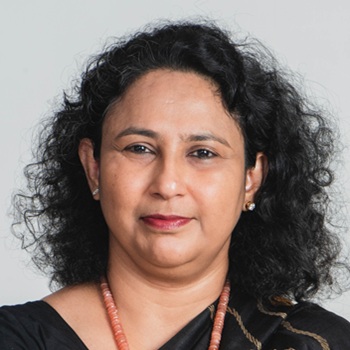
Minari Shah is a strategic communications leader who has helped Fortune 500 brands, such as Amazon, Tata Motors and Dell, build trust through storytelling.
July 16, 2026 at 9:09 AM IST
Between July 2021 and December 2025, India celebrated IPOs like big Bollywood opening weekends. The 25 loudest listings raised the country’s public capital markets to a new tempo. Subscription multiples of 60x, 80x, 100x were reported like sporting results, median day-one gain was +22.7%. Anchor books filled in minutes.
Within hours, one decided whether an IPO had been a success. The following years showed how unreliable that verdict could be.
I looked at the 25 largest and most talked-about Indian IPOs between July 2021 and December 2025, benchmarked against the Nifty 50 over the identical holding period, priced as of July 9, 2026. From the listing date to that point, eight of the 25 underperformed the index, three matched it, and 14 beat it. An index fund, bought quietly and forgotten, would have done as well as or better than nearly half of India’s most celebrated public debuts.
Misleading Signals
Some companies simply did not do what they said. Paytm’s path to profitability, Ola Electric’s gigafactory economics, Swiggy’s quick-commerce timeline: promises made at pricing, unmet on schedule.
Others were the companies that did deliver, but there was a narrative gap causing a lack of earned trust. Nykaa listed at over 800 times trailing earnings, an arithmetic no growth trajectory could defend on day one, and the stock duly fell hard in its first year. What is interesting is what came next. As the business kept compounding, the price slowly caught up to it, and over the full holding period, the stock has beaten the index. The hype was punished first, and the delivery rewarded later, a story about how trust takes time to rebuild. Delhivery shows a similar pattern: it largely executed against its long-term strategy but had listed at the peak of logistics optimism, and as that optimism faded, the valuation reset even as the business matured.
And finally, the third set of companies was those hit by things that couldn’t have been predicted. Defence procurement cycles stretched weighed on ideaForge through 2024-25. The West Asia conflict in March 2026 shut the primary issuance market for two months. Growth stocks were derated globally through 2022 as interest rates rose, taking every long-duration story down with them.
On the face of it, only the first one should qualify for a trust failure, but in reality, both the first and second had a key trust gap.
Was it predictable?
Some of the business issues, such as those with Paytm, were indeed far from unpredictable. Months before Paytm’s prospectus was cleared, The Morning Context published a piece asking what Paytm actually does, arguing that the super-app framing was aggregating loss-making sub-businesses into a single story to obscure them. Aswath Damodaran, the NYU finance professor whose public valuations have become a benchmark for Indian IPOs, warned explicitly that this was not a buy-and-hold investment. The RBI’s supervisory concerns about the payments bank predated the IPO entirely. Every warning was public. In fact, Macquarie initiated coverage with Underperform on the morning of the listing, targeting a fall of around 40%.
Which brings us to the second big issue, how the prospectus has been reduced to just a legal document owned by the bankers and lawyers rather than the most important trust document a company will ever publish. If we continue with the same Paytm example, the prospectus did offer facts about how they had never made a profit, that they may never become profitable, that the RBI had issued them a show-cause notice, and that regulation could materially impact them. What it did not call out clearly was that it was a collection of unrelated loss-making businesses masquerading as a super-app, and the interpretations that Damodaran or Macquarie made. So the roadshow, the banker presentations, the founder interviews and the subsequent media coverage made the dominant story all about the super app.
The warnings on Paytm were loud, and unlike in many other IPOs, they did break through. The issue just about scraped through; the stock fell sharply on listing, and the market rejected the valuation almost immediately. Indian IPOs suffer less from an information gap than from an interpretation gap.
This was even more visible with Ola Electric. Which was oversubscribed four times, with substantial institutional buy-in into its EV narrative, despite visible operational problems.
Who Owns Trust?
So, who owed the market the prediction? Bankers are paid on issue size, not on the promise being true in years to come. Syndicate research faces the obvious conflict. Auditors certify the past, not the plausibility of the future. The regulator reviews compliance and disclosure; it does not certify that the valuation is sensible or that the operating thesis is likely to succeed.
In short, nobody in the room is paid for the promises and hype being true in future. The mechanics of the system are designed such that nobody owns the full interpretation and trust is nobody’s job.
This shows up in the prospectus too, which mentions key details, yet disclosure and transparency are not always the same thing. Both Paytm and Ola Electric had fairly explicit prospectuses, but why were the red flags still ignored? The prospectus remains a densely written document, covered with legalese and hard to understand.
This has played a not insignificant role in the rise of finfluencers, a market response to the trust vacuum. As more retail investors get interested in these hyped FOMO-inducing IPOs, with the growing grey market premium as a proxy for a stock’s true value, the ordinary investor can rarely understand financial details or the fine print.
This situation is worsened by the misleading perceived connection between oversubscription and value. Oversubscribed 20 to 30 times sounds impressive, but in reality, it only means too many people chasing too few shares. Retail investors often interpret anchor books, grey market pricing, oversubscription, celebrity founders, and marquee investors as signals of quality, but these are really signals of marketing, demand, and institutional participation rather than intrinsic value. And when the prospectus ceases to be readable, investors seek information elsewhere. Increasingly, that “elsewhere” has become YouTube explainers, Telegram groups, X threads and finfluencers.
The finfluencers have thus become a key bridge to decode these complexities. Which would be great but for the fact that there is not enough disclosure about the commercial transactions between a company planning an IPO and the finfluencer. Often, these are framed as educational analyses or ambiguous phrases, thriving on hidden affiliate marketing routes to bypass disclosures.
Candor, Credibility
On the other hand, markets may forgive the external circumstances when handled with candour, when, of course, the business moves in the right direction too. They don’t forgive the deliverability failure that was already visible at pricing.
Ather Energy came to market in May 2025, having cut its targeted IPO valuation from $2.5 billion to $1.4 billion and reduced both the targeted valuation and the shares offered by existing investors. Headlines called this out as a weakness.
The stock listed 6.5% below issue. It’s now one of the best performers in the cohort, up roughly 280% from the issue against a flat Nifty over the same period. Beyond this cohort, there is Capillary that withdrew twice before listing at a disciplined size. In each case, the pricing was recalibrated toward what the transaction actually was, and in each case, the market rewarded the alignment.
When ideaForge ran into a defence procurement slowdown after listing and posted loss-making quarters through 2025, its handling was almost boring, and that was the point. The losses were framed as cycle-driven, but it began to clearly show the operational proof-points. When the cycle turned and it returned to profit in early 2026, the story it had told held up. The stock only matched the Nifty over the holding period, but matching the index through a genuine earnings trough without a big rescue narrative is its own kind of result.
Similarly, how a company defines its business in the prospectus is a strategic choice that brings trust or a lack of it. Paytm’s super-app framing created an attack surface in multiple directions; any regulator in any vertical could knock a piece out (and did). Urban Company framed itself narrowly, staking a claim to a marketplace with specific unit economics and dateable milestones. It met its promises and the stock holds around +33% above issue, comfortably ahead of a flat-to-down Nifty over the same period. PhysicsWallah disclosed losses in its offline expansion granularly, including conversion rates and centre economics. That transparency was read as a risk at the time. It actually functioned as insurance as the base case was already priced.
The Reckoning
What this shows clearly is not that most IPOs failed. They did not. The point is that the signals treated as proof of success on listing day were remarkably poor guides to what followed. Trust, priced into the stock and then priced into the next transaction, thus becomes the cost of capital, in the form of a follow-on round, in acquisition negotiations or the debt window gets narrower because the market prices in the scepticism. A company that lost credibility at IPO doesn’t just carry a lower share price but also a harder path to the follow-on round, a wider spread on the QIP, a less receptive audience for the acquisition currency, and a more expensive debt window when it needs one.
And the founder is often the only actor still in the room when this bill arrives. Something to note for the founders drafting the next batch of prospectuses sitting with SEBI. End
This piece first appeared on Minari Shah’s Substack page, The Long View.
More From BasisPoint