.png)

June 18, 2026 at 2:23 PM IST
The Big Picture
The Bank of England held interest rates on Thursday, but the broader message from a crowded day of central-bank decisions was not one of policy relief.
The BOE voted 7-2 to keep Bank Rate at 3.75%, with two policymakers favouring an immediate increase. Bank Indonesia raised rates for the third time in four weeks, the Bangko Sentral ng Pilipinas tightened for a second consecutive meeting, and the Czech National Bank delivered its first rate increase in four years. Norges Bank held but indicated that another hike would probably be required, while Taiwan’s central bank retained a more hawkish bias despite leaving rates unchanged.
Less than 24 hours after the Federal Reserve restored rate increases as a credible policy option, the dividing line among central banks is becoming clearer. Those with contained inflation, stable currencies and weakening demand can wait. Those confronting exchange-rate pressure, imported inflation or stronger domestic price persistence are still tightening.
The recent fall in oil prices following the interim US-Iran agreement has reduced the urgency of the initial energy shock. It has not convinced policymakers that the effects already passing through currencies, wages, services and inflation expectations will disappear with oil. The easing cycle has not formally ended, but it is no longer the default direction of travel.
Today’s Board
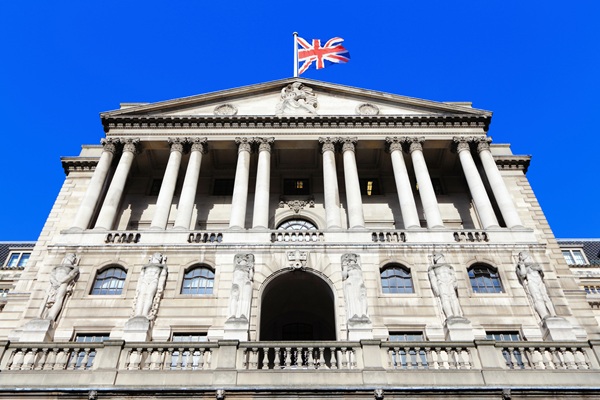
Threadneedle Street: An Active Hold
The Bank of England left Bank Rate unchanged at 3.75%, with seven members of the Monetary Policy Committee supporting the decision and Megan Greene and Chief Economist Huw Pill voting for an increase to 4%.
The majority judged that weaker demand, a loosening labour market and the recent decline in energy prices allowed it to wait for more evidence. But the two dissents underscored concern that the earlier energy shock could become embedded in inflation expectations, wage-setting and broader pricing behaviour.
UK inflation eased to 2.8% in May, but the BOE expects it to rise again later this year as higher energy costs continue to pass through. The central bank said monetary policy could not prevent the initial increase in global energy prices, but it must ensure that the resulting inflation does not persist.
This was therefore not a signal that rate cuts are approaching. It was an active hold that preserved the option of tightening if inflation persistence becomes more evident.
Jakarta: A Third Increase in Four Weeks
Bank Indonesia raised the BI Rate by 25 basis points to 5.75%, following an unscheduled quarter-point increase on June 9 and a larger-than-expected 50-basis-point move in May.
The central bank has now tightened by a cumulative 100 basis points in four weeks. It also raised the deposit facility rate to 4.75% and the lending facility rate to 6.50%.
The decision was principally aimed at stabilising the rupiah, attracting portfolio inflows and limiting the risk that exchange-rate weakness feeds into domestic inflation. It also confirmed that the June 9 off-cycle action was not intended as a one-off adjustment.
Bank Indonesia is prepared to use interest rates, foreign-exchange intervention and domestic market instruments until confidence in the currency is restored. Lower oil prices improve the outlook, but they do not remove the pressure created by a stronger dollar and persistent portfolio outflows.
Manila: Second Consecutive Hike
The Bangko Sentral ng Pilipinas raised its policy rate by 25 basis points to 4.75%, following a similar increase at its previous meeting in April.
Governor Eli Remolona said further tightening remained possible and that larger or off-cycle moves could be considered if inflation risks intensified. The central bank raised its average inflation forecasts to 6.4% for 2026 and 4.5% for 2027.
Inflation moderated to 6.8% in May from 7.2% in April, but underlying pressures remain broad. Higher energy and fertiliser costs are feeding into transport and food prices, while the BSP does not expect the tentative US-Iran settlement to reverse supply disruptions immediately.
Indonesia and the Philippines are responding to the same basic problem: a global energy shock that has become intertwined with currency pressure and domestic inflation expectations.
Prague: First Hike in Four Years
The Czech National Bank increased its two-week repo rate by 25 basis points to 3.75%, its first rate increase since June 2022.
The move came despite headline inflation slowing to 2.1% in May. Policymakers remain concerned about stronger services inflation, rapid wage growth, expanding credit and housing-market pressures. Core inflation was still running above the headline rate.
The increase appears to be a precautionary recalibration rather than the beginning of a prolonged tightening cycle. Even so, it broadens the European tightening story beyond the ECB and shows that lower headline inflation is not sufficient when domestic price pressures remain persistent.
Oslo: Hold Now, Hike Later
Norges Bank kept its policy rate unchanged at 4.25%, but said another increase would probably be required later this year.
The central bank remains concerned about rapid growth in business costs, elevated wage expectations and core inflation, which rose to 3.4% in May. Its updated policy path points to a somewhat more restrictive stance by year-end.
Norway’s decision illustrates why counting rate changes alone can be misleading. The policy rate did not move on Thursday, but the guidance became more restrictive. (The Wall Street Journal)
Zurich: The Franc Gives the SNB Room
The Swiss National Bank left its policy rate unchanged at 0%, maintaining the lowest benchmark rate among the major developed economies.
The SNB expects average inflation of 0.6% in both 2026 and 2027 and 0.7% in 2028. Although its near-term forecast was raised because of higher commodity prices and inflation abroad, medium-term inflation pressure was described as virtually unchanged.
The central bank also reiterated its willingness to intervene against a rapid and excessive appreciation of the franc. Switzerland can afford to wait because low domestic inflation and a strong currency continue to absorb much of the imported price shock.
Taipei: Strong Growth Produces a Hawkish Hold
Taiwan’s central bank kept its benchmark discount rate at 2%, but the decision was not unanimous.
Two board members raised concerns about inflation, and Governor Yang Chin-long said the stance needed to become slightly more hawkish. The central bank raised its 2026 growth forecast to 9.45% from 7.25%, reflecting exceptional demand for semiconductors, servers and other AI-related exports.
Its inflation forecast was increased to 1.91%, while actual inflation reached 2.2% in May, above the bank’s informal warning threshold.
Taiwan does not yet see sufficient price pressure to justify an immediate increase. But an economy expected to expand by almost 10% has little need for additional monetary support, particularly if inflation continues to strengthen.
Beijing: China Focuses on Transmission, Not Rates
The People’s Bank of China did not announce a benchmark-rate change. Instead, Governor Pan Gongsheng outlined measures to strengthen monetary-policy transmission.
The PBOC will narrow its short-term interest-rate corridor, expand overnight liquidity operations and introduce a yuan repo facility for foreign central banks and other official institutions. The package is designed to give the PBOC greater control over short-term funding costs while deepening international use of the yuan.
While other central banks are debating how high rates should be, Beijing is concentrating on improving the precision and effectiveness of its monetary framework.
Policy Themes
A hold is no longer necessarily dovish. The BOE and Norges Bank left rates unchanged while keeping further tightening clearly in play.
Currency defence is driving Asian policy. Indonesia’s cumulative 100-basis-point increase shows how quickly inflation control and exchange-rate management can become inseparable.
Oil relief changes timing, not necessarily direction. Lower crude reduces the immediate inflation impulse, but central banks remain concerned about the pass-through from earlier price increases.
The global cycle is diverging. Switzerland can rely on low inflation and a strong currency. Indonesia and the Philippines cannot. Taiwan can wait because inflation remains moderate, but exceptional growth limits the case for eventual easing.
The Week Ahead
|
Date |
Institution/Event |
Key Focus |
|
Jun 19 |
Bank of Russia |
Whether it extends its easing cycle from the current 14.50% rate as inflation slows but expectations remain elevated. |
|
Jun 19 |
Bank of Japan minutes |
Minutes of the April meeting may show how firmly the board was already leaning towards June’s rate increase and slower bond purchases. |
|
Jun 22 |
PBOC loan prime rates |
The one- and five-year LPRs are expected to remain at 3.00% and 3.50%; watch for any signal that operational changes will be followed by easing later this year. |
|
Jun 23 |
Magyar Nemzeti Bank |
A new Inflation Report accompanies the decision. Lower inflation and risk premia have opened the door to easing, but external volatility argues for caution. |
|
Jun 24 |
Bank of Thailand |
The MPC must balance weak domestic activity against energy-related inflation risks, with the policy rate currently at 1.00%. |
|
Jun 24 |
Bank of Canada deliberations |
The account should show how closely policymakers considered tightening and how they assessed the risk of broader energy-price pass-through. |
|
Jun 24 |
Bank of Japan Summary of Opinions |
Markets will look for the breadth of support for the move to 1.00% and whether further normalisation remains likely. |
|
Jun 25 |
Banco de México |
Whether Banxico confirms that its easing cycle has ended after the May reduction to 6.50%, or retains flexibility as growth weakens. |
Mint Street Notes
India received a more favourable external mix than several of its Asian peers.
The rupee advanced for a fifth consecutive session on Thursday, its longest winning run in a year, and closed at 94.3325 per dollar. Heavy exporter sales, dollar selling by foreign and private banks, FCNR(B)-related inflows and lower crude prices helped the currency reverse an initial decline following the Federal Reserve’s hawkish message.
The RBI was also seen modestly absorbing some of the inflows, consistent with an effort to rebuild foreign-exchange buffers rather than permit an unchecked appreciation.
April’s balance-of-payments data explain that caution. India recorded a current-account surplus of $4.7 billion, supported by services and transfer receipts, but the overall balance of payments registered a deficit of $6.6 billion as foreign portfolio and other capital outflows overwhelmed the current-account improvement.
The comparison with Indonesia and the Philippines is instructive. India is not currently being forced to use the policy rate to defend its currency. Lower oil, a firmer rupee and the RBI’s measures to attract overseas deposits have provided time.
But the central bank is using that time to reinforce external buffers, not to conclude that the global shock has passed.
The Signal
The day’s central-bank decisions cannot be divided simply into hikes and holds.
The BOE held, but two members voted to tighten. Norges Bank held, but its projected policy path became more restrictive. Taiwan held, but its tone turned more hawkish. Indonesia, the Philippines and Czechia raised rates. Switzerland remained the exception because its inflation and currency dynamics are fundamentally different.
The real dividing line is between central banks that can wait without losing credibility and those that must act to prevent inflation or currency weakness from becoming self-reinforcing.
The fall in oil prices has given policymakers more time. It has not restored the global easing cycle. (Richard Fargose)
Sources: Reuters, Bloomberg, Bank of England, Bank Indonesia, Bangko Sentral ng Pilipinas, Czech National Bank, Norges Bank, Swiss National Bank, Central Bank of the Republic of China (Taiwan), People’s Bank of China, Bank of Japan, Bank of Thailand, Bank of Canada, Magyar Nemzeti Bank, Banco de México, Bank of Russia, Reserve Bank of India.
More From BasisPoint