.png)

Sarci-Sense:The Bucket Problem Nobody Talks About
From hotels to homes, the humble bucket exposes India’s curious distinction between hospitality and hygiene. Perhaps our real challenge is not cleanliness, but the dignity we accord to details in maintenance itself

Dr. Srinath Sridharan is a Corporate Advisor & Independent Director on Corporate Boards. He is the author of ‘Family and Dhanda’.
June 20, 2026 at 7:17 AM IST
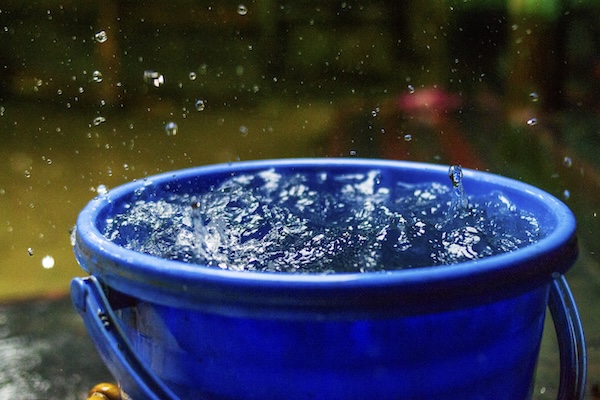
I have a pet peeve. It is a bucket.
Not just any bucket, but that particular bucket which appears in bathrooms across India with a consistency that ought to interest anthropologists. Especially it inhabits small-town hotels, modest guest houses, old homes and, occasionally, establishments that advertise themselves with a confidence unsupported by their plumbing. I have also sadly seen it in city homes. It sits there with extraordinary self-belief, accompanied by a mug that looks as though it has survived several governments and perhaps a few natural disasters.
The room itself may be spotless. The bedsheets may be white or even ghastly prints but washed. The floor mopped atleast once a day. The television remote wrapped in plastic with the solemnity of a museum exhibit, and yet you search for kerchief after using the remote. The receptionist may inquire after your comfort with touching sincerity. Then one enters the bathroom and encounters the bucket.
Not a bucket.
The bucket.
Its original colour survives only in the memories of the manufacturer. The interior carries deposits in shades no designer intended. Occasionally there is an odour that inspires less confidence than philosophical reflection. One is never entirely sure whether pouring hot water into it would disinfect the object or accidentally awaken ancient life forms that had peacefully settled there over generations.
What fascinates is not the dirt itself. Human beings, after all, are imperfect creatures. What fascinates is the confidence with which the bucket is presented to guests.
Indians take enormous pride in hospitality. We are capable of emotionally blackmailing guests into eating a fourth dosa and a second helping of dessert. Nobody escapes an Indian home hungry. Yet some guests do escape with questions about the soap dish.
Indians often say that guests are gods. Judging by some bathroom buckets, one suspects we assume guests-as-gods possess stronger immunity than ordinary mortals.
The bucket, however, is not merely a hotel problem. That would have been comforting. It is merely the most visible ambassador of a much larger phenomenon. Many Indian homes contain their own versions of it. Toothbrush holders carrying geological layers. Soap dishes deserving archaeological protection. Water filters whose maintenance schedules resemble family reconciliations. Plastic containers whose original colour survives only in photographs. Bathroom corners that enjoy constitutional immunity.
This reveals something curious about our understanding of cleanliness. We often define cleanliness visually. If something appears respectable from a distance and passes the guest test, it enters a strange category of existence. It may not be clean. It may not even be hygienic. But it becomes acceptable.
Perhaps our problem is not that we dislike cleanliness. We admire it immensely. We simply do not extend equal dignity to maintenance. Building a house commands prestige. We celebrate inauguration more enthusiastically than upkeep. This is not merely a domestic household problem. It also explains much of city roads, institutions and occasionally even governance.
The distinction between tidiness and hygiene is more profound than we realise. Tidiness is theatrical. Hygiene is repetitive. Tidiness impresses guests. Hygiene is what nobody notices. Tidiness is an event before visitors arrive. Hygiene is a boring habit performed when nobody is watching. One receives compliments for the first. One receives none for the second.
Perhaps that is why maintenance struggles to attract admiration. Nobody applauds a person for cleaning a bucket.
Indian television certainly does not help. For three decades, television daughters-in-law have kept cushions aligned with military precision. Entire marriages have collapsed in serials without anybody once asking who cleaned the bucket. The Indian imagination reserves dignity for drawing rooms and emotional energy for kitchens. Bathrooms remain a blind spot.
Our fascination with cleanliness abroad reveals another contradiction. Indians speak about the bathrooms of relatives in New Jersey with the awe earlier generations reserved for pilgrimage sites. We discuss Singapore and Dubai as though cleanliness is carried by international flights. Nobody pauses to consider that the son in Dallas probably cleans his own toilet and that Singapore’s famous cleanliness is not the product of geography or superior DNA. Somebody simply cleans things repeatedly.
Civilisation, unfortunately, is bad news for romantics because it is built less by speeches and more by habits.
Our society possesses a touching inability to retire objects with dignity. Plastic buckets, mugs and containers are granted extensions usually denied to successful CEOs. Somewhere between thrift and sentiment, we have converted our bathrooms into museums of post-liberalisation plastic. We develop emotional attachments to objects that should have been thanked for their service and allowed a peaceful retirement.
The bucket survives because somebody looked at it every day and slowly stopped seeing it.
The tragedy of familiarity is that it grants immunity. We stop seeing what surrounds us. That is true of stains. It is also true of corruption, incompetence and mediocrity. Human beings possess an extraordinary ability to adapt to what should disgust them. Entire nations occasionally do the same.
Neglect rarely announces its arrival dramatically. It enters quietly and takes residence in familiar corners. Over time, inconvenience becomes normal, normal becomes tradition and tradition becomes invisible. Mildew itself does not begin as mildew. It begins as tomorrow’s problem.
Perhaps this is why every conversation about India’s future eventually becomes strangely theatrical. We enjoy discussing artificial intelligence, geopolitical influence, demographic dividends and India’s rise. We compare ourselves with Singapore, admire Japan and invoke Dubai with astonishing frequency. Yet nations rarely decline because they suffer from a shortage of ambition or speeches. They decline because people become comfortable with small neglects.
The bucket, therefore, is not merely a bucket.
It is an object lesson in civilisation.
More From BasisPoint