.png)

State Finances are India’s New Macroeconomic Frontier
India’s fiscal story can no longer be read through the Union Budget alone. State borrowing and spending now shape growth, interest rates and macroeconomic stability.

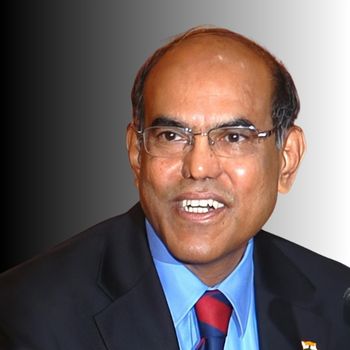
Dr Duvvuri Subbarao is a former governor of the Reserve Bank of India.
January 20, 2026 at 3:30 AM IST
As India heads into the budget season, analyst commentary once again centres on a familiar question: will the finance minister be able to deliver on the fiscal deficit target of 4.4% of GDP in 2025-26 despite income-tax relief, GST moderation, and relatively modest nominal GDP growth? The implicit assumption underlying this debate is that the Centre’s fiscal deficit is the single most important indicator of India’s macroeconomic stability.
That assumption is increasingly questionable.
The Centre’s fiscal deficit remains important, but it no longer captures the true fiscal impulse in the economy. India’s fiscal framework has quietly evolved from one dominated by a single anchor at the Centre to a multi-layered structure in which state-level decisions increasingly shape aggregate demand, debt dynamics, and the effectiveness of macroeconomic policy.
Any assessment that fails to account for this shift is likely to be incomplete, if not misleading.
The 60:40 reality
States today account for around 60% of total public expenditure in India, while the Centre accounts for the remaining 40%. On the revenue side, the picture is reversed: the Centre raises about 60% of combined revenue, while the states collectively raise around 40%.
This asymmetry between spending responsibility and revenue generation lies at the heart of India’s contemporary fiscal challenge. States control the bulk of public expenditure, but a significant portion of that expenditure is funded by tax devolution and grants from the Centre. This weakens commitment to fiscal responsibility, especially as market discipline is softened by expectations of implicit central support in the event of fiscal pressure.
Despite this growing importance of states in the aggregate fiscal space, analytical discourse continues to focus overwhelmingly on the Centre’s numbers, even though spending and borrowing decisions, rather than deficit targets in isolation, ultimately shape macroeconomic outcomes.
State borrowing and expenditure choices matter for at least four reasons:
State borrowing and the combined fiscal stance
While the Centre’s fiscal deficit is currently around 4.4% of GDP and that of the states collectively about 3% of GDP, macroeconomic stability depends on the combined deficit, not either number in isolation. It is this general government deficit that determines aggregate demand pressures, interest rates, and debt dynamics.
Periods of apparent fiscal consolidation at the Centre can therefore coincide with an expansionary overall stance if state borrowing remains elevated. From a macroeconomic perspective, it is the net supply of government paper to the market that matters, not the institutional source from which it originates.
Over time, state borrowing has become more persistent, driven by committed expenditures such as salaries, pensions, interest payments, power subsidies, and welfare schemes. Even when the Centre consolidates, elevated state deficits can keep the overall fiscal stance accommodative. Judging fiscal discipline solely on the basis of the Union Budget, therefore, risks underestimating the degree of fiscal support being provided to the economy and overestimating the durability of consolidation.
Crowding out and the investment constraint
India’s growth prospects depend critically on a sustained revival of private capital expenditure. Governments and firms draw from the same pool of domestic savings. When states increase market borrowing, they add to public-sector demand for funds, putting upward pressure on interest rates and tightening financial conditions.
This crowding-out effect operates through both quantity and price channels. Larger public borrowing absorbs available savings, while increased bond supply raises yields across the maturity spectrum, increasing the cost of capital for businesses. In a bank-dominated financial system with limited depth in long-term bond markets, these effects are particularly pronounced.
The constraint is especially relevant in an economy with limited household financial savings and a banking system that remains cautious in extending long-term credit. Even if the Centre restrains its borrowing, elevated state borrowing can weaken monetary-policy transmission and blunt the impact of interest-rate easing.
Admittedly, several factors continue to weigh on private investment. Even so, a lower and more stable interest-rate environment would improve risk appetite and project viability. From that perspective, crowding out is not merely a theoretical concern but a practical constraint on India’s ability to sustain investment-led growth.
Why the quality of state spending matters
States dominate spending in sectors that shape human capital and economic efficiency, such as school education, public health, nutrition, urban infrastructure, and power distribution. Outcomes in these areas affect labour productivity, business costs, and the attractiveness of states as investment destinations.
Two states with similar fiscal deficits can generate very different economic outcomes depending on how they allocate spending. One may invest in infrastructure and service delivery, crowding in private investment. Another may prioritise poorly targeted subsidies and short-term consumption support, accumulating debt and crowding out private activity.
Aggregate deficit numbers obscure these distinctions. Moreover, incentives within state-level public finance often favour visible transfers over long-gestation investments whose benefits accrue beyond political cycles. Any serious assessment of India’s growth prospects must therefore look beyond how much states spend to how effectively they spend.
Hidden liabilities and fiscal opacity
While the Centre has made efforts in recent years to curb off-budget borrowing and bring liabilities onto its balance sheet, fiscal opacity remains more prevalent at the state level. Borrowings routed through power distribution companies, public enterprises, special purpose vehicles, and government guarantees often remain outside headline deficit figures.
The power sector illustrates the problem. Losses accumulate in distribution companies, backed by state guarantees. Eventually, these liabilities surface, either on state balance sheets or through central intervention.
Off-budget borrowing postpones fiscal adjustment that can prove costly. It raises the risk of abrupt debt crystallisation, forcing pro-cyclical tightening later and complicating macroeconomic management. Fiscal opacity is not merely an accounting weakness, it is a source of macro-financial vulnerability.
Conclusion
As states assume a larger role in spending and borrowing, macroeconomic stability, investment outcomes, and growth quality increasingly depend on their fiscal choices - how much they borrow, how transparently they account for liabilities, and how productively they spend.
Recognising this shift is essential not only for more accurate fiscal analysis, but also for designing policies that support sustainable, investment-led growth rather than consolidation in appearance alone.
It is time for India’s fiscal discourse to catch up with this 60:40 reality.
More From BasisPoint