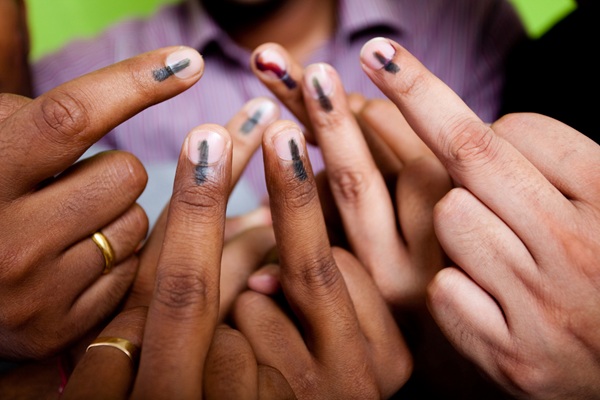
Five states — Uttar Pradesh, Punjab, Uttarakhand, Goa, and Manipur — head to polls in the first quarter of 2027 in what is shaping up to be one of the most closely-watched electoral contests of this decade. Four of these states currently have BJP governments, while Punjab is ruled by the Aam Aadmi Party. Together, they send close to 20% of the total strength of the Lok Sabha. The Uttar Pradesh election, in particular, will be widely viewed as a semi-final ahead of the next general elections in 2029.
A Changed Political Weather
Unlike the BJP’s buoyant mood after the party’s landslide victories in West Bengal and Assam, the run-up to the 2027 polls finds the party on the back foot. A wave of youth-led protests by the CJP across the country over jobs and opportunity, combined with allegations of donation theft ("chanda chori") linked to the Ram Temple in Ayodhya, has put the ruling establishment on the defensive.
The opposition, led by the Congress, has sensed an opening, and has been demanding the resignation of Home Minister Amit Shah over the unrest. The BJP's response has included a series of damage-control measures: Union minister Dharmendra Pradhan's resignation, a broader organisational rejig within the party, the removal of its social media chief, and the referral of the FCRA amendment bill to a Joint Parliamentary Committee.
Notably, there has been no fresh movement on the long-pending delimitation bill, a subject of considerable anxiety in southern and some northern states. Taken together, these developments suggest a party recalibrating under pressure, rather than one riding a wave of confidence, a sharp reversal from its post-Bengal, post-Assam positioning just months earlier.
Jobs and Youth Anger
If there is one issue uniting all five states, it is unemployment. The latest Votevibe Survey data shows unemployment as the single largest concern among voters in Uttar Pradesh (23.1%), Uttarakhand (20.7%), and — combined with migration — nearly a quarter of respondents in Punjab (24.3%) and Goa (26.2%).
This is consistent with the national mood: youth protests across the country in recent months are, at their core, an expression of the frustration over a lack of jobs and economic mobility for a young, aspirational electorate.
Political parties across the spectrum will be forced to speak the language of employment, skilling, and opportunity, or risk being seen as out of touch with the age group that increasingly decides elections.
NITI Aayog released a report titled Reimagining Skilling for Viksit Bharat@2047 in August 2026, revealing that 87 million young Indians aged between 15 and 29 are not in education, employment, or training (NEET). Graduate unemployment stands at 13%, and climbs to 20.4% for female graduates—far above the national unemployment rate of 3.2%. Only 8.25% of employed graduates work in jobs that match their specific educational qualifications. Millions of students are enrolled in generic degree programmes (like B.A.) that offer weak links to the actual job market. Further, many young people enter the workforce without job-ready skills or practical industry exposure.
Beyond jobs, a set of recurring themes cuts across all five states: corruption, law and order, education and healthcare, and basic infrastructure. Additionally, each state also carries its own distinct flavour of discontent and unique local issues that will shape the final verdict.
Uttar Pradesh: The Big One
As the state that effectively sets the tone for national politics, UP's issue matrix is closely tracked. Unemployment tops the list at 23.1%, followed by farmers' issues (14.1%), education and healthcare (13.7%), inflation (12.2%), and corruption — sharpened considerably by the Ram Temple donation theft controversy — at 11.4%.
The donation scandal is particularly potent because it strikes at a symbol the BJP has built much of its political capital around; any perception of financial impropriety linked to the temple could dent the party's core messaging in the state.
Interestingly, when it comes to what actually drives the vote, ideology (25.1%) and development or public issues (22.0%) rank above candidates’ personal appeal (15.3%) or even the chief ministerial candidate (13.4%).
This suggests that while unemployment and corruption dominate the conversation, the final choice at the ballot box may still hinge on broader party loyalty and governance performance — a dynamic that could work in the BJP's favour if it can shift the narrative back to development, but against it if voters view the temple controversy and lack of jobs as a governance failure.
Punjab: Drugs, Migration, and Fractured Social Coalition
Punjab presents perhaps the most distinctive issue landscape of the five states. Drugs (25.7%) and unemployment/migration (24.3%) together account for half of all voter responses — a stark reminder that the state's decades-long struggle with narcotics remains unresolved and has become deeply entangled with the migration of its youth abroad in search of opportunity. Inflation (13.7%) and law and order/women's safety (11.7%) follow.
The issue also splits sharply along demographic lines. For Scheduled Caste voters, unemployment tops the list, but for nearly every other group — Upper Caste Hindus, Jatt Sikhs, and Muslims — drugs is the number one concern. Age matters too: young and middle-aged voters rank drugs as their top issue, while senior citizens are more preoccupied with unemployment.
Uttarakhand: Jobs and a Healthcare Gap
In Uttarakhand, unemployment (20.7%) and education/healthcare (18.9%) are near-equally dominant, with inflation (12.9%) and law and order/women's safety (10.8%) trailing behind. Corruption also registers meaningfully at 9.8%, a familiar marker of anti-incumbency sentiment building against a long-serving government.
The demographic breakdown reveals interesting nuances: Scheduled Tribe voters prioritise education and healthcare far above the state average, at 24.7%, while the Sikh community places extraordinary weight on inflation, at 30.5%. Generationally, youth and senior citizens are most animated by unemployment, while middle-aged voters are more concerned with education and healthcare — suggesting parties will need multi-pronged messaging rather than a single unifying pitch.
Goa and Manipur: Local Fault Lines
Goa, India's highest per-capita-income state, faces a very different challenge: environmental degradation. Years of unchecked construction, mining, and tourism-driven development have made ecological concerns a defining issue in a state where economic prosperity has come at a visible environmental cost — a tension that could reshape traditional voting patterns built around religion and caste.
Manipur, meanwhile, continues to grapple with the aftermath of ethnic conflict and questions of security, governance, and reconciliation that will likely overshadow conventional economic issues in this election cycle.
The Bottom Line
With unemployment as the connecting thread, corruption allegations chipping away at the BJP's core narrative, and each state carrying its own local flashpoint — drugs in Punjab, environmental strain in Goa, ethnic reconciliation in Manipur — the 2027 state elections promise to be a genuine test of whether the ruling party can regain its momentum, or whether a resurgent opposition can convert youth discontent into electoral gains ahead of the national contest that follows.
*The findings on election issues are from a Votevibe Survey.
.png)