.png)

Sharmila Chavaly, a former civil servant who held key roles in the railways and finance ministries, specialises in infrastructure, project finance, and PPPs.
December 29, 2025 at 10:50 AM IST
The journey of a flag carrier from a national symbol to a commercial entity is one of the most complex challenges in economic policy — privatisation of a national flag carrier is rarely just a financial transaction; it is a profound test of a state’s ability to redefine its role in the economy.
While the recent sales of Pakistan International Airlines and Air India follow a familiar script of debt separation and ownership transfer, history provides a more instructive blueprint. The most relevant lesson for governments comes not from a straightforward sale, but from a controlled collapse: the 2010 bankruptcy and rebirth of Japan Airlines. JAL’s transformation demonstrates that state intervention can succeed, but only when it mimics the ruthless discipline of the private sector—imposing stringent conditions, enforcing painful cuts, and prioritising commercial viability over national pride. This model of a state-orchestrated, privately disciplined turnaround offers a critical lens through which to assess the prospects for PIA and the ongoing journey of Air India.
The Common Blueprint: Surgical Separation and Sale
- The Air India Debt Transfer: The government transferred ₹615.62 billion (about $8.2 billion) of debt and non-core assets to a special state-held vehicle, AIAHL. The Tata Group then acquired the airline by paying ₹27 billion in cash and taking on ₹153 billion of the remaining debt—a classic “debt and cash” model that provided a complete exit for the government.
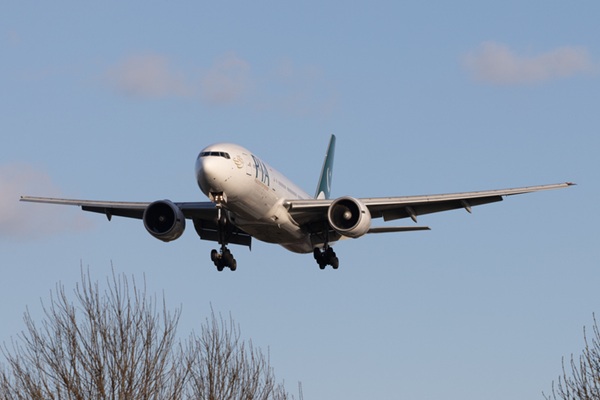
- The PIA Carve-Out: The Pakistani government split PIA into two. A state-held “bad bank” absorbed a crushing PKR 650 billion (about $2.3 billion) in legacy liabilities. The sold entity—a clean operating airline—was recapitalised through a unique “equity infusion” model, where the buyer paid a small cash sum to the state but injected PKR 125 billion as new equity, with the government retaining a 25% stake.
- While financial surgery was a necessary first step, creating a platform for potential recovery, the JAL case underscores the point that separating debt is the easy part; transforming culture and operations is the real challenge.
Lessons from Global Success: Beyond the Balance Sheet
- Strategic Focus & Network Rationalisation: Successful airlines like Qantas (with its clear separation of full-service and low-cost brands) do not fly for prestige. They ruthlessly cut unprofitable routes and focus on their competitive strengths. For Air India, the Tata Group is applying this lesson by merging its airlines into two distinct full-service and low-cost brands. For PIA, this means abandoning politically-motivated destinations.
- Cultural & Operational Overhaul: The legendary turnaround of British Airways in the 1980s (under John King) involved a direct confrontation with entrenched union practices to instill a customer-service culture. This is the single greatest hurdle for PIA, where a state-job mentality is ingrained. Air India’s new management has been investing heavily in training and technology to overcome this same legacy, but the jury’s still out on whether they have seen success.
- Fleet and Alliance Strategy: Efficiency derives from a simplified, modern fleet (as seen with both Qantas and BA) and the global reach of alliances like oneworld. While Tata has placed a historic 470-aircraft order to modernize Air India’s fleet, PIA’s path requires its new equity to fund a similar strategic shift and for it to eventually earn a place in a global alliance.
The JAL Precedent: A Model for State-Led Discipline
- Radical Downsizing: Elimination of one-third of its workforce, termination of 45 unprofitable routes, and a drastic reduction in its international network.
- Financial Rigor: Creditors forgave ¥521 billion in debt, and shareholders were wiped out.
- Cultural Shock Therapy: The process broke the lifetime employment covenant and seniority-based promotion system, forcing a complete reset of corporate culture.
The state’s role was not to protect the old JAL, but to act as a midwife for a new, lean, and commercially-driven one. It provided stability but delegated the painful restructuring to an independent body with a private-sector mandate.
Prognosis and a Path Forward: Applying the Lessons
For Air India, the Tata Group possesses the capital, strategic clarity, and—critically—the complete operational freedom that JAL’s new management enjoyed. It has adopted the global playbook: brand rationalisation, massive fleet renewal, and cultural change. Its success is not guaranteed, but its trajectory aligns with the principles that saved JAL, BA, and Qantas.
For PIA, the prognosis is far more precarious. The privatisation deal has provided a clean balance sheet, but the government’s retained 25% stake and its custodianship of the Rs 650 billion “bad bank” create a continuous channel for political interference in routes, hiring, and strategy—the very vulnerability that necessitated the sale. The JAL model suggests a solution, i.e., that the government has to re-conceive its role, where the holding company for PIA’s old debts has to be managed not as a political entity, but as an independent, professionally-run “turnaround corporation” tasked with maximizing asset recovery with zero operational interference in the new airline.
The lesson from successful examples abroad is clear: a flag carrier can be saved from the state, but it cannot be saved by the state on its old terms. The government’s choice becomes binary: it can be a passive, non-interfering shareholder in a commercial enterprise, or it can be an active, disciplinarian architect of a court-style rehabilitation. The hybrid model—partial ownership with lingering control—that Pakistan currently has with PIA is the one model that has consistently failed everywhere. The futures of both PIA and, to a lesser extent, Air India today, hinge on whether their governments have learnt and internalised this most difficult of lessons.
More From BasisPoint