.png)

Sarci-Sense: What Our Shoes Reveal About The Modern ‘Us’
From slip-ons to sneakers, footwear now reflects a society eager to belong without standing out. Comfort has become India’s most reliable social signal.

Dr. Srinath Sridharan is a Corporate Advisor & Independent Director on Corporate Boards. He is the author of ‘Family and Dhanda’.
January 18, 2026 at 3:35 AM IST
Who would have imagined that plasticky slip-ons would one day be treated as sensible, even stylish. Not as irony. Not as faux-pas. Simply as normal. But as fashion. Call them Crocs, or croak softly at the absurdity of it all. A decades of human civilisation that once took footwear seriously — as craft, and at times even social hierarchy — now steps confidently into foam shoes with holes in them. And nobody feels the need to explain themselves.
That is the most revealing detail about us.
This is not a story about fashion becoming careless. It is a story about us becoming honest. The world walks differently now. At least it still walks, which already feels like a small achievement in an age where screens offer participation without movement, beds promise rest, and sofas feel increasingly permanent. Footwear, sensing fatigue everywhere, has quietly recalibrated itself.
There was (or probably still is for few of us) a time when shoes were aspirational objects. They announced our presence. Polished leather suggested authority. Heels implied purpose. Even discomfort seemed to carry moral weight. If your feet hurt, it meant you were trying. Shoes trained posture, discipline and respect for occasions. Fashion rewarded endurance.
The modern Indian no longer expects footwear to elevate them. They expect it to endure them. Long days, blurred roles and the exhaustion of constant availability have reshuffled priorities. Comfort has stopped being a guilty indulgence and become a public requirement. It is fatigue that has finally been legitimised.
Into this landscape enters social FOMO, quietly but decisively. The fear today is not merely of missing success. That anxiety belonged to an earlier generation. The sharper fear now is of missing presence. Of not being seen somewhere, at the café that looks productive, the airport lounge that signals progress, the weekend gathering whose importance will only be clear after the photographs circulate.
Life is no longer lived forward. It is audited backward.
Footwear has learned to cooperate. Shoes today must survive multiple identities in a single day: offices that pretend to be casual, cafés that double as workspaces, weddings that resemble networking events, airports that function as public stages. Changing shoes for different roles requires certainty. Certainty has become rare.
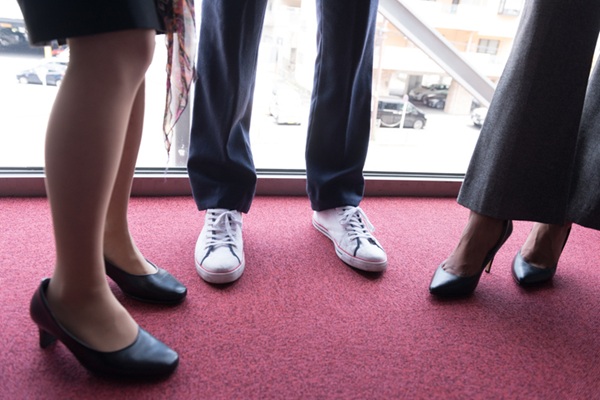
So, Indians choose footwear differently. Slip-ons that do not ask where you are going. Sneakers that suggest motion without direction. Those foam footwear have not become popular because they look good. They became popular because one can show up anywhere without having to prove you belong.
What looks like choice, however, is often coordination. We tell ourselves we dress comfortably because we are liberated, but we dress similarly because deviation now needs explanation and even courage. Comfort has become the safest aesthetic in a culture that quietly punishes standing out. Uniformity has learned to disguise itself as freedom.
If social FOMO explains comfort, wealth FOMO explains its careful neutrality. There was a time when footwear revealed class with ruthless efficiency. Today, that clarity has dissolved. The wealthy dress down deliberately. The aspiring dress carefully upward. The middle class performs a delicate balancing act, trying to appear effortlessly stable.
This confusion is not accidental. It is protective.
In a country where wealth is increasingly visible and uneven, loud luxury invites judgement. Quiet footwear signals calm, or at least the appearance of it. Expensive sneakers are designed to look ordinary. Affordable footwear is designed to look intentional. Everyone wants to appear comfortably placed — not climbing too hard, not slipping behind.
Even traditional Indian footwear has adapted to this anxiety. Kolhapuris soften their authority. Mojris shed ceremonial stiffness. Craft seeks relevance. The foot has become democratic territory, impatient with hierarchy and uninterested in symbolism that does not serve function.
For Indian men especially, this shift carries a private negotiation with age. Sneakers and slip-ons allow them to postpone their own comfort with their age. They offer youth without exertion, fitness without discipline, modernity without risk. The shoe quietly promises that you are still in the race, even when you have stopped running. It is a gentle deception, but a comforting one.
It is now common to see people across corporate hierarchies wearing what appear to be formal shoes until one looks closely. Black, discreet, office-appropriate — and unmistakably cushioned. Sports shoes disguised as seriousness. Senior executives, middle managers and fresh recruits participate in this shared performance. Brands have perfected the art of making shoes that look like leather authority but feel like weekend mercy. The wearer wants to appear professional without suffering, formal without stiffness, ambitious without foot pain. Leather shoes, once non-negotiable markers of discipline, are now reserved for weddings, board meetings that truly matter, or days when authority must be visibly worn.
Fashion purists may mourn the loss of elegance. But elegance has always required leisure, maintenance and confidence in one’s place. Modern India has ambition in abundance and very little patience for upkeep. Shoes that demand suffering now feel faintly unreasonable, almost immoral.
There is humour in this if one looks closely. We will argue ferociously about politics, productivity and purpose, but reach instant agreement on comfort. Ugly shoes no longer embarrass. In fact, their ugliness signals self-assurance. You are announcing that you no longer require approval from the ankles down.
Clothes are chosen for cameras. Faces are adjusted for filters. Shoes alone are chosen for floors. They meet dust, rain, broken pavements and the quiet unpredictability of Indian life. They must endure reality, not perform for it.
Comfort is a wonderful innovation.
So smile at the foam clog. Raise an eyebrow at the slip-on worn where polish once ruled. But notice what they reveal. A society’s anxieties are visible in what it allows closest to the ground.
India walks comfortably today.
It is just not entirely sure where it is going.
More From BasisPoint