.png)


February 7, 2025 at 2:27 AM IST
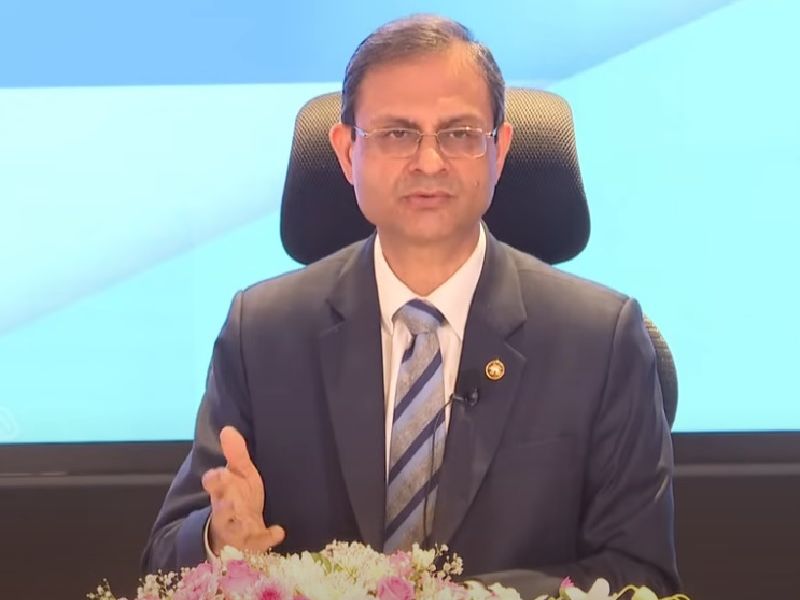
When Sanjay Malhotra steps up to deliver his first post-policy press conference as Reserve Bank of India governor, financial markets will not just be parsing his words but reading between the lines. More than the Monetary Policy Committee’s formal statement at 10 AM, Malhotra’s responses around noon will offer the clearest signals about the kind of central banker he would be.
His challenge is immediate and unenviable. Even before he had a chance to settle into the job as the Chairman of the MPC, his former colleagues at the Ministry of Finance complicated his mandate by making it clear that they expected the RBI to cut interest rates to support growth. Tuhin Pandey, the Finance Secretary, could have left the matter to the MPC’s discretion. Instead, his public remarks have effectively placed Malhotra in a no-win situation. If the MPC cuts rates, it risks being perceived as bending to government pressure. If he resists, he will be cast as defying the administration.
This scrutiny could have been avoided. The government and the RBI regularly interact behind closed doors, where such expectations and counterarguments can be exchanged without theatrics.
Malhotra’s predecessors have faced similar pressures, but rarely has a new governor been thrust into such a direct crossfire so early into his job. The Finance Ministry’s year-end economic review explicitly blamed RBI policy for contributing to India’s growth slowdown, conveniently overlooking the role of sluggish public capital expenditure and a worsening global backdrop. Now, with additional economic headwinds—from the impact of US tariffs under Donald Trump to a stronger dollar—the RBI’s already delicate balancing act has become even trickier.
At stake is not just interest rate policy but the independence of India’s central bank. While the RBI operates within a framework jointly shaped with the government, its credibility hinges on being seen as an institution that acts in the long-term interest of the economy rather than the immediate concerns of the administration.
Malhotra’s first test is not just about whether rates move up or down—it is about whether he can command the authority that comes with his office. His real challenge is not in navigating the mechanics of monetary policy but in ensuring that, through the din of political pressure, the RBI’s voice remains its own.
More From BasisPoint