.png)


Venkat Thiagarajan is a currency market veteran.
March 23, 2026 at 1:21 PM IST
Gold’s rise has invited a familiar explanation: that investors are seeking safety amid geopolitical tension and monetary uncertainty. That story feels intuitive, yet it is incomplete. Gold rarely moves in isolation, and reading its trajectory without reference to crude oil risks missing what the market is actually pricing.
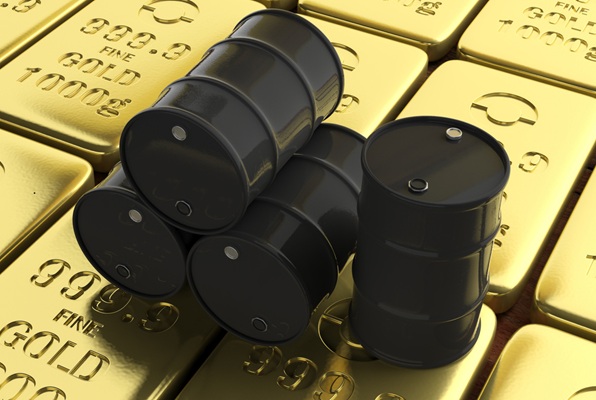
A simple, time-tested lens, the gold–oil ratio, offers a more grounded way to interpret this move. By comparing the price of one troy ounce of gold with that of a barrel of crude, the ratio acts less as a timing tool and more as a barometer of the macro regime investors believe they are in.
When gold rises while oil remains subdued, the ratio climbs, signalling a tilt towards financial anxiety rather than real-economy strength. Periods such as 2025 fit this pattern, where concerns around monetary stability and geopolitical risk dominated, even as growth signals remained uneven. In such phases, markets tend to favour gold, high-quality bonds and other defensive assets.
A falling ratio, driven by stronger oil, typically reflects a different backdrop. It points to demand-led growth, tighter supply conditions, and a greater willingness among investors to embrace risk. Oil, in this sense, becomes a proxy for real economic momentum, while gold reflects the market’s confidence, or lack of it, in the financial system.
There is also a third regime that is often overlooked. When both gold and oil rise together, and the ratio moves only modestly, the market is signalling an inflationary or commodity-driven expansion. The previous gold bull market between 2001 and 2012 broadly followed this pattern. Gold prices surged, yet the ratio remained relatively contained because oil was moving in tandem, reflecting a synchronised global upswing.
Misread Risk
The current configuration of gold and oil suggests that markets may be overemphasising one part of the story. If gold continues to rise while oil remains weak, the implicit assumption is that financial and geopolitical risks will dominate the macro landscape. Yet such extremes in the ratio have historically not persisted.
Reversion, when it comes, does not follow a fixed script. It can occur through a rebound in oil prices, a cooling in gold, or a combination of both. What matters is that the gap between the two narrows as the macro narrative becomes clearer. Periods when gold becomes unusually expensive relative to oil have often been followed by phases where oil recovers, and gold loses momentum.
This is where the geopolitical narrative needs greater discipline.
If conflicts ease quickly, bringing with them a stabilisation or even a decline in oil prices, the case for further gold upside becomes more tenuous, particularly if inflation expectations soften. Conversely, if tensions leave a lasting imprint on energy markets, sustaining higher oil prices and firmer inflation, the room for gold to make fresh highs becomes constrained by the eventual response of real rates.
In other words, the direction of gold cannot be assessed without a view on oil. The ratio forces that discipline by linking what are often treated as separate narratives.
For Indian investors, this framework needs one additional layer. Gold priced in rupees has exhibited a persistent long-term uptrend that has weathered multiple global cycles. Currency depreciation, import dependence and sustained domestic demand have ensured that cyclical corrections in global gold prices have rarely translated into durable declines in local terms.
That distinction is important. The gold–oil ratio helps explain global gold prices in dollar terms, but gold prices in India are influenced by both global trends and domestic factors. Even if global gold prices soften as the ratio normalises, the long-term upward trend in rupee terms is unlikely to reverse easily.
The message from the gold–oil ratio, therefore, is not to predict precise turning points, but to question the narrative embedded in prices. At present, that narrative appears to lean heavily on risk and uncertainty. Whether it proves justified will depend less on gold itself and more on how oil behaves from here.
More From BasisPoint