.png)


July 10, 2026 at 2:26 PM IST
Raghuram Rajan’s return to the centre of global monetary policy is not through a rate decision, a crisis speech or an emerging-market rescue package. It is through the Federal Reserve’s balance sheet.
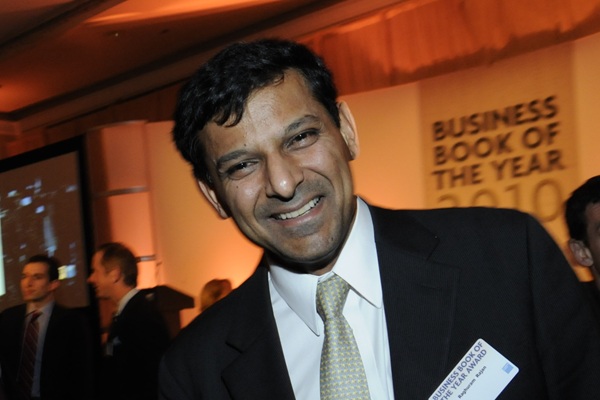
The Fed on Thursday named Rajan, the former Reserve Bank of India governor and University of Chicago finance professor, as one of three co-leads of its new Balance Sheet Policy task force, alongside Harvard’s Karen Dynan and former Fed governor Jeremy Stein. The group has been asked to examine the costs, benefits, and institutional implications of the Fed’s current balance-sheet regime, one of five outside-led task forces Chair Kevin Warsh has created to review the conduct of monetary policy.
That makes Rajan’s appointment more than a prestigious advisory role. It places him inside the most market-sensitive part of Warsh’s attempted Fed rebuild. Interest-rate decisions still dominate the near-term policy cycle, especially with June CPI due next week and the July 28-29 FOMC approaching. But the balance sheet is where the Fed’s strategy turns into market plumbing: reserves, repo, Treasury-bill purchases, standing facilities, remittances, term premium and dollar liquidity all meet there.
Warsh’s broader review is explicitly institutional.
The five task forces cover communications, balance-sheet policy, data, productivity and jobs, and inflation frameworks. The Fed says they will be supported by staff but operate independently, with a mandate to provide candid findings to the FOMC. Reuters reported that Warsh hopes to receive recommendations by year-end, and noted that the process contrasts with earlier Fed reviews that were more internally driven.
Rajan is a logical choice for the balance-sheet brief because he brings two perspectives the Fed needs but does not always foreground: financial stability and spillovers. As RBI governor from 2013 to 2016, he managed policy through the aftermath of the taper tantrum, when Fed communication, US yields and dollar funding conditions transmitted directly into emerging-market currencies. His early tenure at the RBI was closely associated with the FCNR(B) swap window, a tool that helped attract foreign-currency deposits by giving banks a concessional dollar-rupee swap facility.
Incidentally, India is again using FCNR(B)-style instruments to manage rupee pressure.
The Fed’s balance sheet is no longer a purely domestic question. The size and composition of the System Open Market Account influence Treasury-market functioning, the supply of safe collateral, bank reserve demand and global dollar conditions. For emerging markets, those choices can change the cost of hedging, the direction of portfolio flows and the credibility burden on local central banks.
The June FOMC minutes show why Warsh wants the review. The Committee held the funds target range at 3.50%-3.75%, but the discussion was not dovish. Participants said inflation had moved higher and remained well above target; a few saw a case for raising rates at the meeting; and many said policy firming would likely be warranted if inflation stayed elevated because of AI-related demand, Middle East conflict or tariffs.
That is the rate-policy backdrop. Rajan’s task force addresses the deeper operating question: what kind of balance sheet should carry that policy stance?
The answer will not be simple. A smaller Fed balance sheet may reduce political criticism, limit remittance losses and restore more private-market intermediation. But shrinking too far risks money-market stress, repo volatility and a repeat of episodes where reserves proved less ample than assumed. A larger balance sheet offers control and liquidity, but can blur the line between monetary implementation and fiscal support.
Rajan’s presence suggests the review will not treat the balance sheet as an accounting problem. It is a credibility problem, a financial-stability problem and a global transmission problem. For Warsh, that is the point. The Fed is not just asking whether rates are high enough. It is asking whether the machinery behind those rates still fits the world it is trying to manage.
More From BasisPoint