.png)

Power, Polarisation and the Battle for the Next India
The 2026 state elections across five regions will test incumbency, opposition unity and shape the political mood well before the next general election.
Amitabh Tiwari, formerly a corporate and investment banker, now follows his passion for politics and elections, startups and education. He is Founding Partner at VoteVibe.
February 4, 2026 at 7:16 AM IST
The 2026 assembly elections are not just another cycle on India’s crowded electoral calendar. They are an early stress test of power, credibility and narrative control, with consequences that will travel far beyond state capitals.
Scheduled for April–May across four states—Tamil Nadu, Kerala, Assam and West Bengal—and the Union Territory of Puducherry, these elections together account for roughly 21% of India’s Lok Sabha strength. Tamil Nadu and West Bengal alone sit among the top five states by parliamentary seats. The outcomes here will inevitably colour the political mood heading into the 2027 state contests, including the semi-final in Uttar Pradesh.
For the BJP, these polls arrive at a moment of regained confidence. After a mixed 2024 general election, the party has stitched together a series of state-level comebacks—Haryana, Maharashtra, Delhi and Bihar—convincing itself that the national setback was temporary rather than structural. Yet, heading into 2026, the reality is stark: the BJP governs outright only in Assam and is a junior partner in Puducherry. The rest including West Bengal, Tamil Nadu and Kerala remain firmly under opposition control.
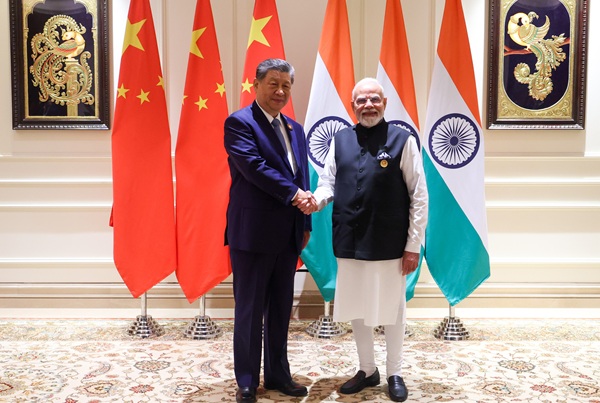
For both the NDA and the INDIA bloc, the objective is straightforward: expand the map and improve bargaining power. But while the NDA enters these contests with organisational cohesion, the opposition’s internal contradictions are on full display. In West Bengal, the TMC and Congress remain estranged. In Kerala, the Left and Congress fight each other as fiercely as they fight the BJP. That fragmentation may matter as much as voter sentiment.
Assam: BJP's Pro-Incumbency Test
Assam is the BJP’s most defensible bastion and its most revealing test. In power for a decade—first under Sarbananda Sonowal and now under Himanta Biswa Sarma—the party is betting that incumbency can be sold as performance.
The transformation has been swift. From just five seats in 2011, the BJP surged to 60 in 2016, ending 15 years of Congress rule, and repeated the tally in 2021. Congress, meanwhile, collapsed from 78 seats to 29 over the same period. Sarma, a former Congressman with sharp political instincts, has emerged as the BJP’s most effective eastern satrap—combining ideological clarity with administrative visibility.
The party is aiming high. Sarma has publicly projected an NDA tally of 100+ seats following delimitation, which has reportedly reduced Muslim-influenced constituencies from around 41 to 26. With minorities accounting for roughly 40% of Assam’s population, this redraw has reshaped electoral calculations.
Illegal immigration from Bangladesh continues to dominate political conversations, alongside unemployment, corruption and development gaps. The opposition remains splintered. Congress has handed the reins to Gaurav Gogoi, but his parliamentary responsibilities limit his bandwidth. Ethnic parties such as the AGP, BPF and UPPL retain influence in pockets, while AIUDF risks fragmenting the minority vote. Assam is heading into a polarised, asymmetric contest.
Seat Tally Over the Years (Source: ECI)
|
2011 |
2016 |
2021 |
|
|
BJP |
5 |
60 |
60 |
|
AGP |
10 |
14 |
9 |
|
BPF |
12 |
12 |
4 |
|
UPPL |
0 |
0 |
6 |
|
INC |
78 |
26 |
29 |
|
AIUDF |
18 |
13 |
16 |
|
OTH |
3 |
1 |
2 |
|
126 |
126 |
126 |
Kerala: Will the Left Secure a Historic Hattrick?
Kerala is different.
The Left Democratic Front, led by the CPI(M) and Pinarayi Vijayan, has governed since 2016 and broke a 35-year tradition of alternating governments by winning again in 2021. That alone makes the 2026 election exceptional. A second consecutive re-election would push it into truly rare territory.
The United Democratic Front, anchored by Congress, remains the principal challenger and traditionally draws strength from Kerala’s large minority population—about 45%, with Muslims and Christians forming a decisive bloc. Allies such as the IUML remain loyal, though the once-monolithic Kerala Congress has splintered across camps.
Signals of voter fatigue are visible. The December 2025 local body elections delivered a clear boost to the UDF. Economic anxieties—unemployment, price rise and post-COVID stagnation—have sharpened discontent, particularly as remittance flows slowed. The Sabarimala gold theft case has further unsettled the LDF, with allegations of investigative lapses and political interference.
Vijayan’s authority within the CPI(M) remains intact, but questions around succession linger. Congress, on the other hand, is struggling with open factionalism. Senior leaders pull in different directions, while Shashi Tharoor’s visible disengagement hints at deeper unease.
Kerala now stands at a fork in the road. Will history repeat with UDF ousting the incumbent, ending the Left era, or can LDF defy trends for a rare hattrick as Congress stumbles like in Haryana? A high-stakes battle awaits.
Seat Tally Over the Years (Source: ECI)
|
2011 |
2016 |
2021 |
|
|
LDF (CPM+) |
68 |
91 |
99 |
|
UDF (INC+) |
72 |
47 |
41 |
|
NDA (BJP+) |
0 |
1 |
0 |
|
OTH |
0 |
1 |
0 |
|
140 |
140 |
140 |
West Bengal: TMC vs BJP in a Polarized Showdown
West Bengal promises the most combustible contest of 2026. Mamata Banerjee’s Trinamool Congress faces its toughest election since 2011, challenged by an emboldened BJP and weighed down by visible anti-incumbency.
The collapse of the Left and Congress—both reduced to zero seats in 2021—has left the battlefield starkly bipolar. Since then, a series of scandals has chipped away at the TMC’s moral authority: the teachers’ recruitment scam, the Sandeshkhali episode, and the RG Kar rape-murder case, which reignited concerns over law and order and women’s safety.
The BJP has sharpened its attack around economic underperformance, governance failures and illegal immigration from Bangladesh, including demands for voter list scrutiny through the Special Intensive Revision process. The rhetoric has polarised the electorate further.
The TMC’s arithmetic remains clear-eyed. With Muslims forming about 27% of the population (as per the 2011 consensus)—and dominating close to 90 constituencies—the party relies on overwhelming minority consolidation and selective gains in Hindu-majority seats. Mamata Banerjee continues to deploy Bengali identity and anti-“outsider” messaging to blunt the BJP’s advance.
The BJP, under new state president Samik Bhattacharya, is attempting a tonal shift—seeking acceptance among the bhadralok while mobilising Matua and OBC communities. Whether anti-incumbency breaks through entrenched identity politics will decide the contest.
Seat Tally Over the Years (Source: ECI)
|
2011 |
2016 |
2021 |
|
|
Left Front |
62 |
32 |
0 |
|
TMC |
184 |
211 |
213 |
|
INC |
40 |
44 |
0 |
|
BJP+ |
0 |
6 |
77 |
|
OTH |
8 |
1 |
2 |
|
294 |
294 |
292 |
Tamil Nadu: A Triangular Battle with Vijay's Entry
The 234-member assembly election has evolved into a triangular contest involving the DMK-led alliance, the AIADMK front and the wildcard entry of actor Vijay’s Tamilaga Vettri Kazhagam. Alliances matter deeply here, often more than personalities.
The DMK, led by M.K. Stalin, enters with a stable, familiar coalition—Congress, the Left, VCK and MDMK—while projecting administrative competence and welfare delivery. AIADMK, shaken after 2021, has widened its tent by re-aligning with the BJP and bringing in the PMK, AMMK and Moopanar’s TMC to prevent vote fragmentation.
Vijay’s TVK has electrified the campaign with massive crowds and sharp rhetoric against both Dravidian majors. His promise of a corruption-free alternative has resonated, though the fatal stampede at a 2025 Karur rally—and the subsequent CBI probe—has introduced an element of risk.
AIADMK is campaigning hard on corruption, law and order and drug abuse, while the DMK leans on development, social justice and resistance to Hindi imposition. The central question remains unanswered: can Vijay convert enthusiasm into votes, or will Tamil Nadu revert to alliance-driven bipolarity?
Seat Tally Over the Years (Source: ECI)
|
PARTIES |
2011 |
2016 |
2021 |
|
AIADMK |
150 |
136 |
66 |
|
DMK |
23 |
89 |
133 |
|
INC |
0 |
8 |
18 |
|
PMK |
0 |
0 |
5 |
|
DMDK |
29 |
0 |
0 |
|
BJP |
0 |
0 |
4 |
|
LEFT |
19 |
0 |
4 |
|
OTH |
13 |
1 |
4 |
|
234 |
234 |
234 |
Puducherry broadly mirrors Tamil Nadu’s political rhythm. The AINRC–BJP alliance has governed since 2021, with statehood demands and local identity shaping voter sentiment.
In sum, these elections are less about immediate seat counts and more about momentum. They will expose which parties can manage incumbency, which alliances can hold, and which narratives still connect. Long before 2029, the direction of Indian politics will begin to show here.
More From BasisPoint