.png)

Rajesh Ramachandran is a former Editor-in-Chief of The Tribune group of newspapers and Outlook magazine.
April 29, 2026 at 11:17 AM IST
At the end of polling in West Bengal, the government is likely to be staring at widening deficits, as reflected in tax receipts. West Bengal, Tamil Nadu, Kerala, Assam and Puducherry together account for about 116 Lok Sabha seats, where the going has been extremely tough for the BJP. Except in Assam, where it is in power, the BJP is in a straight fight with the incumbent only in West Bengal. Yet, the party has put in a massive effort, suspending major policy decisions until the polls.
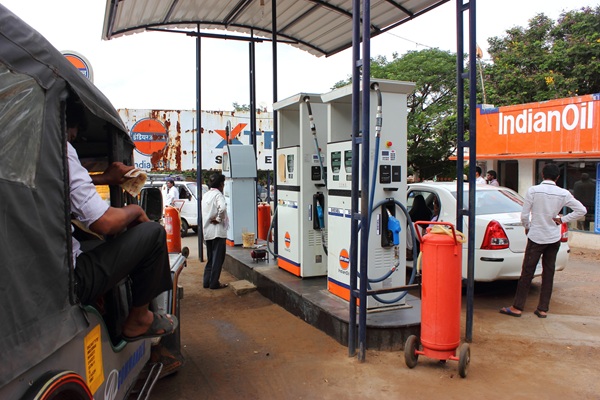
Now is the time to recalibrate. The excise duty cuts of ₹10 per litre for petrol and diesel, announced on March 27, have led to a significant revenue loss of about ₹70 billion in just 15 days. Yet, this is hardly a consolation for oil marketing companies that have been absorbing mounting losses from surging crude prices. Brent crude prices rose from about $72 before the war to a high of $120 in early March. Such a sharp oil shock typically calls for policy action, which has been deferred until the end of polling on April 29.
However, the government has only a small window until the next round of assembly polls in Uttar Pradesh, Punjab, Uttarakhand, Manipur, and Goa. Going by the 2022 poll schedule, the notification, the final bell for full-fledged electioneering, could be issued as early as January 2027, with polling slated for February-March and votes to be counted in the second week of March. This schedule could get pushed back by a couple of months at most. But that leaves only a brief interval to tighten the belt before any expansion in welfare spending.
Except for Punjab, the other four states are governed by the BJP, and the stakes are high, particularly in Uttar Pradesh. The most populous and most electorally significant state has had the Hindutva poster boy Yogi Adityanath as its Chief Minister since March 2017. For the BJP, losing Uttar Pradesh would be akin to losing the moral right to govern India, and for that reason alone, the party would be extra cautious about taking any step that could cause hardship to the electorate.
Poll Quandary
Mega infrastructure projects and capex spending could get curtailed, but trimming revenue expenditure and increased borrowing may not resolve the burgeoning oil bill. This would require diversification of sources away from the US-influenced pricing system towards Russian oil and Iran’s shadow fleet, possibly paid for in yuan. With Russian President Vladimir Putin in St Petersburg on Monday assuring Iranian Foreign Minister Abbas Araghchi that he would do everything that serves Iran’s interests to achieve peace, the geopolitical game surrounding the West Asia conflict has grown more complex. Meanwhile, the UAE has stepped out of OPEC, putting greater pressure on Saudi Arabia.
If Iran has indeed begun transporting oil by rail to China, it has made US efforts to dominate the world’s oil flows all the more difficult. Sure, a rail network would never be able to transport the bulk that large oil tankers carry. But this is a glimpse of China preparing for a war in West Asia, which could lead to the closure of the Strait of Hormuz. US protestations against Chinese support for Iranian war efforts and the threat of a 100% tariff have not made any difference to the steady, yet silent, support.
In this context, the Indian effort should focus on playing the geopolitical game to its advantage rather than on increasing retail energy prices. Russian oil could, to a great extent, cushion the steep losses of Indian OMCs. In any case, it has become imperative for India to find alternative energy sources, as the West Asian conflict drags on, with social media speculating that Donald Trump will unilaterally declare victory and step off the kinetic accelerator. His shifting positions on the ceasefire and escalation have heightened global uncertainty, pushing India to secure more resilient supply chains.
It is neither logical nor sustainable to keep raising retail prices at the whims of external actors or crude oil speculators. The Indian government has been forced to explore newer supply channels that could withstand geopolitical disruptions. If not, ordinary citizens would have to pay the price of global conflicts and supply shocks.
In that sense, the next round of assembly elections, seven months later, could act as a constraint against the Indian government aligning too closely with US-Israel positions in West Asia. Prime Minister Narendra Modi’s ill-timed visit to Israel days before the attack on Iran had robbed India of its sheen as a global arbiter of peace, but it did not dent his image significantly back home.
But he cannot afford runaway inflation and joblessness now. The unemployment rate, according to CMIE data for March, is 6.9% and inflation, according to the government, is 3.4%. This is not the time to have a fertiliser crisis during the Kharif sowing season or consumer unrest. The recent workers’ protest in Noida points to simmering urban working-class discontent below the surface. Large investments, if not forthcoming from the West, then from China, must be expedited. This is as big a crisis as one can anticipate, and it needs pragmatic solutions, not a price rise.
More From BasisPoint