.png)

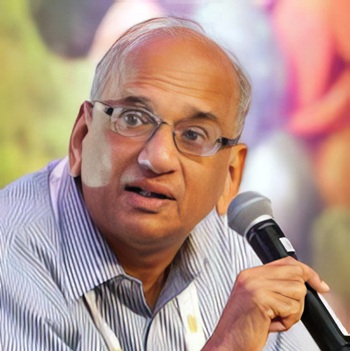
Chandrashekhar is an economist, journalist and policy commentator renowned for his expertise in agriculture, commodity markets and economic policy.
January 16, 2026 at 11:25 AM IST
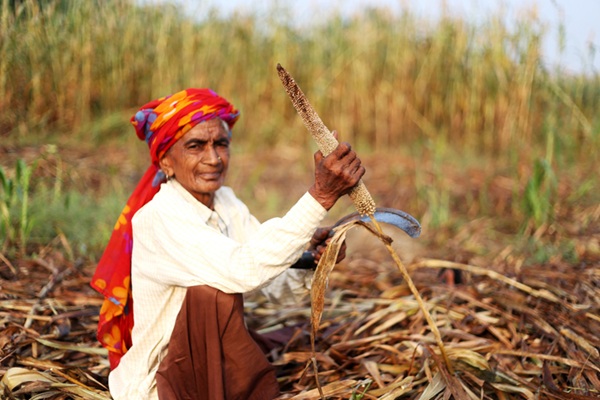
India grows more millets than any other country, yet treats them like a nutritional afterthought. That contradiction sits at the heart of the millet story: abundant production, earnest policy intent, lavish publicity—and stubbornly modest consumption.
In 2024–25, India produced a record 18.6 million tonnes of millets, now rechristened nutri-cereals or Shree Anna. Until the Green Revolution of the 1960s and 1970s, millets were everyday food for a vast majority of Indians. Then rice and wheat were crowned as “fine cereals”, pushing millets to the margins despite their superior nutritional profile. The slide in consumption has never really been arrested.
India’s diplomatic push succeeded in getting 2023 declared the International Year of Millets. The celebrations were expansive and expensive. By anecdotal estimates, over ₹12 billion was spent to promote millet production, consumption and exports. Conferences were convened, mahotsavs organised across districts in major growing states, trade fairs attended, and World Food India 2023 was framed with millets as a star attraction. An ₹8 billion Production Linked Incentive scheme was announced to spur manufacturing of millet-based products. Several large food companies launched new lines and advertised them heavily.
Two years on, what remains once the banners have been folded away?
There are positives. Millets have been introduced into welfare schemes such as PM-Poshan and the public distribution system in some states. That is not trivial. But beyond these pockets, the structural constraints that have dogged millets for decades remain firmly in place.
Structural Reality
Processing is another choke point. Millets need specialised milling to remove the tough outer husk. Once converted into flour, they deteriorate quickly due to enzymatic activity, leading to rancidity and short shelf-life. These are not minor technicalities; they complicate logistics, inflate costs and deter scale.
In cities, millet-based foods are often positioned as premium health products, priced beyond the comfort of the average middle-class household. In rural India, the irony is sharper. Cheap or free rice and wheat distributed through welfare channels make millets an unattractive purchase for the very communities that once cultivated and consumed them—and who now need them most to improve nutrition outcomes.
Research and development is the missing muscle. Investment in food technology is essential to create millet products that are easy to cook, tasty, and stable. Ready-to-cook and ready-to-eat options must have credible shelf-life, which in turn demands high-quality packaging—vacuum sealing or gas flushing, not jugaad. This is where innovation, not nostalgia, must do the heavy lifting.
The market potential is vast. There is scope for millet-based foods for children, teenagers, working adults, the elderly, sportspersons, and patients in recovery. Energy bars, snacks, breakfast foods and therapeutic diets are all natural fits. But potential does not convert itself into demand.
Millets must be made fashionable without becoming elitist—marketed as smart foods or superfoods, not museum pieces from a virtuous past. That requires consistency, affordability and taste, not just slogans.
If India is serious beyond the International Year optics, it must adopt an ecosystem approach. Millets are not just food; they are feed, fuel and ferment—the four Fs. Production and consumption must grow in lockstep. Critically, production should be driven by real demand so that value flows back to primary producers, not just processors and advertisers.
Policymakers have clear work to do. Engagement with farmers, especially through Farmer Producer Organisations, is essential to understand constraints around inputs, agronomy, quality and costs. Input suppliers and banks need clear signals about farmer requirements. Market linkages between FPOs and processors must be actively facilitated. Large companies should be nudged towards contract farming, not merely brand-building.
A structured research–industry interface, with startups in the mix, could accelerate solutions. Organic millets also offer an export opportunity, particularly in Western markets where regulations now favour sustainably produced food. With proper traceability and compliance, these markets are accessible.
The real test is simple. Will millets return to Indian plates after the applause has faded? Unless policy moves from spectacle to systems, Shree Anna will remain a well-meaning mirage—visible, celebrated, and ultimately out of reach.
More From BasisPoint