.png)


Krishnadevan is Editorial Director at BasisPoint Insight. He has worked in the equity markets, and been a journalist at ET, AFX News, Reuters TV and Cogencis.
March 19, 2026 at 5:19 AM IST
Jaguar built its soul on the gloriously guilty roar of an internal combustion engine and is now betting that mythology transfers to a car that makes no sound at all. PB Balaji, the new chief executive of Jaguar Land Rover, told The Economic Times that while most EVs maximise space and efficiency, Jaguar deliberately did the opposite, prioritising the thrill of driving above all else. Auto enthusiasts are not convinced, arguing it is a structural misread of who buys luxury cars and, more pointedly, why they enjoy them.
JLR's EBITDA crashed 97% to £33 million in the December quarter, revenue fell 39% to £4.5 billion, and the company's full-year EBIT guidance sits at a threadbare 0-2%. That number is not a transition cost. That is a company running on fumes while it bets the house on unproven demand. JLR also decided, in March, to defer a potential US bond sale due to market volatility, even as US high-grade debt markets saw issuances of over $115 billion.
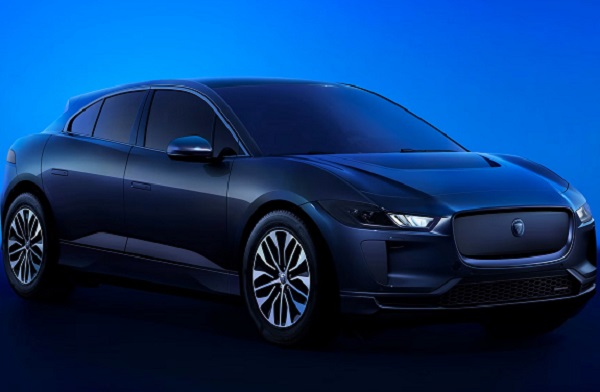
The structural problem at JLR is one of identity misalignment, not product quality. Jaguar halted all production in September 2025, stopped selling cars, erased its leaping-cat logo, and relaunched at Art Basel in Miami with a concept called the Type 00, painted in a shade described as Miami Pink.
The brand's own strategy document called it "Copy Nothing." Notice what that phrase implies about the customer Jaguar is now pursuing. It is not the burgundy-corduroyed loyalist who bought three E-Types and a pair of XJs.
It is someone who has never owned a Jaguar and may never have wanted one. Their attention is now being competed for by Tesla, Porsche, Lucid, BMW's i-series, and every other aspirational electric brand already entrenched in that segment.
When Porsche launched the Taycan in 2019, it kept the 911 in production alongside it, preserving the emotional anchor while extending the brand forward. Jaguar has no such hedge. It killed the combustion range entirely, and is performing the trapeze act without a safety net.
For perspective, Porsche, with the full weight of its racing heritage and a functioning petrol lineup, still posted a profit slump in 2025 as luxury EV demand faltered across Europe. Jaguar is a late entrant, with less goodwill, no transitional volume, and a parent company, Tata Motors Passenger Vehicle, that reported a consolidated loss of ₹34.86 billion in October-December.
One must give Balaji his due because the case for exclusivity has logic to it. He could be correct that exclusivity is the only durable moat in premium automotive, pointing out that Range Rover owners do not think in cycles, with many of them on their fourth Range Rover or Defender.
If the new Jaguar can command a price point north of $100,000, reach a buyer who is indifferent to the brand's history, and sell in volumes deliberately kept scarce, the unit economics may work regardless of broader EV market softness.
The logic holds, until it meets the market it was written for. Luxury EV buyers are proving more price-sensitive and more hesitant than earlier projected, which is precisely the condition that makes Jaguar's case unravel.
Jaguar contributes 75 to 80% of Tata Motors Passenger Vehicle revenues. That concentration can be dangerous. A stumble at the Jaguar EV launch does not wound one brand inside a diversified group. It destabilises the group's entire revenue structure.
Balaji said he is "patient about results but impatient about action." The market will not share his patience. JLR is not just too big to fail. It is too central to Tata Motors Passenger Vehicle's automotive future to be allowed a slow recovery if the Type 00 lands badly.
Any delay, any muted reception, any signal that the new buyer profile does not materialise at the volumes required, and Tata Motors faces a capital reallocation problem that no amount of procurement reform or board-level accountability can paper over.
The leaper has left the branch, and there is no branch to return to.
More From BasisPoint