.png)

Indian Oil’s Hefty Green Transition Bill Comes With Struggling Payback
The prospects of IOC's green energy initiative appear shaky, forcing costly capital choices between profitable fossil operations and renewables commitments.

Dev Chandrasekhar advises corporates on big picture narratives relating to strategy, markets, and policy.
January 16, 2026 at 8:36 AM IST
Indian Oil Corporation's sustainable aviation fuel plant launches within weeks. Its green hydrogen facility follows in late 2027. For years, India's largest refiner spoke confidently about transformation. Now those promises meet reality in the form of ₹1.66 trillion in capital deployment over five years plus another ₹2.5 trillion earmarked for energy transition. Decisions that will either validate the plan or expose it as ill-conceived.
The timing creates an uncomfortable paradox. In the April-June 2025 quarter, IOC reversed year-earlier losses with ₹78 billion net profit . Gross refining margins surged to $10.6 per barrel from $1.59. September hit $19.6. EBITDA beat estimates by 36%. But those margins reflected temporary dislocations from lower crude costs and inventory gains. Refining margins are cyclical and large regional premiums rarely persist once crude prices stabilize.
The cost comparison for green hydrogen is stark. Grey hydrogen production costs have been $1.5–$1.6 per kg. IOC’s green hydrogen plant at Panipat contracted in May 2025 at $4.60 per kg for a market that does not exist. Green hydrogen costs ₹3.82 per km travelled. CNG delivers ₹2.89 per km. LPG averages ₹3.00 per km. Battery electric vehicles charging at home cost ₹0.80 to ₹1.00 per km. Green hydrogen is 32% more expensive than CNG and nearly four times the running cost of electric vehicles.
Chairman Arvinder Singh Sahney acknowledges the circular trap. He calls it a chicken and egg story. Without automobiles, why should the hydrogen plant be? If the hydrogen plant is not, then why the automotive? His answer is that IOC will build both supply and demand simultaneously. But no hydrogen vehicle infrastructure exists in India. Automotive manufacturers will not commit without guaranteed fuel availability. Grey hydrogen, by contrast, enjoys captive demand. India's refineries consume nearly 3 million tonnes annually to desulphurise diesel and upgrade heavy crude into lighter, more valuable products. A market that generates consistent margins without infrastructure risk. IOC is betting billions on green hydrogen whilst shareholders watch grey hydrogen print money.
The sustainable aviation fuel facility at Panipat presents an equally vexing challenge. Initial production relies on used cooking oil. Transitioning to ethanol or bio waste puts IOC in competition with its own compressed biogas and ethanol blending operations. IOC controls the largest share of India's aviation fuel market where it earns healthy margins. SAF production costs are significantly higher than conventional jet fuel. Convincing airlines to pay premium prices will require government mandates or IOC subsidising the gap.
Project SPRINT illustrates the whiplash. The programme balances Strengthening the Core and Powering the Transition. Launched during the margin crisis, those dual mandates now appear contradictory. At Panipat and Paradip refineries, IOC achieves 15% to 20% petrochemical intensity and targets 25%. The company average across all refineries is at just 5% to 6%. IOC plans to raise this to 10% to 12%. This shift adds $1 to $1.5 per barrel in margins because petrochemicals command higher prices than commodity fuels. But this optimisation competes for capital with green hydrogen and SAF projects at those same refineries.
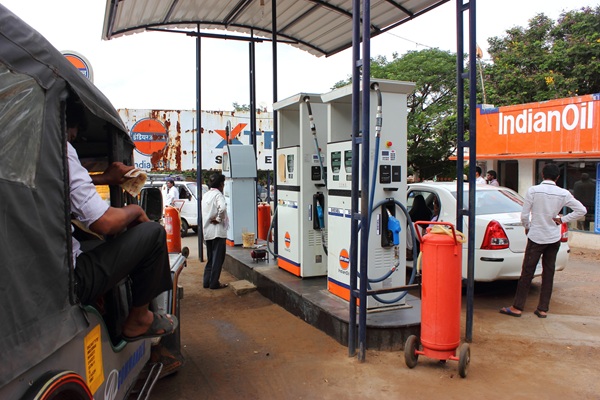
India imports just under 90% of its crude oil requirement. IOC is attempting to moderate demand by reimagining its over 41,600 retail outlets to offer CNG, EV charging, and eventually hydrogen. But unlike fossil fuels where IOC controls the entire value chain from refining to retail, EV charging offers limited margins. This requires capital that competes directly with profitable refining operations.
When margins are weak companies have little capital for alternatives. When margins are strong they have little incentive. IOC experienced the first trap during loss-making quarters. The margin recovery presented the second. Chairman Sahney cites healthy demand growth: petrol expanding 5% to 6%, aviation fuel surging 8% to 10%. But that strength makes green investments harder to justify.
India’s energy demand will nearly double by 2040. IOC commands a third a third of the country's refining capacity and nearly half of petroleum product sales. Yet Chairman Sahney acknowledges the tension. Whilst total energy requirements will reach 2X, the present form of fossil energy will not grow by double. Other energy sources must expand for IOC to maintain its dominant position in India's evolving energy scene.
IOC’s binary challenge is this: if margins stay elevated then green investments look like value destruction; if margins collapse little capital will be available for transformation.
The coming year might clarify whether IOC’s capital decisions towards the green road to transformation matches management rhetoric or market reality.
More From BasisPoint