.png)

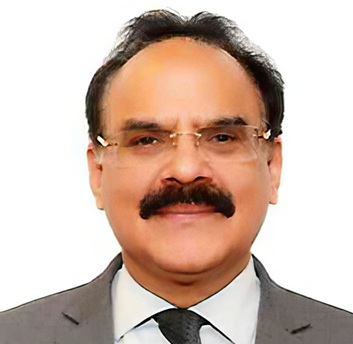
Dr Arvind Mayaram is a former Finance Secretary to the Government of India, a senior policy advisor, and teaches public policy. He is also Chairman of the Institute of Development Studies, Jaipur.
January 19, 2026 at 3:09 AM IST
For economic policymakers, foreign policy is not an exercise in posture or positioning. It is a determinant of economic growth. The central question for India’s statecraft today is not where it stands in an unsettled global order, but whether its external choices expand or constrain the conditions required for rapid, sustained growth. Strategic autonomy, seen through this lens, is not an ideological inheritance. It is the policy space needed to grow.
India’s growth imperative is unusually stark. It must generate employment at scale, absorb a rapidly urbanising population, finance massive investments in infrastructure and the energy transition, and move decisively up the technological ladder—within a compressed time frame. Failure on this front would overwhelm any diplomatic success. Growth is not one objective among many; it is the binding constraint within which all others must operate.
A World Where Economics Has Become a Weapon
This is why India’s external engagements must be judged not by symbolism, but by their growth consequences. Dependencies alter bargaining power. The overriding concern is whether today’s decisions preserve the flexibility required to sustain growth tomorrow.
Constraint Management Under Growth Pressure
Power increasingly operates through economic channels. Tariffs, export controls, sanctions, and technology restrictions do more than signal intent; they shape investment decisions, productivity growth, and long-term competitiveness. Their cumulative effects are slow but decisive. For India, whose development trajectory depends on openness, scale, and technological upgrading, this linkage is existential.
China: Risk Management, Not a Binary Choice
Security Competition and the Cost of Preparedness
Domestic politics compound these constraints. When foreign policy becomes a vehicle for domestic mobilisation, policy flexibility declines. Recalibration becomes politically costly even when economic conditions change. A growth-oriented policy requires adjustment to data, shocks, and opportunities. Centralisation may speed decisions, but it can weaken feedback loops essential for correction.
When Personality Replaces Process
Ego-aware diplomacy, properly understood, is therefore not a strategy to be emulated but a risk to be managed. Personality-driven diplomacy increases volatility, weakens predictability, and raises uncertainty premiums across the global economy. Investment is deferred, supply chains are defensively rerouted, and partnerships become fragile. For an economy pursuing scale and stability, this volatility carries real cost.
Why Institutions Matter More Than Optics
Institutionalisation matters more than personal rapport. Agreements embedded in law and process provide predictability—a critical input into growth. Personalised diplomacy may ease momentary frictions, but durable outcomes depend on rules that survive leadership cycles.
Beyond Insulation: Moral Leadership and BRICS
Yet insulation alone is insufficient. India’s own history suggests that growth and moral leadership need not be mutually exclusive. In the early Cold War, India leveraged normative leadership to expand strategic space despite material weakness. Whether a measure of that leadership can again serve growth—by shaping a more predictable and inclusive external environment—remains an open question.
BRICS offers a test case. Conceived as a plural, reformist platform, it once promised to amplify the voice of growth-seeking economies. Power asymmetry has narrowed its agenda, with China increasingly driving it, but the platform remains salvageable. India’s opportunity lies not in contesting dominance, but in exercising quiet, agenda-based leadership on growth-relevant public goods: development finance norms, debt sustainability, health systems, climate adaptation, and institutional reform. Such leadership is slow and understated, but it can reduce uncertainty and widen opportunity.
Autonomy as the Freedom to Grow
In a world defined less by balance than by volatility, the central test of statecraft is not assertion but agency. Countries will be judged not by how loudly they speak, but by how consistently they grow. Autonomy, in the end, is about retaining the freedom to develop at scale and at speed.
More From BasisPoint