.png)


Nilanjan Banik is a Professor at the School of Management, Mahindra University, specialising in trade, market structure, and development economics.
March 10, 2026 at 9:52 AM IST
India wants to build a globally competitive electric vehicle industry. Yet the policy meant to support that ambition may be sidelining the very innovation it needs. The Production-Linked Incentive scheme has helped expand manufacturing and draw investment, but in practice it rewards scale and often leaves technology-led firms outside the incentive net.
Since its launch, it has catalysed nearly ₹2 trillion in investments across 14 sectors. Incremental production and sales have crossed ₹18.7 trillion, while more than 1.26 million jobs have been generated. The shift is also visible in India’s export mix. Higher-value engineering goods and electronics are steadily replacing low-value commodities in India’s export basket, with smartphones and automobiles now among the country’s leading export categories.
But these headline gains mask a deeper policy tension.
Take the automobile PLI scheme. With an outlay of about ₹260 billion, it signals the government’s ambition to turn India into a global hub for electric mobility. Yet despite the scale of that commitment, the scheme is falling short of its most important objective: encouraging indigenous innovation in electric vehicles.
The problem lies less in funding than in design. The current framework triggers incentives mainly through incremental sales over a base year. On paper, the approach appears neutral since all manufacturers are treated alike. In practice, it favours firms that can scale quickly, while those investing heavily in new technology find themselves at a disadvantage.
For deep-tech EV companies, early output rarely appears in sales figures. Their first years are spent building battery management systems, refining power electronics and designing motors. Progress is measured in engineering capability and intellectual property rather than vehicles sold. By tying incentives largely to sales thresholds, the policy delays support until after the most expensive phase of innovation has already been completed.
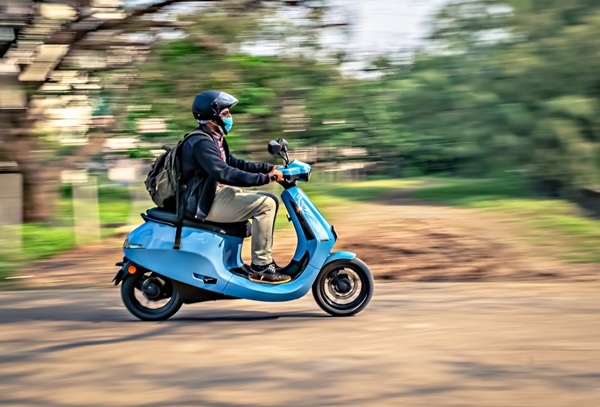
Evidence from the electric two-wheeler market illustrates the distortion. An impact assessment by the Centre for Digital Economy Policy Research shows E2W sales rising fortyfold since 2018-19 to more than 1.1 million units in 2025-26. PLI beneficiaries such as Ola Electric, TVS Motor, Bajaj Auto and Hero MotoCorp captured roughly 75% market share by 2025. Non-PLI manufacturers, meanwhile, saw growth collapse from 407% in 2021-22 to –11% by 2024-25, weighed down by a 13–16% cost disadvantage relative to firms receiving incentives.
Innovation Gap
Exports tell a similar story. Nearly 77% of electric two-wheeler exports come from models outside the PLI framework, yet overall shipments remain modest. Without stronger technological differentiation, India risks steadily losing overseas markets to Chinese competitors such as Yadea.
The scheme’s eligibility rules tighten the squeeze further. A turnover threshold of ₹100 billion effectively shuts out most deep-tech EV startups, many of which spend years refining product safety, engineering capability and technology before pursuing scale.
The PLI framework, however, expects both scale and localisation upfront. Incentives arrive only after high turnover and stringent Domestic Value Addition norms are met, conditions that many young innovators cannot satisfy in their early years.
Many startups already comply with localisation norms without the benefit of subsidies. They are doing precisely what the policy seeks to encourage, but without recognition or financial support. In effect, the eligibility rules operate as domestic non-tariff barriers that restrict participation by firms building indigenous technology.
Execution has compounded the problem. Of the roughly ₹38 billion allocated under the auto PLI so far, only about ₹23 billion has been disbursed. Several approved manufacturers have struggled to meet their targets, leaving funds idle even as new entrants remain outside the scheme. The utilisation numbers speak for themselves: barely 30% in the first year and around 60% in the second.
Yet the government recently doubled the auto and component PLI allocation to ₹59 billion. With utilisation already lagging and close to 40% of the budget underused, additional funding risks flowing into a structure that continues to sideline firms capable of technological breakthroughs.
Employment numbers reinforce the concern. The scheme initially aimed to create 150,000 jobs, but official data suggests only about 48,000 have materialised so far. Investments without a corresponding rise in employment are increasingly portrayed as success, even as the broader industrial ecosystem remains constrained.
None of this diminishes the value of the PLI experiment. The programme has energised India’s manufacturing ambitions and shown that targeted incentives can reshape production patterns. But the EV sector also highlights the limits of a uniform policy design.
A more balanced structure is needed. One tier can continue rewarding large manufacturers on the basis of sales and production volumes. Alongside it, a parallel window should recognise firms investing deeply in research and engineering. Measures such as R&D intensity, intellectual property creation and technological capability must carry weight alongside units sold.
India’s electric vehicle ambitions cannot be realised through assembly alone. Industries built purely on scale tend to struggle when global cost curves shift, while those built on proprietary technology compete through design, reliability and intellectual property.
India spends roughly 0.7% of GDP on R&D, compared with China’s 3.75%. That gap helps explain Beijing’s manufacturing dominance across multiple sectors. If India is serious about becoming an EV powerhouse, policy must reward laboratories as much as factories, not just production lines.
More From BasisPoint