The most ambitious growth plans in India's diagnostics industry are increasingly aimed at people who are not ill.
That is an unusual place for a healthcare business to find its future. Leading listed diagnostics companies suggest that the sector is quietly shifting away from a model built around disease and towards one built around engagement, aspiration, and consumer behaviour.
The approach is spread across different companies, but points in the same direction. Dr Lal Path Labs is investing in oncogenomics, precision medicine and Sovaaka, its AI-enabled premium wellness platform. Vijaya Diagnostic plans to launch genomic testing even though management acknowledges it is unlikely to contribute materially to revenues in the near term. Metropolis Healthcare continues to expand its speciality diagnostics capabilities while emphasising customer engagement, network productivity and operating leverage.
Taken individually, these look like product decisions. Taken together, they look like a change in the business model.
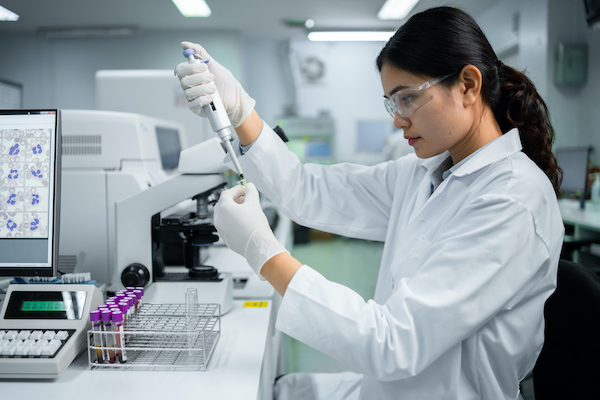
Diagnostics has traditionally been a transactional industry. Patients fell ill, doctors prescribed tests and laboratories processed samples. Revenue depended on volume, network expansion and the ability to move samples efficiently through increasingly sophisticated infrastructure.
That business model continues to grow. Vijaya continues to talk about capacity additions, new hubs and volume-led growth. Metropolis is extracting more throughput from an existing network of over 5,000 collection centres and 212 laboratories. Dr Lal added 14 laboratories and more than 1,100 collection centres in 2025-26.
What is changing is how companies are leveraging this network.
Subscription Model
Indian diagnostic labs have shifted from a transactional, doctor-prescribed illness model into a direct-to-consumer, subscription-based wellness model that prioritises lifelong customer retention over occasional patient volume.
The industry's language increasingly resembles that of consumer businesses rather than healthcare providers. Wellness, preventive screening, precision health and personalised diagnostics appear with growing frequency in marketing campaigns and customer outreach programmes.
These categories are attractive not simply because they generate revenue, but because they create recurring engagement with customers who may not otherwise need to visit a laboratory.
A patient who walks into a diagnostic centre after falling ill may generate revenue once or twice a year. A health-conscious executive purchasing annual wellness packages, specialised screenings and genomic assessments can become a recurring source of revenue for years.
The closest comparison may be with how the wealth management business has grown.
A generation ago, wealth managers largely sold products. Today, the industry's most valuable firms sell relationships. Mutual funds, insurance products and alternative investments are tools used to deepen customer engagement and increase lifetime value.
Diagnostics appears to be moving in the same direction. The blood test becomes the entry point, wellness programmes become the engagement layer and genomic testing becomes the premium offering. The objective shifts from maximising the value of a single transaction to maximising the value of the customer relationship.
That helps explain the industry's growing fascination with premiumisation.
Profitability Flywheel
Genomics, precision medicine and concierge-style wellness services are not designed to solve an access problem. They are designed to improve profitability. Routine diagnostics is a competitive business with limited pricing flexibility. Several diagnostic companies continue to emphasise affordability and market share rather than pricing power.
Higher-end health services offer a different economic proposition. They increase revenue per customer without requiring a proportionate increase in infrastructure. The marginal economics of selling an additional genomic test to an existing customer are often more attractive than acquiring a new customer for a routine blood test.
The opportunity has not gone unnoticed. Online platforms such as PharmEasy and Apollo 24/7 continue to use pricing to acquire customers and test demand across markets. Yet incumbents retain advantages that are difficult to replicate through discounts alone.
Large laboratory networks, trusted brands and established relationships with consumers remain important differentiators in a category where accuracy and credibility matter as much as convenience.
A more formidable competitive threat may come from hospital chains. As preventive healthcare, wellness screening and specialised diagnostics become larger profit pools, hospitals have an incentive to move beyond their traditional patient base and deepen their presence in retail diagnostics. Unlike online platforms, they are already inside the healthcare ecosystem and often possess both clinical credibility and captive customer relationships.
The diagnostic industry's future growth may therefore come less from expanding access and more from expanding aspiration. The customer is no longer asking whether they are ill. Increasingly, they are paying to understand whether they might become ill.
Investors still tend to value diagnostics companies as healthcare services businesses. The key metrics remain test volumes, collection-centre additions, laboratory utilisation and operating margins. Those metrics will continue to matter because the sector's economics are still driven by scale and operating leverage.
Yet diagnostic companies increasingly sound as though they are building consumer platforms on top of healthcare infrastructure. For this to succeed, trust, brand strength and customer retention could become as important as laboratory capacity.
The next phase of competition may not be decided by which company processes the most samples. It may be decided by which company becomes the default destination for people willing to spend money staying healthy.
In that world, the industry's most valuable customer is not the patient who arrives with a prescription, but the one who arrives without one.
.png)