.png)


Chandrika Soyantar is an investment banker and founder Director at Amarisa Capital Advisor.
April 17, 2026 at 12:09 PM IST
In physics, the three-body problem describes systems where interacting forces produce outcomes that resist simple prediction. No single equation captures all three.
India’s capex narrative is not confused. It is being read through a single lens.
Markets are collapsing distinct signals into one story and calling it a trend. Read together, they describe an economy in motion. Read in isolation, they mislead.
Indian capex investments is shaped by the interaction of economic structure and sectoral cycles.
Government, firms, households, and external sector respond differently to investment signals. On the production side are agriculture, industry, and services, each split into segments moving through cycles at different speeds.. These structures determine where capex flows, stalls, and accelerates.
India’s capex paradox resolves when separated into two cycles, strategic and broad.
The strategic cycle is forward-looking, with investment intent running ahead of demand. The broad cycle reflects realised outcomes, with investment waiting for demand. Between them, activity is visible but has not triggered expansion..
Strategic Cycle
The leading indicators show where capital intends to go.
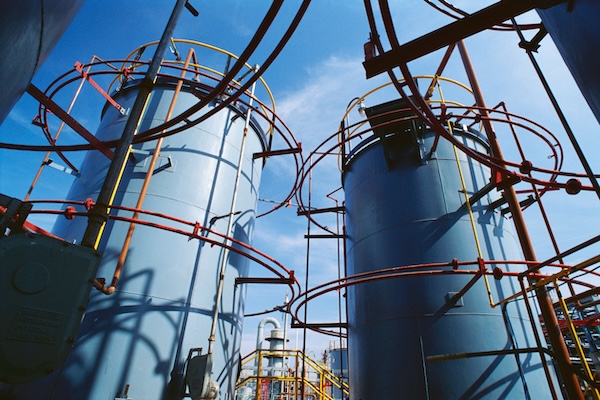
Across semiconductors, data centres, energy systems, and defence, Indian corporates are committing capital well ahead of visible demand. Investment in these sectors is not cyclical. It is strategic. Not building carries higher risk than building early. Energy security, defence capability and supply chain resilience now sit at the core of policy.
Strategic projects are forward-loaded, capital-intensive investments driven by long-term imperatives rather than near-term consumption signals. Employment and multiplier effects are slower to become visible. A data centre does not employ at scale like a garment factory or auto plant.
Funding from internal cash accruals and borrowings lifts capital work in progress and expands balance sheets.
The investment intent is rising, but activity indicators are still catching up.
Broad Cycle Waiting
Lagging indicators are restrained.
Private corporate investment remains uneven, with a clear divide between larger firms and the wider base of unlisted MSMEs. Unlisted firms drive employment and income, and mass consumption. When MSMEs pause, wages and consumption pause with them.
Income growth remains uneven, particularly in the middle. In a consumption-driven economy, income distribution shapes demand visibility and investment decisions.. Consumption is strong at the top, recovering at the lower end, but still thin in the middle. This supports margins in some segments and volumes in others, but not broad-based capacity expansion.
As a result, firms prioritise efficiency over new capacity. Cash accumulates, and balance sheets do not translate into fresh investment.
Outcomes are subdued. The broad cycle is waiting.
Coincident Reality
Between intent and outcomes lies the present
Tractor sales are strong. Two-wheelers are recovering. Rural demand is holding. All activities are real. Yet none of the activity has translated into broad-based industrial capex.
Two types of enterprise wait for different reasons.
The first are firms connected to the strategic cycle, suppliers to data centres, semiconductor fabrication units, and infrastructure projects, waiting for upstream investments to reach sufficient scale. The second are MSME, the engine of the mass economy, waiting for consumption to widen in the middle. Both are waiting for the same condition. Capacity utilisation remains below 74–75%, the threshold that typically triggers new investment.
The delay is not accidental. The strategic cycle is capital-intensive but not immediately employment-intensive.. The first-round effects expand order books and balance sheets. The second-round effects, jobs, wages, and broader consumption, take considerably longer to materialise.
While both types of enterprise wait, revenues grow, margins hold, and cash accumulates. Investment decisions remain cautious. Capital has not turned into capacity.
The process is circular. Capex generates employment. Employment provides income. Income leads to consumption. Consumption shapes demand, which shapes new investment intent. The weak middle slows down pace. When it strengthens, the economy gathers speed.
Investment is strong in technology, energy, and strategic sectors, while consumption-linked sectors expand more cautiously. This unevenness reflects different sectoral multipliers and timelines.
The question is not whether India’s capex cycle has turned. The answer depends entirely on what is being observed.
Aggregation of signals and cycles obscures. Granularity reveals.
More From BasisPoint