.png)


January 7, 2026 at 11:35 AM IST
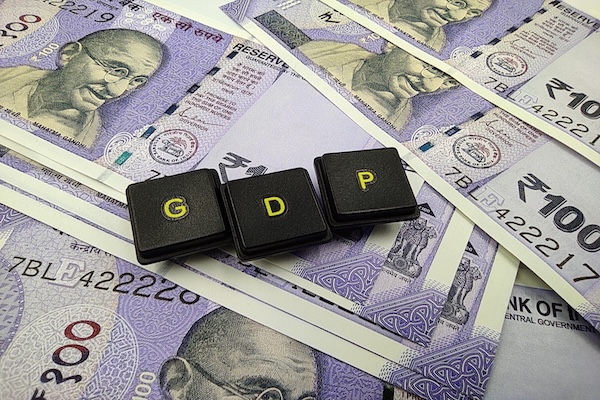
India’s economy is projected to grow 7.4% in 2025–26, accelerating from 6.5% in 2024–25, according to the first advance estimates released by the Ministry of Statistics and Programme Implementation on Friday. The estimate usually goes through major revisions, but is still important as the upcoming budget uses this figure for its projections.
The estimates point to sustained momentum across key sectors, even as external risks are expected to intensify in the coming year.
In nominal terms, GDP is projected to rise 8.0%. Real gross value added is estimated to increase 7.3%, underscoring the broad-based nature of the expansion.
The Reserve Bank of India has projected GDP growth of 7.3% for 2025–26 in its latest assessment, broadly aligning with the official estimates and reinforcing confidence in the strength of domestic demand.
Services remain the principal driver of growth. Real gross value added in services is estimated to expand strongly, led by financial, real estate and professional services, along with public administration, defence and other services, which are projected to grow 9.9%. Trade, hotels, transport, communication and broadcasting-related services are estimated to expand 7.5%, reflecting steady urban consumption and improving mobility trends.
Industrial activity is also expected to lend support, with manufacturing and construction together projected to grow 7.0% in real terms. This reflects continued investment activity and infrastructure spending, although capacity utilisation and global demand conditions will remain key variables through the year.
Growth in agriculture and allied activities is estimated at a more modest 3.1%. Electricity, gas, water supply and other utility services are projected to expand 2.1%.
On the expenditure side, private consumption is estimated to grow 7.0% in real terms, indicating stable household demand. Gross fixed capital formation is projected to rise 7.8%, compared with 7.1% in the previous year, suggesting that investment continues to underpin the growth cycle despite tighter global financial conditions.
Still, the outlook for the coming fiscal is not without risks. External headwinds are expected to intensify, with uncertainty around United States tariff policies, ongoing geopolitical tensions and uneven global growth likely to weigh on exports and capital flows. These factors could test India’s growth resilience if global financial conditions tighten further or commodity price volatility resurfaces.
Even so, the First Advance Estimates suggest India enters 2025–26 from a position of relative strength, supported by services-led growth, steady investment and contained inflation pressures. The policy challenge will be to preserve this momentum while navigating an increasingly complex global environment, where external shocks may play a larger role in shaping macroeconomic outcomes.
More From BasisPoint