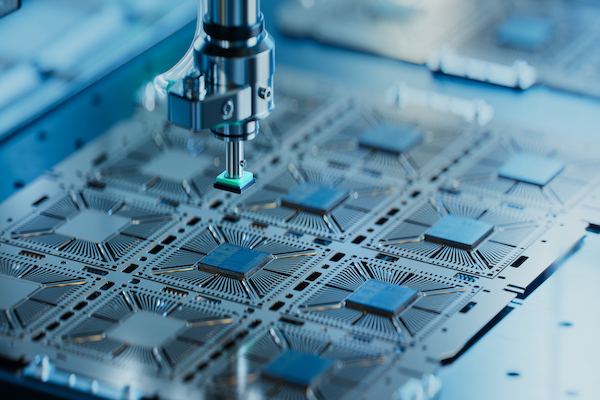
On June 30, the Finance Ministry's Expenditure Finance Committee cleared ₹1.25 trillion for India Semiconductor Mission 2.0, more than doubling the ₹760 billion committed under the first phase. Twelve semiconductor projects worth ₹1.64 trillion are already approved across six states.
The scale of this expansion raises a question beyond chips: does India coordinate its economic security programmes through a single strategy, or does it run them as separate schemes under separate ministries?
This is no longer just an industrial policy story. It is about how India protects supply chains, secures critical technologies and reduces strategic dependence. Yet, while the country's ambitions increasingly resemble those of major economies, its policymaking remains fragmented.
Global Models
The pandemic, technology export controls and competition over critical minerals have blurred the lines between trade, industry and national security. Governments that once managed these separately are now integrating them under formal economic security frameworks.
The European Union adopted its Economic Security Strategy in 2023 around three objectives: promote competitiveness, protect against risks and partner with trusted countries. It has since expanded investment screening, export controls, research security and outbound investment monitoring, while tightening foreign investment screening across all member states.
Japan took the legislative route. Its Economic Security Promotion Act, passed in 2022, covers critical materials, infrastructure protection, sensitive technologies and patent security under a dedicated Minister of Economic Security, a role created specifically for this purpose.
The United States has taken a defence-led approach. Its National Defense Industrial Strategy treats industrial capacity as a strategic asset, focusing on resilient supply chains, workforce development, procurement reform and economic deterrence through the Department of Defense. It estimated the cost at $23 billion between 2025 and 2029 for six initiatives, with a further $38.4 billion identified in the 2024-25 budget for related investments.
The institutional designs differ, but the common thread is that each country has created a framework linking industrial capability to national security.
India's Pieces
India has assembled many of the same building blocks without a coordinating doctrine.
Alongside the Semiconductor Mission, the government approved the National Critical Mineral Mission in January 2025 with a seven-year outlay of ₹343 billion to accelerate exploration and production, including ₹163 billion in government expenditure and an expected ₹180 billion from public sector investment. PM Gati Shakti, the National Logistics Policy and the Foreign Trade Policy 2023 aim to strengthen infrastructure, logistics and trade competitiveness.
Defence manufacturing adds a fifth track. As of April 2026, the Uttar Pradesh Defence Industrial Corridor had attracted investment commitments of ₹420 billion, with ₹44 billion already grounded. Meanwhile, Tamil Nadu's corridor had secured commitments worth ₹326 billion, with ₹64 billion actually invested.
Collectively, these programmes pursue a common objective: reducing India's vulnerability to external supply shocks while expanding domestic manufacturing capacity. They simply operate through separate ministries with separate priorities.
The Economic Survey 2025-26 recognised this shift, introducing the concept of "strategic indispensability". Instead of merely withstanding disruptions, India should become so deeply embedded in global value chains that partners cannot easily bypass it.
The Survey ties this to state capacity rather than resources, arguing that administrative reform, not funding, is the binding constraint on the transition. It is a doctrine. It is not an institutional mechanism.
Missing Link
The coordination gap becomes visible precisely where modern supply chains overlap. Semiconductor manufacturing depends on critical minerals, specialised equipment, logistics, electricity, skilled labour and trade policy simultaneously. A delay in one area slows the entire ecosystem.
That challenge is already visible. Of the 48 critical mineral blocks auctioned across four rounds between 2023 and 2024, only 24 received successful bids. Slower mineral development inevitably affects semiconductor manufacturing, regardless of how efficiently the chip programme itself is executed.
Today, semiconductors sit with MeitY, critical minerals with the Ministry of Mines, logistics with DPIIT, trade with the Department of Commerce and defence manufacturing with the Department of Defence Production. Coordination relies largely on inter-ministerial consultation, an arrangement designed for occasional overlap rather than constant interdependence.
The experience elsewhere suggests a formal strategy need not require another ministry. Japan added a cabinet-level coordinator while leaving implementation with existing departments. The European Union uses the European Commission to align policies that remain legally distinct. Both models strengthen coordination without disrupting institutional structures.
Strategic Signal
A published economic security strategy would do more than improve government coordination. It would also provide investors and trading partners with a clear statement of India's long-term priorities.
Large manufacturing investments unfold over years, not budgets. Tata Electronics alone is investing ₹910 billion in its Dholera fabrication plant, with first silicon targeted for December 2026. For projects of this scale, predictability matters as much as financial incentives. Investors need confidence that trade policy, investment screening, infrastructure planning and technology regulations will evolve in a coherent direction.
The EU and Japan explicitly use their economic security strategies to send that signal to markets as well as to policymakers.
India has not lacked initiative. It has approved a critical mineral mission, a semiconductor mission, a logistics policy, a trade policy and two defence corridors within three years, and backed them with over ₹3 trillion in combined outlay. What it has not done is publish a document that states how these pieces fit together when a mineral supply gap slows a fab, or when an export control decision in one country affects a packaging facility in another.
The Economic Survey has already supplied the language of strategic indispensability. The next step is giving that idea an institutional home. Without one, India risks pursuing a common objective through parallel programmes rather than a shared national strategy.
.png)