.png)


Shilpashree Venkatesh is a research professional with expertise in macroeconomics, real estate, and infrastructure, focused on growth trends.
December 12, 2025 at 11:58 AM IST
India’s last decade has been marked by an unprecedented push toward large-scale infrastructure development, as evident in the sharp rise in government capital expenditure. The central government’s total capital spending increased from ₹2.0 trillion in 2014-15 to ₹10.5 trillion in 2024-25, a more than fivefold expansion.
The share allocated to key infrastructure sectors such as transport, energy, housing, and utilities rose from 39% to 64%, underscoring a strategic focus on improving economic efficiency through physical infrastructure. Including state-level spending, total public capital expenditure now stands at roughly 3.5–4.0% of GDP, the highest in over two decades.
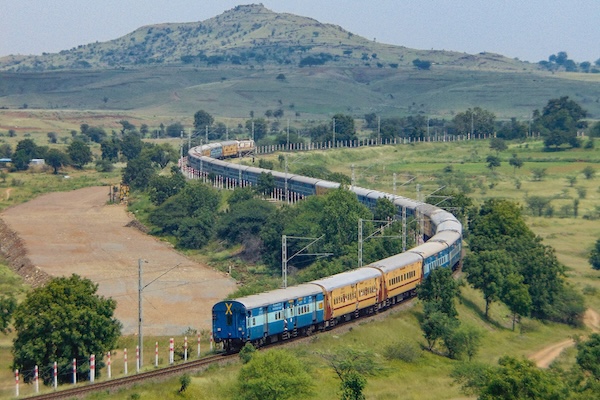
The outcomes are tangible: national highways expanded from 97,991 km to 146,204 km, metro rail networks have crossed 900 km across multiple cities, and the number of airports increased from 74 in 2014 to more than 150 by 2024. The scale is significant. But is it moving the GDP needle in a meaningful way as anticipated?
Globally, countries such as China, South Korea, and Japan have relied heavily on infrastructure to accelerate structural transformation. China, at the peak of its growth cycle, invested 8-10% of its GDP annually in physical infrastructure, roughly double India’s current effort. Between 1990 and 2015, when China grew at an average annual rate of 10.5%, it built more than 100,000 km of expressways, surpassing the entire US interstate system. Its high-speed rail network expanded from zero to nearly 50,000 km within two decades. These developments contributed to rapid economic expansion, with fiscal multipliers on infrastructure investment estimated at 1.5 to 2.5.
South Korea followed a similar trajectory. From the 1960s to the 1990s, it invested 5-7% of GDP annually in ports, railways, and industrial corridors. Infrastructure was not just built; it was built with a purpose. The expansion of Busan Port, for instance, was instrumental in South Korea’s emergence as a global shipbuilding and export powerhouse. By the 1980s, its export-to-GDP ratio had risen to over 25%, up from 2% in the 1960s, supported by strong logistics efficiency. Thus, each unit of public investment catalysed multiple units of private investment by chaebols such as Samsung, Hyundai, and LG.
The experience of these two countries demonstrates the potential of infrastructure investments in accelerating economic growth and transforming the economic landscape in the long run.
In comparison, despite massive public investment in infrastructure in India over the last 10 years, its role as a significant enabler of economic growth has yet to be fully evident. Unlike these economies, India’s fiscal multiplier for infrastructure spending ranges from 0.4 to 0.6, which is substantially lower than China’s. Private capital expenditure in India, despite significant improvements in logistics and connectivity, remains modest. In both China and South Korea, the era of public investment in infrastructure coincided with substantial growth in the manufacturing sector. However, India’s manufacturing sector remains around 13-14% of GDP, far below China’s peak of 32% or South Korea’s 27-28%.
So, has India’s infrastructure spending contributed to GDP growth?
Yes. However, the impact is meaningful rather than explosive. Road transport costs have fallen by an estimated 15-20% on upgraded freight corridors; average travel time on key freight routes has fallen by 20-30%; and average port turnaround time has fallen from 4 days in 2014 to under a day now. India’s performance in the Logistics Performance Index improved from 54th place in 2014 to 38th in 2023. Power outages have declined sharply as generation capacity has increased from about 250 GW in 2014 to more than 500 GW in mid-2025. These gains have contributed to GDP growth by lowering friction, reducing costs, and raising efficiency.
Yet the full potential remains untapped. India’s public capital expenditure multiplier is held back by delays. By 2024, these delays had caused massive cost overruns amounting to ₹5 trillion, thereby discouraging private investments. Manufacturing capacity utilisation remains around 73–75%, below the 80% threshold that typically triggers new capital expenditure. Without a stronger revival in private-sector investment, the growth impact of public capital expenditure will remain limited.
India is undoubtedly in its infrastructure decade. Over the next ten years, the country plans to expand highways and expressways, introduce high-speed and semi-high-speed trains for faster regional connectivity, operationalise dedicated freight corridors for both road and rail, and significantly scale up urban transit systems. However, for these investments to translate into meaningful economic growth, barriers to private-sector participation must be addressed as a priority.
Faster project execution could boost multipliers by 20–30%, better alignment with industrial clusters could attract large-scale private investment, and stronger coordination across states could make logistics improvements more uniform. Historically, every high-growth economy has transformed itself through infrastructure. India is on the same path. The real challenge will be converting this foundation into a sustained engine of economic growth over the coming decade.
Disclaimer: The views and opinions expressed in this article are solely those of the author and do not necessarily reflect the official position of any organisation or institution the author may be associated with.
More From BasisPoint