.png)


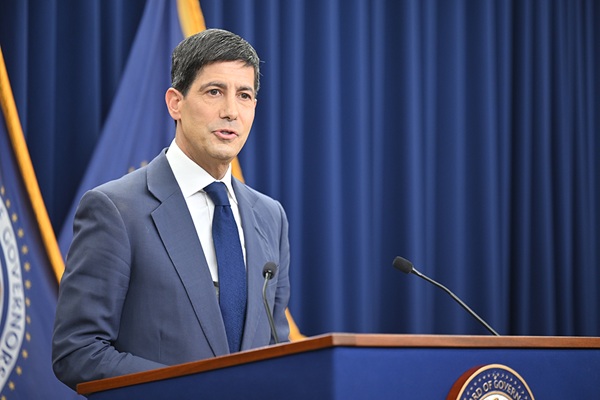
Lt Gen Syed Ata Hasnain is Governor, the State of Bihar, and Former Commander of India's Srinagar-based Chinar Corps.
December 31, 2025 at 5:40 AM IST
As 2025 draws to a close, terrorism presents a paradox. Across much of the world, large, centrally planned attacks have become rarer. Intelligence successes, improved surveillance, and sustained pressure on known organisations have reduced the frequency of spectacular mass-casualty events. Yet this apparent calm is misleading; terrorism has not receded but adapted, incubating future threats beyond immediate visibility. It has fragmented, decentralised, and embedded itself in new social and technological spaces. The result is a threat that is less visible, harder to attribute, and often detected only after it has struck.
The Indian Subcontinent
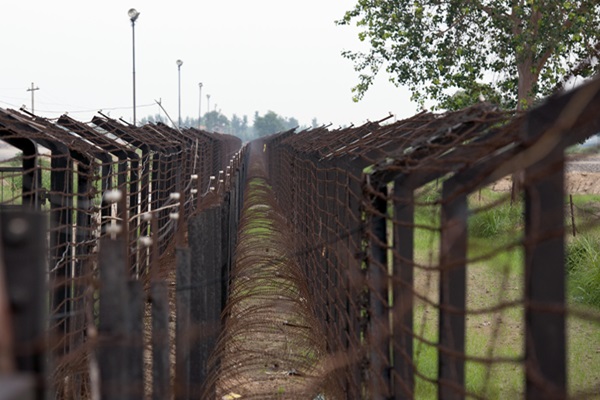
This duality remains the defining feature of Pakistan’s relationship with terrorism. Training infrastructure may be less visible, financial channels more discreet, and handlers more cautious, but the underlying permissiveness endures. Pakistan today functions less as a launchpad for mass-casualty attacks and more as an incubator—of ideology, facilitation networks, and proxy capabilities that can be activated when conditions permit. In global terms, no other state combines internal fragility, ideological radicalism, and strategic ambiguity with such consistency.
In India’s two-and-a-half front security environment, terrorism is therefore no longer a standalone threat but a central instrument of hybrid warfare. It operates deliberately below the threshold of conventional conflict, amplifying pressure on internal stability while complicating military, political, and diplomatic responses. Its value to adversaries lies precisely in this deniability and persistence.
J&K
This shift was evident after the Pahalgam incident, where investigations indicated not an absence of electronic activity, but its deliberate management. Controlled communication, spoofing, and dissipation of electronic emissions complicated attribution and pattern analysis, while selective avoidance of traceable digital transactions reduced forensic visibility. In an age of pervasive surveillance, terrorist invisibility increasingly lies not in silence, but in disciplined control of signatures.
Beyond J&K, India’s internal security landscape in 2025 has reflected the same shift. The Delhi car blast was not a reminder of organisational strength so much as a warning about urban vulnerability. Terror networks across India today are diffuse rather than hierarchical. Sleeper cells, logistics facilitators, and ideological sympathisers form loose constellations rather than rigid command structures. Financing has become opportunistic, using informal channels, cryptocurrencies, and small-value transactions that evade conventional detection thresholds. The challenge is no longer merely one of intelligence penetration, but of mapping intent in an environment where capability can be assembled rapidly and quietly.
Bangladesh
Afghanistan
The Middle East
In the Middle East, the devastation in Gaza has introduced another layer of complexity. While neither Hamas nor Hezbollah appears inclined toward orchestrating global terror campaigns in the immediate future, the emotional and ideological fallout of the conflict cannot be ignored. Images of civilian suffering, amplified across digital platforms, have already begun to shape narratives well beyond the region. The danger lies less in direct sponsorship and more in inspiration—individuals and small groups acting in perceived solidarity, detached from organisational command but deeply influenced by global grievance narratives.
Europe
Europe’s experience in 2025 reinforces this concern. After the intense wave of attacks between 2016 and 2020, much of Western Europe has been relatively quiet. This reflects effective policing and intelligence cooperation, but it does not imply elimination of risk. Residual networks persist, and the primary threat has shifted toward lone actors and psychologically unstable individuals whose ideological alignment is shallow but volatile. Immigration from North Africa is not a cause of terrorism, but inadequate integration and social alienation continue to create pockets of vulnerability that extremist narratives can exploit.
Australia
Australia offers a glimpse of what this new phase of terrorism may increasingly resemble. Recent incidents there were not the work of organised terrorist groups, but of homegrown, stand-alone actors radicalised within their own social environments. These individuals had no foreign handlers, no training camps, and minimal logistical support—yet they were capable of lethal violence. This model, replicated across different societies, represents one of the most difficult challenges for counter-terrorism agencies worldwide.
Emerging Technologies that Aid Terrorism
Overlaying all these trends is the growing exploitation of emerging technologies. Terrorist organisations and sympathisers are increasingly adept at using digital tools for recruitment, networking, financing, reconnaissance, and training. Encrypted communication platforms, anonymised financial systems, and open-source intelligence allow even small groups to operate with sophistication once reserved for larger organisations. At the same time, the future threat of vertical attacks using drones is becoming impossible to ignore. Commercially available drones, modified for surveillance or weaponisation, present a challenge that no state can fully mitigate. Maintaining continuous radar or visual coverage over every vulnerable area is neither practical nor affordable, yet the potential impact of even a single successful drone attack is significant.
As 2025 ends, the lesson is clear. Terrorism has not disappeared; it has merely changed form. The age of centrally directed proxy wars is giving way to a landscape dominated by lone actors, micro-cells, and ideologically primed individuals operating in the seams of society. For India and the wider world, the task ahead is not only to disrupt organisations, but to anticipate pathways of radicalisation, technological exploitation, and silent mobilisation. The danger in 2026 will not come from what is visible, but from what is quietly assembling beneath the surface. Countering it will depend less on reactive force and more on the convergence of counter-radicalisation, advanced counter-terror technologies, and intelligence integration. Together, these will form the bedrock of research, capability development, and operational execution in the years ahead.
More From BasisPoint