.png)



Dr Hemachandra Padhan is an Assistant Professor, General Management and Economics, IIM Sambalpur.*
December 11, 2025 at 6:11 AM IST
COP30 will not be another routine climate summit for India. It arrives at a moment when the country can no longer pretend that development goals and climate risks belong to separate debates. They collide now, often uncomfortably, and the world has taken note. As the Paris pathway slips further from reach, expectations on major economies have hardened. India finds itself squarely in that spotlight — urged to accelerate its energy transition, defend an equitable global framework, and secure the finance needed to modernise without slowing growth. What it negotiates in Belém, Brazil, will shape far more than climate policy; it will influence investment choices, fiscal planning, and India’s diplomatic leverage for years.
The Global Stocktake has made the obvious unavoidable: the world is drifting away from its 1.5°C ambition. Countries must return with NDCs that are both sharper and more workable. India, with its rising energy demand and mounting climate exposure, will be judged on how well it balances both pressures. It has moved faster than many expected on renewables, but no one seriously believes the difficult part of the transition is behind it.
Energy Transition
India’s expansion of solar and wind remains one of the more promising developments in global climate policy. Costs have fallen, capacity has surged, and the Centre has a non-fossil fuel target of 500 GW for 2030. But coal still dominates the system, supplying around 70% of electricity. As calls intensify for a global fossil-fuel phase-out, India will face sharper questions about the pace and shape of its coal transition.
This is not merely a technical debate; it is deeply social and political. India has long argued that nations that built their wealth on fossil fuels should lead the way in retiring them — and that argument remains valid. But this time, the expectation is that India will set out a clearer transition pathway of its own: what a gradual retreat from coal might involve, and what protections a just transition would offer to workers and regions tethered to the sector.
A productive COP30 could unlock long-term funding for storage, green hydrogen, and grid upgrades, finally addressing the reliability constraints that still limit renewable integration.
Finance Imperative
Climate finance will sit at the heart of India’s negotiating stance. The failure to meet the old $100-billion climate pledge hasn’t just dented credibility; it has left many developing countries wondering whether future commitments will fare any better. India will, of course, ask for a higher and more believable finance target, but just as important is something more basic: money and technology that aren’t wrapped in conditions no one can realistically meet. Without concessional funds or affordable tech, all the talk of scaling up hydrogen, or building out carbon-capture systems, or pushing electric mobility simply floats above the ground.
India’s long-term climate promises, including the 2070 net-zero goal, will cost trillions. And climate shocks are already pushing expenses upwards. Heatwaves, erratic monsoons, flooded metros that were never designed for this level of rainfall — all of it forces states to spend more just to keep up. What COP30 decides on finance will seep into everything: infrastructure plans, agriculture policy, even how India prepares for the next round of extreme weather.
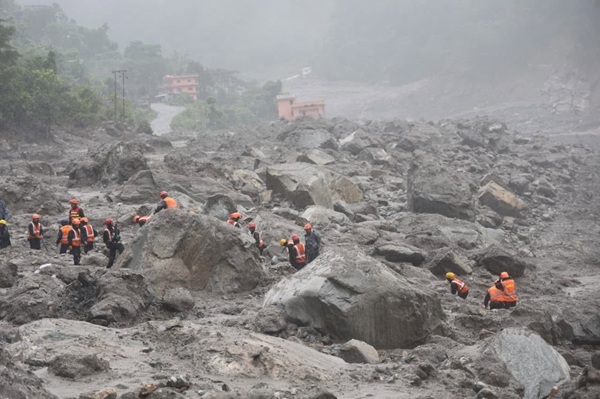
India’s climate vulnerability is visible. Cities flood with alarming regularity. Farmers are left guessing at rainfall patterns their parents once relied on. In the Himalayas, shifting glaciers carry risks that travel far downstream. And along the coasts, the sea inches forward every year. When so many livelihoods depend on land, water, seasons and coastlines, the room for error shrinks.
Adaptation will depend on whether COP30 produces finance and technology that developing countries can actually reach without running a bureaucratic marathon. With the Loss and Damage Fund finally moving into the real world, India will argue for a process that is easy to navigate and dependable enough to plan around. The immediate needs are: stronger farming systems, sensible water management, early-warning systems that don’t fail, and infrastructure that doesn’t crumble at the first sign of a heavy monsoon. In a country of this size, even small improvements in adaptation support can shift outcomes dramatically.
Global Leadership
India’s role in global climate diplomacy has grown. The International Solar Alliance, the Coalition for Disaster Resilient Infrastructure, and Mission LiFE have given India a reputation for building things that go beyond communiques. At COP30, it will draw on that credibility as it speaks for countries that have the least carbon space and the greatest vulnerability.
One principle remains non-negotiable for India: countries that industrialised early cannot expect developing economies to follow the same emissions pathway. The idea “common but differentiated responsibilities” still shapes India’s stance. It will argue for fair access to carbon space, for technology rules that don’t hide behind intellectual-property walls, and for cooperative models that move solutions quickly instead of hoarding them.
India also enters COP30 with stronger Global South partnerships than in previous years. Its G20 presidency strengthened both political backing and confidence, giving New Delhi a firmer platform from which to push for fairer outcomes.
Yet COP30 is not only about risk. There is a significant economic opening here. As the world accelerates its move towards low-carbon systems, India has an opportunity to reshape its industrial base and energy economy:
-
Green hydrogen: The National Green Hydrogen Mission has given the sector momentum. COP30 could expand partnerships and investment into electrolysers, hydrogen hubs, and export infrastructure.
-
Electric mobility: With falling battery prices and rising domestic capacity, India is poised to become one of the world’s largest EV markets, with an entire supply chain of manufacturing and innovation behind it.
-
Solar manufacturing: India is building out its solar ecosystem; global collaborations could reinforce its stability and competitiveness.
-
Carbon markets: Clearer rules under Article 6 could allow India to benefit from a transparent carbon-trading system that rewards strong mitigation.
-
Climate-smart agriculture: With rural India tied so closely to the monsoon, investment in resilient crops, precision tools, and efficient water systems is essential.
If COP30 delivers finance and technology that countries can actually use, India’s shift to a low-carbon economy could strengthen, rather than hinder, growth.
Turning Point
COP30 is more than a diplomatic event for India. What is decided in Belém will influence how quickly the country can reduce its coal dependence, how effectively it adapts to intensifying climate shocks, and how resilient its economy will be in a warming world.
India enters the negotiations with a careful balance: it cannot afford to slow development, yet it recognises the need to contribute credibly to global climate goals. The success of COP30 will be measured not by declarations but by the partnerships secured, the financing agreed, and the technologies made accessible.
If the summit delivers those, India can accelerate its move towards a more secure, climate-resilient future. If it does not, the costs of delay will only rise.
Also Read: A Just Energy Transition Needs Circular Finance
Also Read: India’s Strategic Shift Toward Diversified Trade and Green Commitments
More From BasisPoint