.png)


Dr. Srinath Sridharan is a Corporate Advisor & Independent Director on Corporate Boards. He is the author of ‘Family and Dhanda’.
January 21, 2026 at 8:58 AM IST
For much of the decade following the global financial crisis, capital moved with unusual ease, supported by prolonged monetary accommodation and a persistent search for yield. That environment has receded. Higher interest rates, geopolitical fragmentation and sharper risk pricing have ushered in a phase in which capital moves more deliberately, demands institutional certainty and shows less tolerance for ambiguity.
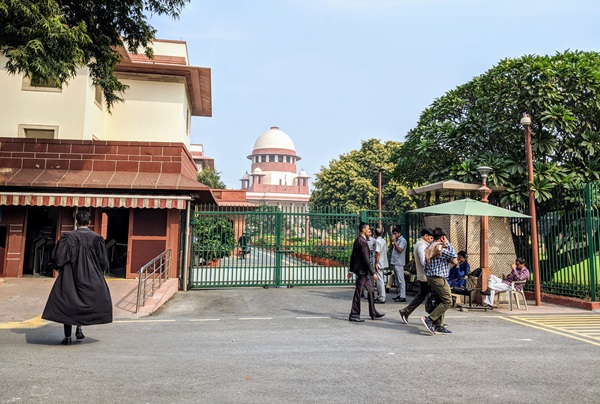
It is in this context that the Supreme Court’s ruling on Tiger Global’s Flipkart exit must be understood. The judgment, which held that capital gains arising from Indian assets are taxable when offshore structures lack genuine economic substance, is being widely misread. It is not an expression of investor hostility. It is an assertion of institutional discipline.
By reaffirming the principle of substance over form, the court aligned India with standards that mature capital markets increasingly take for granted. Tax treaties are instruments of facilitation, not shields for artificial pass-through entities. Structures created primarily for tax optimisation distort competition and weaken confidence in the rule of law.
Some investors have interpreted the ruling as tax assertiveness or uncertainty, particularly given the length of the litigation. Yet the fact that the issue was tested across multiple judicial layers and settled by the highest court reinforces the credibility of India’s institutional process. Foreign investors enjoyed full access to legal remedies, even as delays faced by ordinary citizens remain a separate governance concern with serious social and economic costs.
This distinction matters. Judicial delay is a weakness that warrants reform. Judicial clarity, however, is a strength that underpins market confidence. Treating the two as interchangeable obscures the real signal the ruling sends.
There will be near-term consequences. Some private equity investors will reassess exit assumptions. Some transactions will be delayed. Required returns may rise. These are not symptoms of capital flight, but of repricing in response to a clearer rule set.
For an extended period after the global financial crisis, capital structures were built on assumptions of frictionless exits and permissive tax interpretations. That era is ending. Globally, capital is becoming more selective, less tolerant of legal ambiguity and more attentive to substance over form.
India is signalling that it is prepared to operate within this more disciplined regime. The emphasis on economic substance discourages treaty shopping and brings domestic practice closer to tightening global norms.
The broader implication is not that foreign capital faces a long winter in India. Capital flows will continue to vary by mandate, tenure and geography. Funds with shorter horizons may pause or reprice. Patient capital with a long-term perspective will judge India less on episodic friction and more on its capacity to deliver durable growth, rule-based governance and credible exits.
India does not need to apologise for asserting tax sovereignty. Mature capital markets are not built through accommodation at the margins, but through consistency at the core. Confidence is sustained not by regulatory laxity, but by predictable rule-making.
Capital aligned with long cycles, genuine economic presence and institutional discipline will continue to find opportunity. A capital reliant on form without substance will find the environment less forgiving. That distinction reflects not hostility, but the normal evolution of a maturing capital regime.
More From BasisPoint