.png)

Amitabh Tiwari, formerly a corporate and investment banker, now follows his passion for politics and elections, startups and education. He is Founding Partner at VoteVibe.
January 5, 2026 at 10:40 AM IST
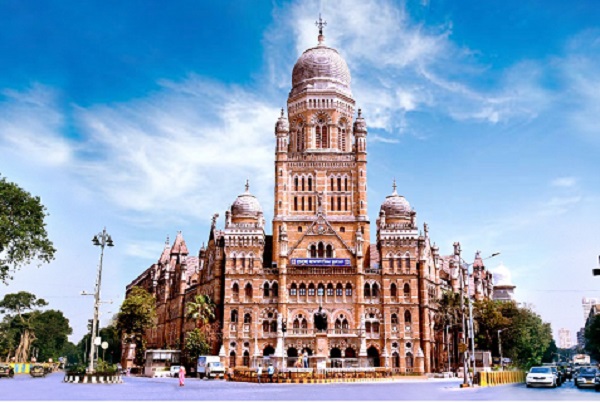
The Brihanmumbai Municipal Corporation elections represent far more than just a local body contest. They symbolise the ultimate prize in Maharashtra politics, a battleground where legacies are forged and political fortunes are won or lost.
As Mumbai prepares for what promises to be one of its most fiercely contested civic polls, the stakes have never been higher for the warring factions of the Shiv Sena, the resurgent BJP, and a splintered opposition desperately seeking to reclaim lost ground.
The Prize Worth Fighting For
The BMC isn't just another municipal corporation, it's an economic powerhouse that commands a budget larger than several northeastern states. This financial muscle translates into immense political capital, controlling everything from infrastructure projects worth billions to the daily lives of 13-15 million Mumbaikars.
The corporation's reach extends across 227 wards, representing 36 Vidhan Sabha seats and six Lok Sabha constituencies, with each assembly constituency encompassing roughly 6.3 wards. For decades, the control of BMC belonged to one family and one party, the Thackerays and the Shiv Sena. But that monopoly is now under serious threat.
The Changing Face of Mumbai
Mumbai's demographic transformation tells the story of a city that has evolved dramatically from its Marathi moorings. In 1951, Marathi speakers constituted 43.6% of the city's population. By 2011, this number had declined to just 35.9%. This shift represents more than mere statistics—it reflects the fundamental rebalancing of Mumbai's political equation.
Today's Mumbai is a melting pot where Muslims constitute approximately 21% of the population, while Gujaratis, North Indians, and South Indians collectively make up about 40%. Buddhists account for another 5%. This demographic mosaic has created new fault lines and new opportunities, challenging the traditional "Marathi Manoos" politics that once dominated civic discourse. Today's winning formula requires carefully calibrated outreach to diverse communities, each with distinct aspirations and grievances.
The Sena's Long Shadow
From 1996 to 2022, the Shiv Sena maintained an iron grip on the BMC mayoral post, albeit in alliance with BJP, a reign that seemed unshakeable and came to symbolise the party's dominance over Mumbai. This control wasn't just about political power—it represented the Sena's claim as the authentic voice of Mumbai's aspirations, the protector of Marathi interests, and the arbiter of the city's development priorities.
However, the 2017 BMC elections delivered a wake-up call with BJP deciding to contest independently. The BJP emerged as a formidable challenger, securing 82 seats and finishing just two seats short of the undivided Shiv Sena's tally. This near-miss demonstrated that the Sena's stranglehold could be broken, and it foreshadowed the dramatic realignments that would follow in the years ahead.
The subsequent split in the Shiv Sena—with Eknath Shinde breaking away to form his own faction and allying with the BJP—has completely redrawn Mumbai's political map. What was once a clear Sena versus BJP contest has become a multi-cornered battle involving competing claims to the Thackeray legacy itself.
The BJP’s rise in line with changing demographics in BMC has been phenomenal. From 28 seats in 2007 to 82 seats in 2017, gaining 19% vote share during this period (27% vs 8%).
The BJP's Mumbai Ambitions
The BJP's strategy for capturing the BMC rests on consolidating the non-Marathi vote bank. With strong support among Gujaratis, Marwaris, and North Indian communities—many of whom are traders and business owners, daily wage labourers from North India and who have prospered in Mumbai—the party believes it has found the key to breaking the Sena's traditional dominance.
Deputy Chief Minister Eknath Shinde's Shiv Sena faction adds another dimension to this strategy, providing the BJP alliance with a Marathi face while the BJP mobilises non-Marathi votes. This strategy aims to squeeze Uddhav Thackeray's faction from both sides—capturing Marathi voters who approve of Shinde's decisive leadership while simultaneously building a pan-Mumbai coalition that transcends ethnic lines.
The 2024 Vidhan Sabha results have bolstered BJP confidence. In Mumbai's 36 assembly constituencies, the BJP won 15 seats, while Shinde's Shiv Sena (Eknath Shinde faction) captured 6. In contrast, Uddhav's Shiv Sena (UBT) won 10 seats, Congress took 3, NCP (Ajit Pawar) secured 1, and others won 1.
More tellingly, the BJP-Shinde alliance bagged 47% of the vote share compared to the Shiv Sena (UBT)-MNS combine's 30%, suggesting a significant advantage heading into the civic polls. If the vidhan sabha leads hold, then it is a clear edge for the Devendra-Shinde alliance.
The Thackeray Counter-Offensive
The alliance between Uddhav Thackeray and Raj Thackeray—once bitter rivals whose feud divided the Thackeray family and split Marathi votes—represents a dramatic attempt to reclaim the Bal Thackeray legacy. By joining hands, the cousins hope to consolidate the "Marathi Manoos" vote bank that their uncle and father respectively cultivated for decades.
Their strategy also includes making a strong pitch to Mumbai's Muslim community. As the opposition best positioned to defeat the BJP, the Thackerays believe they can secure a sizeable chunk of Muslim votes, which could prove decisive in close ward-level contests. This represents a significant evolution from the Shiv Sena's historically complicated relationship with the Muslim community, reflecting the pragmatic realities of contemporary Mumbai politics. SHS-UBT as part of MVA had received Muslim community support in 2024 general as well as state elections.
However, this opposition unity faces significant challenges. The NCP (Ajit Pawar faction) is contesting separately, while Congress has tied up with Prakash Ambedkar's Vanchit Bahujan Aghadi. Regional parties like Samajwadi Party and AIMIM maintain strong presences in minority-dominated pockets. This fragmentation threatens to split the opposition vote, potentially benefiting the BJP-Shinde alliance even in wards where anti-BJP sentiment runs high.
The X-Factors
The unprecedented delay in conducting BMC elections has rendered sitting corporators increasingly irrelevant, creating a vacuum in local leadership. This raises fundamental questions about the nature of the coming campaign. Will it be a presidential-style contest dominated by Chief Minister Devendra Fadnavis and Uddhav Thackeray, with voters choosing between competing visions for Mumbai? Or will it remain hyper-local, with ward-level issues and candidate popularity determining outcomes?
Fadnavis himself represents a unique factor—an urban, educated, development-oriented leader who enjoys considerable support in Mumbai's middle-class neighbourhoods. His record as Chief Minister and his perceived competence give the BJP a credible face for urban governance, potentially swaying voters who prioritize efficiency and development / infrastructure creation over identity politics.
The turnout is of grave concern in BMC, just 55% in 2017, though recording an increase of 10% compared to 2012. In this also it is believed that turnout is lower in buildings / housing societies than slums. Around half of the BMC population lives in slums, the other half in buildings. If the turnout in buildings is drastically lower than slums, Jan 15 voting day is a weekday, then it could impact BJP’s chances.
Conclusion
The battle for BMC is ultimately a battle for Mumbai's soul. It pits competing visions of the city's identity against each other—one rooted in Marathi pride and regional assertion, the other embracing Mumbai as a cosmopolitan metropolis where diverse communities coexist under development-focused leadership.
The outcome will not only determine who controls India's richest municipal corporation but will also signal whether traditional identity politics or newer coalition-building strategies define Maharashtra's political future. As Aamchi Mumbai prepares to vote, all eyes are on a contest that will shape the city—and the state—for years to come.
More From BasisPoint