.png)


Vivek Kaul is a writer and an economic commentator.
June 9, 2026 at 1:33 PM IST
Alan Greenspan, an intellectual disciple of Ayn Rand and the second longest serving Chairperson of the Federal Reserve of the United States, who turned 100 in March, believed that bubbles could be spotted only after they had burst.
As he said in June 1999: “Bubbles are generally perceptible only after the fact. To spot a bubble in advance requires a judgment that hundreds of thousands of informed investors have it all wrong.”
If we go by this, there is no artificial intelligence bubble currently simply because so many entrepreneurs, firms and informed investors are betting big on the future that AI is likely to create.
Nonetheless, history shows us that the wisdom and the judgement of hundreds of thousands of ‘informed investors’ can be wrong. So, there have to be ways of identifying a bubble.
One underappreciated way is the situation when both private companies and publicly listed firms are eager to raise a lot of money by selling shares. It suggests that management teams see an attractive opportunity to monetise lofty valuations and cash in on the mahaul – for the lack of a better term – of investing in stocks that has been created over the years.
Also, those running firms are the ultimate insiders and typically know more about the true prospects of their businesses than even the so-called informed investors. When firms rush to sell shares at the same time, it may indicate that those closest to the business believe that existing valuations are unusually generous and unlikely to last.
This dynamic has played out multiple times in the past:
1) The South Sea Bubble of 1720.
2) The British Railway Bubble of the 1840s.
3) The British Bicycle Mania of the 1890s.
4) The US stock market bubble of 1929.
5) The Japanese stock market bubble that peaked in the late 1980s.
6) The dotcom bubble of the late 1990s and early 2000s.
In fact, as Benjamin Graham writes in The Intelligent Investor: “Most new issues are sold under “favorable market conditions”—which means favorable for the seller and consequently less favorable for the buyer.”
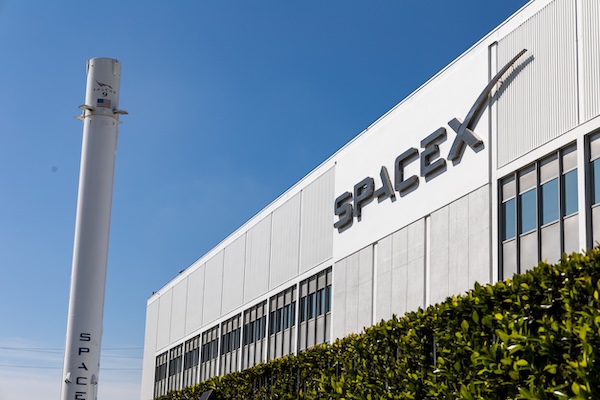
That’s mahaul and it is just right for the big AI initial public offerings and equity issuances that are hitting the US right now. SpaceX is selling 555.6 million shares at $135 each to raise $75 billion. In fact, the total amount of money raised through IPOs in the US in 2025 was $70.1 billion.
Further, the AI firm Anthropic has recently filed for an IPO. The Economist reports that OpenAI is expected to file papers soon and that the two firms are “rumoured to be seeking as much as $60 billion apiece”.
So, the IPO raises of these three AI firms add to around $195 billion. This is 26% more than the money raised through IPOs in the US over the last four years.
Now, add to this the fact that Alphabet – Google’s parent – is raising $85 billion through the fresh issuance of shares. Further, the Financial Times reports that Facebook parent – Meta – is also planning to raise money through issuance of fresh shares.
So, what does all this mean?
First, the AI entrepreneurs are making use of the mahaul. This does not just mean cashing in on the enthusiasm of retail investors for anything AI but also cashing in on the enthusiasm that prevails in other parts of the financial system. It has been suggested that rules are being relaxed to encourage index funds to buy SpaceX shares.
Second, history is rhyming again, with firms raising money at hot shot valuations. For those in and around the business of managing other people’s money, or OPM, not investing in AI and not consistently hyping it up has become a huge career risk. This is despite the lack of clarity on how the hundreds of billions of dollars being invested in AI are going to be recovered.
Indeed, as Jeremy Grantham writes with Edward Chancellor in The Making of a Permabear: “Every technological revolution prior to AI – going back from the internet to telephones, railroads and canals – has been accompanied by early massive hype and a stock market bubble as investors focus on the ultimate possibilities of the technology, pricing most of the very long-term potential immediately into current market prices.”
Third, the lack of clarity around the business model, or whether the potential market – what venture capitalists like to call the total addressable market, or TAM – is large enough to justify raising tens of billions of dollars, does not mean that AI has no future.
But a bubble is a bubble. Or as Grantham writes with Chancellor: “Many such revolutions are in the end as transformative as those early investors could see and sometimes even more so – but only after a substantial period of disappointment during which the initial bubble bursts.”
The grander the promise of a new innovation and stronger the belief in its transformative potential, the more investors pour money into it without regard for valuation – setting the stage for a larger eventual crash.
This leads to overcapacity, something which was seen in the railway bubble of the 1840s – when six railways lines were planned between Manchester and Leeds – to the telecom bubble of the 1990s and the early 2000s – when a huge supply of internet bandwidth was created, the demand for which simply did not exist.
The technology survives and changes the world, but a lot of capital is destroyed, leading to huge underinvestment in the economy in the years to come. And this time should be no different.
Fourth, the Nobel Prize winning economist, Robert Shiller, refers to the stock market in certain situations as a naturally occurring Ponzi scheme.
As he writes: “Investors, their confidence and expectations buoyed by past price increases, bid up stock prices further, thereby enticing more investors to do the same… When prices go up a number of times, investors are rewarded sequentially by price movements in these markets, just as they are in Ponzi schemes.”
For this dynamic to play out, it’s important for the mahaul to continue. And this is where the OPM wallahs come in. Or as Shiller writes: “There are still many people (indeed, the stock brokerage and mutual fund industries as a whole) who benefit from telling stories that suggest that the market will go up further.”
Of course, the storytelling works primarily because most retail investors taken in by the mahaul want to be lied to. Also, no OPM wallah really knows when the bubble is going to burst, so, it’s a huge career risk to bet against it and sit it out.
Fifth, while it’s safe to say that the AI bubble is currently on, there is no way of predicting when and how it is likely to burst, given that most investors like to believe that the future will be like the recent past.
Nonetheless, as Warren Buffett wrote in 2000: “But a pin lies in wait for every bubble. And when the two eventually meet, a new wave of investors learns some very old lessons: First, many in Wall Street – a community in which quality control is not prized – will sell investors anything they will buy. Second, speculation is most dangerous when it looks easiest.”
So, what’s the pin going to be this time around?
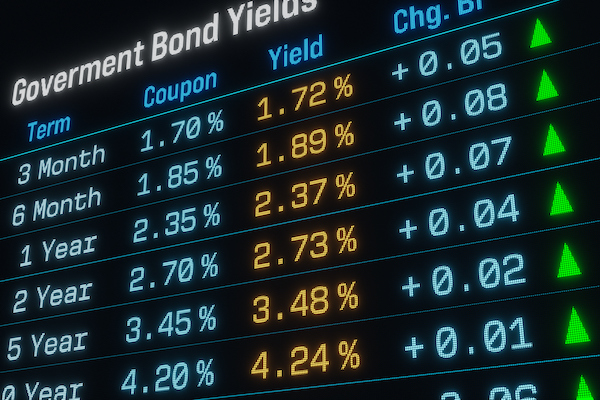
What the pin will be is impossible to know in advance. Perhaps it will be the Federal Reserve raising interest rates to curb inflation, which has remained above the level the American central bank is comfortable with for a while now.
If one were to go by Greenspan’s belief on bubbles, perhaps the AI bubble will only be obvious in hindsight. Perhaps he was right…But when insiders are rushing to sell shares, valuations have become detached from the likely future cash flows and investors are buying narratives rather than businesses, it is worth remembering that every bubble looks like a revolution while it is inflating. Only after it bursts does it become a bubble.
More From BasisPoint