.png)


Dhananjay Sinha, CEO and Co-Head of Institutional Equities at Systematix Group, has over 25 years of experience in macroeconomics, strategy, and equity research. A prolific writer, Dhananjay is known for his data-driven views on markets, sectors, and cycles.
April 28, 2026 at 9:18 AM IST
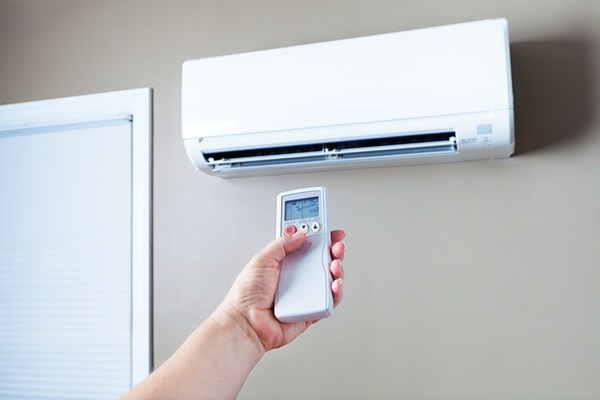
Voltas appears best positioned in the room air conditioner industry to capitalise on the upcoming demand cycle, as the possibility of a strong El Nino points to weaker monsoon conditions. The company is targeting double-digit summer growth and aims to gain market share, supported by its strong distribution network and execution intensity.
Blue Star also remains a steady performer with consistent execution, but may lag slightly in terms of growth acceleration if the current demand upcycle sustains. Industry feedback, including discussions with Daikin Industries, suggests that players with strong channel relationships, brand trust, and manufacturing scale are likely to emerge as winners in the next phase.
An El Niño year tends to be particularly favourable for AC demand due to higher temperatures and weaker monsoon conditions. The latest forecast by the India Meteorological Department of an 8% monsoon deficiency this year comes with a wider distribution of rainfall shortfall, including multiple states in the north and south; excess rains are expected in select areas in the north-east, Kashmir, and parts of the south.
Pricing dynamics are also supportive for AC makers, with input cost pressures leading to about 10% price hikes that the market has largely been able to absorb without materially impacting demand. Empirical analysis suggests that the industry exhibits strong operating leverage—there is a high correlation (0.92) between sales growth and operating costs, indicating that cost increases are effectively passed on. More importantly, operating profits show higher elasticity to price and sales growth compared to operating costs, implying that margin expansion is achievable during demand upcycles. Inflation has only a marginal negative impact on volume growth, reinforcing the sector’s pricing power.
Financially, the industry has historically operated at relatively modest margins, with average operating profit margins of about 5–6% over the past 5–7 years. However, margins tend to improve cyclically during periods of strong demand and pricing power. After a muted performance in 2025–26—where sales growth slowed to about 0.9% and margins compressed to about 4.3%—the stage appears set for a recovery in 2026–27, supported by a potential demand uptick. The sharp slowdown in earnings growth in 2025–26 has also created a low base.
Overall, the Indian room air conditioner industry continues to offer a strong long-term growth opportunity, driven by low penetration, improving incomes at the top end of the income spectrum, and increasing urbanisation. With AC penetration in India still at just about 8–9% compared to about 44% in China, the market remains significantly underpenetrated, indicating that the growth cycle is still in its early stages. Industry growth is expected to sustain at around 15% CAGR, supported by a shift toward energy-efficient inverter ACs, rising temperatures, and improving affordability. Additionally, structural drivers such as local manufacturing, tighter energy efficiency norms, and increasing preference for trusted brands are reshaping the competitive landscape in favour of established players with strong distribution and service networks.


More From BasisPoint