.png)

Yield Scribe is a bond trader with a macro lens and a habit of writing between trades. He follows cycles, rates, and the long arc of monetary intent.
March 3, 2026 at 12:43 PM IST
Four days in, it is clear that killing a leader is not the same as weakening a state. Ali Khamenei’s death removes a central figure, but it does not dismantle the system that produced and protected him. Iran was never a one-man enterprise. Authority, led by the Islamic Revolutionary Guard Corps, is layered and institutional, rooted in clerical networks, security structures and an ideological framework that has endured sanctions, isolation and internal dissent.
If Tehran believes Washington has crossed a red line, this becomes more than a contained exchange. The strategy shifts to cost imposition: raise the price until the other side recalibrates. United States' bases across the region are therefore exposed, irrespective of geography.
It is also a mistake to interpret discontent on Iranian streets as alignment with Washington or Tel Aviv. Economic frustration does not automatically translate into geopolitical sympathy. People can resent their leadership without embracing its adversaries. The absence of large-scale mobilisation after Khamenei’s death suggests that private anger, where it exists, has not crystallised into organised rupture.
The conflict may yet redraw regional lines, hardening a divide between older ideological alignments and newer US-aligned Gulf states. If so, it may come to define the legacy of Trump 2.0. The question of “how this ends” was never raised.
Energy Shock
If Iran sustains pressure on US assets in the region, oil markets will not wait for diplomatic clarity. Risk premia will build into crude, reflecting the possibility of a longer confrontation.
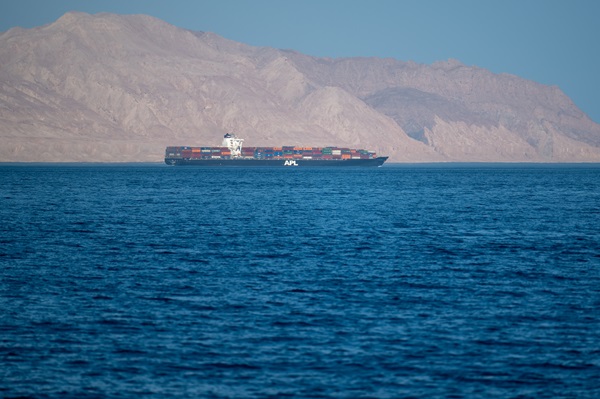
Brent at $90 per barrel would represent a repricing of conflict durability. A more disruptive outcome would involve internal fragmentation that interrupts production and removes 1.6 mbpd of Iranian exports from global supply, pushing prices towards $100. The most severe scenario remains disruption in the Strait of Hormuz. Any sustained closure or mining of that corridor could lift Brent towards $120.
The vulnerability extends beyond crude oil. LNG, LPG and fertilisers move through the same artery. European natural gas futures have already more than doubled since Friday due to uncertainty around Qatari LNG flows. Europe is approaching the end of winter with lower storage levels, intensifying competition for cargoes ahead of the restocking season. Qatar accounts for roughly one-fifth of global LNG supply. Even the prospect of disruption forces buyers into defensive procurement.

Chart 1: European Natural Gas futures
Because a substantial portion of Qatari LNG is contracted to Asian markets, tighter flows are likely to push Asian spot prices higher relative to European benchmarks. India’s vulnerability here is structural. Domestic storage capacity for crude, LNG and LPG remains limited relative to demand.
LPG is particularly sensitive. Storage capacity is about 1 million tonnes, equivalent to roughly 10 days of consumption. Annual demand is near 33 million tonnes, with over 85% used for household cooking. Imports total 23.3 million tonnes, 93% of which originate in West Asia via a seven-day journey. Any sustained disruption would have immediate consequences.
In LNG, India imported around 25 million tonnes in 2025, about 67% sourced from West Asia. Unlike China and several developed economies, India has no meaningful underground gas storage. Tanks at import terminals are operational buffers that must remain partly full for technical reasons. They cannot absorb a prolonged supply shock.

Fertiliser markets add another layer of exposure. Qatar accounts for roughly 11% of global urea exports, and nearly 45% of shipments originate from plants across the Persian Gulf. Around a third of globally traded nutrients pass through the Strait of Hormuz. That is a narrow corridor for such a large share of supply. Prices were already firm before the latest escalation, and with the northern hemisphere planting season underway, there is limited room for interruption.
Granular urea prices in Egypt have risen by $60 per metric tonne since the effective closure of Hormuz. Supplies were tight even before this flare-up, with geopolitical risk embedded after damage to Russian nitrogen facilities. Russia and Qatar remain among the largest suppliers to the United States, and significant Middle Eastern volumes transit Hormuz. Several of the world’s largest ammonia and phosphate exporters depend on this route.
India’s fertiliser imports are expected to rise 76% this fiscal year to a record $18 billion. Higher urea and DAP imports are already lifting the bill. With global prices elevated, subsidy pressures will intensify.
The fertiliser subsidy is budgeted at ₹1.71 trillion for the coming financial year, slightly below the revised ₹1.86 trillion for 2025–26. If LNG prices remain 15–20% higher, both imported urea and domestic production costs will increase, potentially pushing the subsidy towards ₹1.9 trillion.
Crude brings wider macro implications. Every $1/bbl increase in Brent implies roughly ₹0.52 per litre on diesel and ₹0.55 per litre on petrol if prices were fully market linked. If Brent averages $75 rather than the earlier assumption of $65, oil marketing companies are absorbing close to ₹5 per litre. That may be manageable briefly; it is harder to sustain when LPG pricing is already strained.
If the government offsets the impact through excise cuts, the fiscal cost could approach ₹600 billion. At the macro level, every $10/bbl rise in crude typically widens CAD/GDP by about 0.5%, adds roughly 35 bps to retail inflation and 130 bps to WPI, and trims 15–20 bps from growth.
There is, in theory, the option of expanding purchases of discounted Russian crude. In practice, that route is complicated by warnings from the Trump administration that renewed flows could invite tariff retaliation. Other major energy importers, from Japan to South Korea and across emerging markets, will also be securing supply. In such conditions, capital tends to move away from net energy importers. Balance of payments pressures intensify and currency volatility follows.
The earlier working assumption of $65 Brent now appears dated. A geopolitical premium of at least $10 may remain embedded for months, placing the baseline closer to $75. That implies tougher fiscal arithmetic for 2026-27, via higher subsidies, lower excise collections, softer nominal GDP and, eventually, a wider fiscal deficit.
It looks like a structural elevation in energy risk. Policymakers may wait for clearer signals, but markets rarely do. They factor in risk before political resolution arrives. What unsettles them more than bad news is drift. In a conflict shaped as much by conviction as by calculation, hope cannot be a strategy.
More From BasisPoint