.png)

Risk-Off Mood Returns as US-Iran Strikes Escalate Tensions
Here’s your quick read to start the day: a chatty, no-fuss look at overnight moves, the big story, what’s on the docket, and the tickers you need to watch.
June 10, 2026 at 1:34 AM IST
GLOBAL MOOD: Cautiously Risk Off
Drivers: Escalating US–Iran Conflict, Persistent Geopolitical Uncertainty
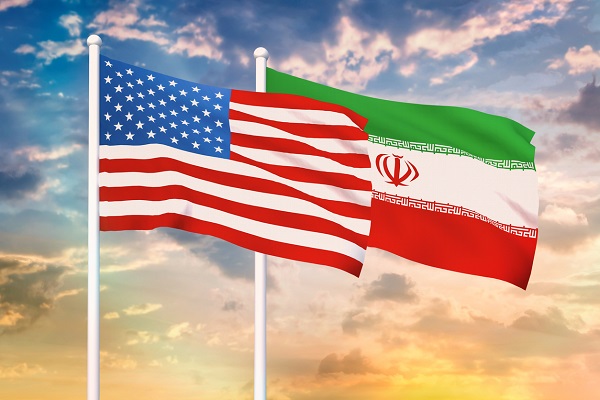
Global markets shifted back into a risk-off mode on Wednesday after fresh US military strikes on Iran raised concerns that the fragile ceasefire between Washington and Tehran could collapse. Asian equities opened lower, led by a more than 2% decline in South Korea's Kospi, while Japan's Nikkei and Australia's ASX 200 also traded in negative territory as investors reduced exposure to risk assets.
The latest escalation followed US "self-defense" strikes in response to the reported downing of a US Apache helicopter near the Strait of Hormuz. The incident reignited concerns over the security of one of the world's most critical energy chokepoints, pushing oil prices higher and reviving fears of supply disruptions and renewed inflationary pressures.
Adding to the cautious mood, Indonesia's central bank unexpectedly raised its benchmark interest rate by 25 basis points to 5.50% in an off-cycle move, the first such action in eight years. The decision was aimed at stabilising the rupiah, which has come under significant pressure amid rising geopolitical tensions and capital outflows. The move underscored how the Iran conflict and stronger dollar environment are forcing policymakers across emerging markets to prioritise currency stability over growth concerns.
Investor sentiment was also weighed down by broader macroeconomic concerns. The surprise rate hike by Bank Indonesia highlighted the growing strain that elevated energy prices and geopolitical uncertainty are placing on emerging-market currencies and monetary policy frameworks.
While strong investor interest in artificial intelligence remained evident following reports of OpenAI's confidential IPO filing, geopolitical risks dominated market thinking. Rising oil prices, heightened military tensions and concerns over inflation have reinforced expectations that global central banks may need to keep policy restrictive for longer, limiting appetite for risk assets.
THE BIG STORY
The United States launched fresh strikes on Iran on Tuesday after Donald Trump said Tehran had downed a US Apache helicopter near the Strait of Hormuz, sharply escalating tensions and dimming hopes for a broader peace deal. Trump called the response “very strong” and “very powerful”, signalling Washington’s readiness to intensify military action despite ongoing diplomacy.
Iranian state media reported attacks on Qeshm Island and projectile strikes near Sirik on the Strait of Hormuz. Explosions were also reported near Bandar Abbas and Jask County, heightening concerns over the security of one of the world’s most critical energy shipping routes. Iranian Foreign Minister Abbas Araqchi warned that Tehran would “leave no attack or threat unanswered” and said foreign forces in the region risked being drawn into a wider conflict. US officials said an Iranian one-way attack drone brought down the Apache, though both pilots survived. Tehran denied conducting offensive air operations in the Strait of Hormuz over the previous 24 hours.
Separately, political developments in Washington highlighted continued domestic divisions within the US. The Republican-controlled House of Representatives narrowly approved a $70 billion immigration enforcement funding bill supporting Immigration and Customs Enforcement and Border Patrol operations through the remainder of Trump’s administration. The legislation now heads to the White House after previously clearing the Senate.
In corporate developments, OpenAI confidentially filed for a US initial public offering, signalling intensifying investor appetite for artificial intelligence-linked companies. The ChatGPT maker said the size and timing of the offering had not yet been determined and indicated it may remain private for some time due to strategic considerations. The filing places OpenAI alongside rival Anthropic in exploring public market listings amid strong demand for AI-related equities.
Data Spotlight
The US trade deficit narrowed to $55.9 billion in April from a revised $56.6 billion in March, beating expectations of $56.1 billion. Exports rose 2.6% to a record $327.1 billion, led by capital goods, industrial supplies and consumer goods. Exports of crude oil and petroleum products increased amid elevated energy prices linked to tensions in West Asia. Imports also climbed 2.0% to $383 billion, the highest level in a year, driven largely by strong demand for computers, semiconductors, and telecommunications equipment tied to continued investment in AI infrastructure.
US existing home sales rose 3.2% month-on-month to an annualised rate of 4.17 million, above expectations of 4.07 million and extending the rebound from March lows. Sales gains were strongest in the Midwest and South despite elevated mortgage rates. Housing inventory increased 3.3%, reaching the highest level in 10 months and equivalent to 4.5 months of supply.
Meanwhile, weekly ADP labour market data showed private employers added an average of 29,000 jobs per week in the four weeks ended May 23, slightly lower than the previous period. However, the broader monthly ADP report remained strong, with private payrolls rising by 122,000 in May, the largest increase since January 2025 and signalling continued labour market resilience.
Takeaway:
Strong exports, resilient housing demand and continued investment in AI-linked imports highlighted ongoing strength in the US economy, reinforcing expectations that the Federal Reserve may maintain a restrictive policy stance despite geopolitical uncertainty.
WHAT HAPPENED OVERNIGHT
- US stocks slide as tech selloff resumes and Iran helicopter incident rattles markets
- Dow rose 0.17%, while the S&P 500 lost 0.26% and the Nasdaq fell 0.97% as an early tech rebound faded.
- The S&P 500 tech index fell 1.8%, and the Philadelphia Semiconductor Index dropped 1.9%.
- Trump's post that Iran shot down a US Apache helicopter patrolling the Strait of Hormuz triggered a fresh leg lower, adding to ceasefire doubts.
- Value stocks outperformed growth, with the Russell 1000 value index gaining 0.4% against a 0.7% decline in the Russell 1000 growth index.
- Broadcom fell 1.1% and Nvidia slipped 0.2%, though the semiconductor index remains up 78.7% year-to-date.
- Wednesday's US CPI data is in focus for clues on how rising energy prices from the Iran war are feeding into inflation.
- SpaceX's IPO on Friday, targeting a $1.75 trillion valuation and $75 billion raise, is adding to investor caution ahead of expected heavy volatility.
- Dow rose 0.17%, while the S&P 500 lost 0.26% and the Nasdaq fell 0.97% as an early tech rebound faded.
- US Treasury yields pull back as ceasefire hopes and oil decline ease pressure
- The 10-year Treasury yield fell to 4.54%, retreating from three-week highs hit in the prior session.
- Lower oil prices following the Iran-Israel halt and Trump signalling a deal with Tehran within days supported the decline.
- Investors now await Wednesday's US CPI report for fresh cues on the inflation outlook.
- Strong economic data continued to underpin sentiment, with existing home sales beating estimates and the trade deficit narrowing as exports hit a record high.
- Markets still price at a 51% chance of a Fed rate hike as early as October, reflecting a resilient economy and labour market.
- The policy-sensitive 2-year Treasury yield fell 2 bps to 4.15%.
- The 10-year Treasury yield fell to 4.54%, retreating from three-week highs hit in the prior session.
- US Dollar slips below 100 as Iran-Israel ceasefire eases safe-haven demand
- The dollar index pulled back from a nine-week high as the Iran-Israel halt and Trump's ceasefire signals reduced safe-haven flows.
- Despite the dip, the dollar held near multi-month highs against major peers, underpinned by stronger-than-expected US jobs data.
- Markets now show a 51% chance of a Fed quarter-point hike in December, keeping the dollar broadly supported.
- US CPI and PPI data due later this week are in focus for further clues on the Fed's policy path.
- The European Central Bank is also widely expected to raise rates this week, adding to the global tightening backdrop.
- The dollar index pulled back from a nine-week high as the Iran-Israel halt and Trump's ceasefire signals reduced safe-haven flows.
- Oil prices fell 3% to a seven-week low as Iran-Israel ceasefire cools risk premium
- Brent fell $2.80 to settle at $91.45/bbl and WTI slid $3.10 to $88.20, the lowest settlement for Brent since April 17 and WTI since May 29.
- Brent also closed below its 100-day moving average for the first time since January, a key technical break.
- The ceasefire between Iran and Israel following Trump's intervention drove the selloff.
- Trump added further pressure by signalling a final deal could be days away.
- Iran continued to block most Strait of Hormuz shipping, though the US Energy Secretary said traffic and oil exports through the strait are rising.
- China's May crude imports slumped 29% to an eight-year low, extending a sharp decline that is keeping a lid on global prices.
- The EIA projected world petroleum production would fall to 99.0 million bpd in 2026, down from a record 106.1 million bpd in 2025, with demand also seen easing.
- OECD oil inventories are forecast to fall to their lowest level since at least 2003 as countries draw on storage to meet supply shortfalls.
- Analysts estimate US crude stockpiles fell by 4.0 million barrels last week, which would mark seven consecutive weeks of draws for the first time since January 2025.
- Brent fell $2.80 to settle at $91.45/bbl and WTI slid $3.10 to $88.20, the lowest settlement for Brent since April 17 and WTI since May 29.
Day’s Ledger*
- US May CPI
- India AMFI May Data
Corporate Actions
- Power Grid Corp board to consider fund raising
- Zee Entertainment Enterprises board to consider fund raising
Policy
- Bank of Canada interest rate Decision
Tickers to Watch
- AJANTA PHARMA promoter entity Ravi Agrawal Trust sold a 2.8% stake via a block deal worth ₹10.24 billion; Kotak Mahindra MF acquired shares worth ₹6.24 billion, while Aditya Birla Sun Life MF bought shares worth ₹4.00 billion.
- BHARTI AIRTEL disclosed financial relief of over ₹105 billion following the Bombay High Court's OTSC ruling; also received DoT and TRAI penalties of ₹0.67 million and ₹3.71 million, respectively.
- DIXON TECHNOLOGIES signed a binding term sheet with Gemtek Technology to form a JV for manufacturing optical transceivers and BOSA products, with Dixon holding a 60% stake.
- EMCURE PHARMACEUTICALS informed that BC Investments IV sold a 1.9% stake through a block deal worth ₹6.12 billion, with Kotak Mahindra MF emerging as the buyer.
- HINDUJA GROUP SOLUTIONS’ broadband arm OneOTT Intertainment launched Project GANGA in Uttar Pradesh, targeting broadband connectivity for 2 million households.
- INTERGLOBE AVIATION (INDIGO) remains in focus after ATF prices were raised about 10%, with Delhi rates increasing to ₹115/litre from ₹104.93/litre, potentially lifting fuel costs.
- NLC INDIA informed that government exercised the oversubscription option in its OFS, increasing the stake sale to 3% from 2%, taking the total offer size to 4.16 crore shares.
- WELSPUN CORP’s Mauritius-based subsidiary sold a 4.5% stake in Saudi Arabia’s EPIC for $75.6 million.
Must Read
- SpaceX Is the New East India Company
- Seventeen Years After Satyam, Who Audits The Auditors?
- Has The Market Overpriced India's Rate Risk?
- Karnataka Minimum Wage Hike: Good for Workers, Worrisome for Enterprises
- From Oil Shocks to Supply Chain Shocks, India Must Rethink Resilience
- Why Oil Price Spike May Trigger Supply Wave
- Foreign Money Returns but Conviction Remains Short
See you tomorrow with another edition of The Morning Edge.
Have a great trading day
Alan Greenspan believed bubbles could be identified only after they burst.
But history suggests one warning sign often appears earlier: when companies and insiders rush to sell shares into a market willing to pay almost any price for a compelling story.
That is what makes the current AI boom worth watching. SpaceX is planning a massive IPO, while Anthropic and OpenAI are moving towards public markets. Large technology firms are also exploring fresh capital raising.
Vivek Kaul writes, this does not mean AI has no future. Railways, telecom and the internet all changed the world. But each also produced periods of overinvestment, excess capacity and capital destruction before the real productivity gains arrived.
Every bubble looks like a revolution while it is inflating. The harder question is whether investors today are buying future cash flows — or simply buying the next great story.
(*Compiled from various media sources)
More From BasisPoint