.png)


Shilpashree Venkatesh is a research professional with expertise in macroeconomics, real estate, and infrastructure, focused on growth trends.
April 23, 2026 at 12:19 PM IST
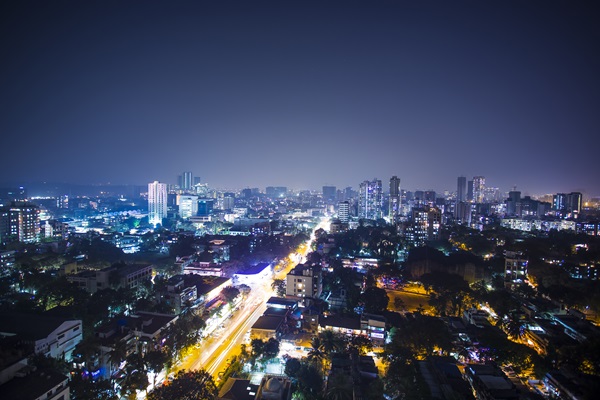
India is urbanising at an unprecedented pace. Between 1995 and 2025, the country’s urban built-up area expanded by about 2.5 times, compared with the global average of 1.8 times. Indian cities now account for nearly 60% of the country’s GDP and are expected to contribute close to 75% by 2030. Over the next decade, around 600 million people, about 40% of the population, are expected to live in cities, rising to nearly 950 million by 2050.
This rapid urbanisation is both inevitable and economically beneficial. Cities generate economic opportunities, attract investment, and enhance global competitiveness. However, this progress has come at a cost, the degradation of ecological systems that sustain urban liveability over time.
In principle, urbanisation is one of India’s greatest economic advantages. Denser cities deepen labour markets, attract investment, enable economies of scale, and accelerate innovation. Well-managed urbanisation can help cities transition from low- or middle-income to high-income status.
Yet, long-term sustainability and liveability depend on protecting ecological assets such as trees, lakes, wetlands, and drainage systems, and recognising them as productive capital. For decades, Indian cities have consumed these natural assets without adequate protection, creating hidden liabilities now emerging as lower productivity, rising living costs, and declining liveability. While cities have gained from economic expansion, land conversions, and output growth, they have largely failed to account for the depletion of natural resources that enabled these gains.
The first signs of these costs are evident every summer. As tree cover declines and surfaces turn into concrete and glass, cities trap heat. Among India’s megacities, all but Hyderabad have seen either marginal growth or significant declines in tree and forest cover over the past decade. This has led to rising temperatures even in cities such as Bengaluru, once known for its year-round pleasant weather. The urban heat island effect has made many Indian cities 4-6 degrees Celsius hotter than surrounding non-urban areas.
Though primarily an environmental issue, heat has also become a labour market concern. According to the Lancet Countdown, India lost around 247 billion labour hours to heat stress in 2024, resulting in an estimated $194 billion in economic losses, largely in agriculture and construction. The same year also saw the country’s longest heatwave since 2010, with more than 44,000 reported cases of heatstroke.
In urban centres, nearly 75% of the workforce is engaged in heat-exposed occupations, particularly in the informal sector, such as construction workers, delivery riders, sanitation workers, and street vendors. Extreme heat directly affects their health, productivity, and earnings. Studies suggest that informal workers earn 40-50% less on heatwave days than on normal days. Such income losses can significantly weaken both household financial stability and broader economic resilience. By 2030, heat stress could reduce total working hours in India by 5.8%, equivalent to the loss of 34 million full-time jobs. The depletion of green cover is therefore not just a climate issue; it is a significant economic risk.
If summer highlights the cost of rising heat, the monsoon exposes the consequences of weakened drainage systems. Cities such as Bengaluru and Chennai were historically built around tanks, lakes, canals, wetlands, and seasonal drainage channels. These systems functioned as critical infrastructure, storing rainfall, slowing runoff, recharging aquifers, moderating floods, and sustaining water supply during dry periods.
However, rapid and often unplanned urbanisation has severely strained these systems, leading to frequent urban flooding. According to a study by the Indian Institute of Science, Bengaluru alone has lost nearly 80% of its water cover. Floods have accounted for about 67% of economic losses from natural disasters in India over the past two decades. The World Bank estimates current annual urban flood losses in India at around $4 billion in 2023, a figure projected to rise to $5 billion by 2030 and as much as $30 billion by 2070 if urban planning trajectories remain unchanged.
Bengaluru offers a stark example of a city that has succeeded economically while weakening ecologically. Once known for its mild climate and interconnected lake systems, it now faces rising heat and recurring floods. The city has lost nearly 3,000 hectares of tree cover over in the last 15 years alone. In 2022, heavy rains paralysed key business districts and residential areas, with IT companies reportedly incurring productivity losses of ₹2.25 billion in a single day due to absenteeism and transport disruptions.
The next phase of India’s urban challenge is already emerging beyond city boundaries. Around 65% of Indian agriculture still depends on rainfall. As monsoon patterns become more erratic, crop failures, rising debt, and livelihood stress will push more people towards cities. Climate-induced internal displacement in India is estimated at 32 million between 2015 and 2024, and projections suggest that up to 45 million people could be forced to migrate by 2050 due to climate-related factors. Many will move to cities already struggling with housing, water, transport, flooding, and heat. If current trends persist, cities will not only absorb prosperity but also increasingly absorb stress.
Urbanisation, therefore, presents a major opportunity for India’s economic growth. But ensuring equitable and sustainable growth requires preserving, restoring, and strengthening ecological assets through stronger policy commitment. Cities must treat trees, water bodies, and natural systems as critical infrastructure, with dedicated maintenance budgets, protection, and long-term investment, much like roads and flyovers.
Empirical evidence supports this approach. Studies estimate that every dollar invested in green cover can generate up to three dollars in economic benefits. The World Bank similarly estimates that climate-resilient natural infrastructure can deliver cost-benefit ratios of up to 1:4. Restoring ecosystems is not just an environmental imperative; it is also an economic opportunity. Framing it this way can strengthen policy support and attract greater investment into conservation and restoration.
According to the World Bank, India will need to invest around $840 billion in urban infrastructure by 2036, roughly $55 billion annually. While roads, transit systems, and utilities remain essential, this investment gap cannot be closed through conventional infrastructure alone. Nature-based solutions, such as lakes, wetlands, urban forests, permeable surfaces, and river buffers, can provide flood control, cooling, water security, and improved air quality at significantly lower cost, provided they are protected and managed effectively.
India currently spends only about half of what it needs to meet its annual urban infrastructure needs. Bridging this gap will require expanding the definition of infrastructure itself. Ecological assets must be treated as economic capital that delivers measurable returns through resilience, reduced disaster losses, lower energy demand, and improved public health.
Financing mechanisms already exist to support such investments. Green municipal bonds, resilience-linked borrowing, land value capture tied to ecological restoration, and climate-risk-sensitive insurance can all help fund urban natural assets. Globally, biodiversity credit markets, currently valued at around $7 billion, are expected to grow rapidly, potentially reaching $38 billion by 2033. For Indian cities that prioritise ecological capital, these emerging markets offer an additional avenue to finance the next phase of urban growth.
Disclaimer: The views and opinions expressed in this article are solely those of the author and do not necessarily reflect the official position of any organisation or institution the author may be associated with.
More From BasisPoint