.png)

Oil Rises, Asian Stocks Sink as Strait of Hormuz Tensions Escalate
Here’s your quick read to start the day: a chatty, no-fuss look at overnight moves, the big story, what’s on the docket, and the tickers you need to watch.
Richard is an independent financial journalist who tracks financial markets and macroeconomic developments
March 4, 2026 at 1:48 AM IST
GLOBAL MOOD: Extreme Risk Off
Asian equity markets led another bruising session, deepening the global risk-off mood as the Iran war fuels fears of a fresh inflation shock and delays to Federal Reserve rate cuts. The MSCI Asia Pacific Index slid 1.6%, with stocks in Japan, South Korea and Australia opening sharply lower. South Korea’s Kospi plunged over 7%, extending its worst selloff in nearly two years as investors rushed to cut exposure to risk assets.
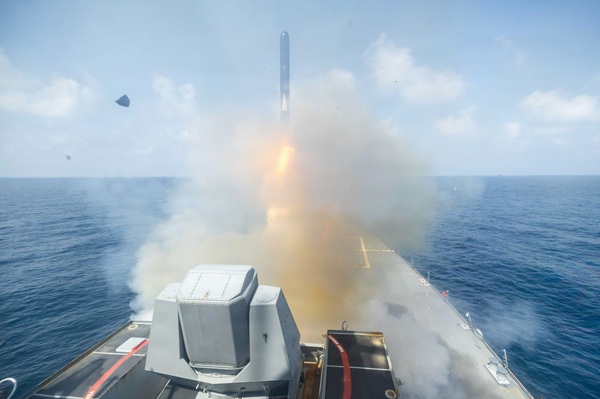
Oil prices ticked higher, keeping energy-driven inflation risks front and centre. West Texas Intermediate rose as much as 1.2% amid uncertainty over crude flows through the Strait of Hormuz. Conflicting signals — Iranian warnings that the waterway is shut versus US assurances that the Navy will escort tankers — have added to volatility
TODAY’S WATCHLIST
- India Composite, Services PMI
THE BIG STORY
Iran's retaliation is widening rapidly. Iranian drones struck the US embassies in Saudi Arabia and Kuwait, while smoke was seen rising near the US consulate in Dubai after a parking lot was hit. Washington shut its embassies in Saudi Arabia, Kuwait, and Lebanon, ordering non-emergency personnel and their families to leave much of the West Asia. The conflict has now spread to Lebanon, rattling global markets and sending oil sharply higher. The Trump administration is covertly preparing corruption and money laundering charges against Venezuelan interim president Delcy Rodriguez, using possible prosecution as leverage after Maduro's ouster.
Data Spotlight
US crude inventories rose by 5.6 million barrels in the week ended February 20th more than twice the expected 2.19-million-barrel build and adding to the prior week's 11.4-million-barrel surge, pointing to a significant softening in near-term demand even as geopolitical risk keeps prices elevated.
On the logistics front, the US Logistics Manager's Index climbed to 61.5 in February, its highest in a year, and broke an eleven-month streak below the long-run average of 61.3. Growth was broadly consistent across supply chains, with warehousing utilisation rising notably to 60.3 from 54.4, while inventory costs and warehousing prices both moderated, suggesting supply chain conditions are improving without overheating.
Takeaway:
WHAT HAPPENED OVERNIGHT
- US stocks slumps as West Asia conflict stokes inflation fears
- The Dow fell 403 points or 0.83%, the S&P 500 lost 0.94%, and the Nasdaq dropped 1.02% in a broad-based selloff.
- The VIX closed at its highest level since November, reflecting a sharp spike in market fear as conflict shows no signs of easing.
- Indexes recovered significantly from session lows; the S&P 500 had fallen more than 2% intraday before paring losses into the close.
- Blackstone fell 3.8% after its flagship credit fund BCRED saw a surge in redemption requests, rekindling private credit contagion fears.
- The session's partial recovery off lows suggests some dip-buying appetite remains, but sentiment is fragile and heavily dependent on West Asia developments.
- The Dow fell 403 points or 0.83%, the S&P 500 lost 0.94%, and the Nasdaq dropped 1.02% in a broad-based selloff.
- US Treasury yields jumps to 4.1% as surging oil reignites inflation fears
- The 10-year Treasury yield rose nearly 6 bps to 4.1%, it’s highest since mid-February, following an almost 9 bps climb in the prior session.
- Surging energy prices tied to the Iran conflict are driving the move, with markets repricing the inflation outlook sharply higher.
- The back-to-back yield surge of nearly 15 bps over two sessions reflects a market rapidly unwinding its February safe-haven Treasury trade in favour of pricing a more persistent inflation shock.
- The 10-year Treasury yield rose nearly 6 bps to 4.1%, it’s highest since mid-February, following an almost 9 bps climb in the prior session.
- US Dollar hits multi-month highs as West Asia war fuels inflation fears
- The US dollar index rose 0.5% to 98.995, briefly touching a three-month peak as conflict-driven safe-haven flows dominated currency markets.
- Greenback logged sharp gains against the euro, sterling, and yen as prolonged West Asia conflict stoked global inflation expectations.
- Dollar/yen rose 0.2% to 157.61, after hitting its highest level since January 23.
- The dollar's safe-haven appeal is being reinforced by a dual narrative geopolitical fear driving flows in while inflation expectations from surging oil reduce rate-cut hopes.
- The US dollar index rose 0.5% to 98.995, briefly touching a three-month peak as conflict-driven safe-haven flows dominated currency markets.
- Crude oil prices jump 4.7% to multi-month highs amid escalating Iran Conflict
- Brent crude prices settled at $81.40/barrel, up $3.66 or 4.7%, its highest settlement since January 2025, while WTI climbed to $74.56/barrel, up $3.33 or 4.7% to its highest settlement since June.
- The rally was driven by intensifying US-Israel military operations against Iran, with energy shipments from the West Asia facing direct disruption.
- Markets are increasingly pricing in a prolonged conflict scenario, raising fears of sustained supply disruption rather than a short-lived spike.
- With Brent now firmly above $80, the path toward the $100 level flagged by analysts is coming into sharper focus if the Strait of Hormuz faces further pressure.
- Brent crude prices settled at $81.40/barrel, up $3.66 or 4.7%, its highest settlement since January 2025, while WTI climbed to $74.56/barrel, up $3.33 or 4.7% to its highest settlement since June.
Day’s Ledger*
Economic Data
- India Composite, Services PMI
- Euro Unemployment
- Euro PMI
- US Composite, Services PMI
Corporate Actions
- Longspur Internal board to consider fund raising
- SEIL board to consider fund raising
Policy Events
- ECB Cipollone Speech
- ECB Guindos Speech
Tickers to Watch
- Wipro set to lose $500-million Estee Lauder contract to Accenture
- Brigade Group leased out 156K sqft to 2 global firms at Brigade Twin Towers
- Jio Platforms appoints Dan Bailey as President, to lead global initiatives
- SBI DMD Nitin Chugh exits as contract term ends, digital role concludes
- Vodafone Idea and Ericsson tie up for deploying additional capex
Must Read
- 'Too late' to talk now: Trump as US-Israel strikes on Iran continue
- India to decide on US standards within six months of interim pact
- Govt to make carbon trading compliance mandatory for steel sector
- Centre aiming to quadruple intake of foreign students in India by 2030
- Putin in contact with Gulf leaders to facilitate de-escalation: Kremlin
- Drugmakers may review shipment schedules to West Asia if conflict drags on
- India 'well stocked' with crude oil to meet supply disruptions: Puri
See you tomorrow with another edition of The Morning Edge.
Have a great trading day
Fuel Efficiency Norms Need Drastic Overhaul, Not Revised Coefficients
Are India’s fuel efficiency norms really about cleaner air or just industry arithmetic?
If emissions are measured in labs while real driving happens in congested streets, are we capturing the truth? Shouldn’t we move from revised coefficients to real-world data?
TK Arun writes, in a digital era, why are our CAFE norms still pre-digital?
(*Compiled from various media sources)
More From BasisPoint