.png)


Prakash Nanda is a veteran editor, author and strategic-affairs commentator with over three decades in media, academia and policy consulting.
July 18, 2026 at 7:31 AM IST
As nuclear energy and the internet have shown, inventions are double-edged. They drive progress while creating serious risks. Neurotechnology appears to be following this path, attracting attention for its medical promise and role in cognitive warfare.
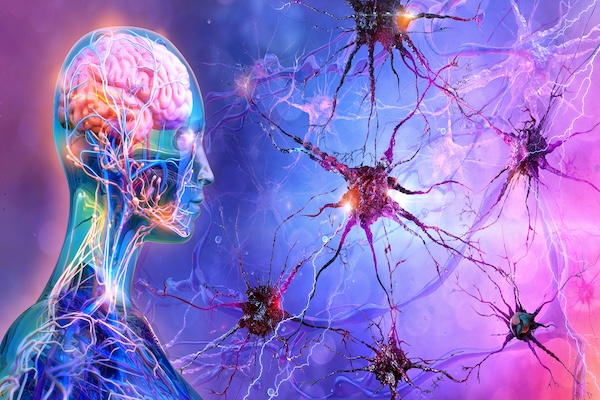
China has approved NEO — Neural Electronic Opportunity — an implantable brain-computer interface developed by Shanghai-based Neuracle Medical Technology for hand motor function. It is described as the world’s first Class III implantable BCI medical device to receive market approval.
For medicine, this is a breakthrough. Paired with pneumatic gloves, NEO can help patients with spinal cord injuries and paralysis retrain neural pathways between the brain and hand. Over time, some may regain voluntary movement, offering hope to millions with severe motor impairment.
Military analysts see a different side. Emerging neurotechnologies may allow adversaries to interact with the human nervous system through BCIs, affective computing and biometric monitoring. Tools designed to heal could be used to read, influence or augment brain function. The boundary between medicine, computing and military capability is rapidly blurring.
Basic neural data collected through BCIs could make disinformation campaigns more effective. States seeking to strengthen cognitive warfare may exploit neurodata as part of what is called neurowarfare.
The objective of cognitive warfare is non-kinetic: to shape perceptions, beliefs and behaviour. It seeks to weaken an adversary’s ability to orient, deliberate and act collectively. The target is not what people believe, but the conditions under which rational judgment becomes difficult.
Some strategists describe the cognitive sphere as a sixth domain of warfare, alongside land, sea, air, space and cyber. Unlike a cyberattack on servers or networks, cognitive warfare attacks the mind through AI-tailored disinformation, synthetic media and technologies that may induce confusion or disorientation.
This warfare operates through three mechanisms. First, it manipulates perception and fractures attention. Contradictory narratives, fabricated media and algorithmically amplified content make the information environment unstable. By multiplying competing claims, campaigns make it harder to distinguish authentic information from manipulated content.
Cognitive Vulnerabilities
Cognitive warfare also exploits psychological vulnerabilities and cognitive biases. Material provoking fear, anger or outrage produces stronger reactions than neutral information. These reactions can be exploited to bypass rational inhibition, encourage impulsive sharing and deepen social divisions.
Tt can also paralyse a society’s cognitive flexibility. When public discourse becomes hyper-polarised, people lose the ability to tolerate dissenting views or find common ground. Over time, this gridlock can stall policymaking, weaken institutions and deepen public cynicism.
Researchers warn that neurotechnology could augment these mechanisms. BCIs may assist in the collection, analysis and delivery of information. Implantable devices such as NEO decode brain signals into commands. Similar systems could potentially control unmanned aerial vehicles, exoskeletons or weapons without conventional hand controls, reducing the time needed to translate intention into action.
Non-invasive systems such as electroencephalography, or EEG, measure the brain’s electrical activity. Clinical systems diagnose seizures and sleep disorders, while consumer and research headsets are used for neurofeedback, meditation tracking and brain-computer interfaces. Such devices could identify stress, fatigue or emotional states as militaries explore brain fingerprinting and emotion detection for interrogation, screening and battlefield triage.
Civilian devices are entering this space. Carl Emilio Lewis and Jonathan Kwik of the T.M.C. Asser Institute cite a 2023 United States patent filing in which Apple described equipping AirPods with dynamic electrodes for EEG, including sleep monitoring and seizure detection.
Devices such as Emotiv’s MN8, a two-channel Bluetooth in-ear EEG headset marketed as a non-medical product, offer real-time insights into a wearer’s mental state. Their purpose is to help users manage cognitive well-being. Yet they could become vulnerable if adversaries gain neurological insights into how individuals feel, think and react.
Researchers have demonstrated the possibility of using large language models to extract textual information from EEG readings. Although such capabilities are developing, they underline the strategic importance of neural data.
Perhaps most concerning is the prospect of neuroweapons, including directed-energy tools intended to disrupt cognition. Such possibilities raise ethical, legal and societal questions involving human dignity and human rights, as UNESCO’s Recommendation on the Ethics of Neurotechnology warns.
Strategic Competition
There is also an operational danger. If BCIs enable faster military decisions, humans may be removed from the loop. A misread neural signal could trigger a weapon, creating grave consequences for accountability and control.
The United States and Chinaare among the countries leading the development of dual-use neurotechnologies. DARPA, the research agency of the United States Department of Defense, supports breakthroughs in high-risk technologies with military applications. Its history shows how defence research can also generate civilian benefits: ARPANET became a foundation of the internet.
The United States benefits from leading universities, companies such as Neuralink, Synchron and Kernel, and strong civil-military research links. The Pentagon places this work within the framework of human-machine teaming.
China is viewed in strategic circles as a fast mover. The People’s Liberation Army’s Academy of Military Medical Sciences and institutes in Beijing and Tianjin have reportedly studied BCIs, brain enhancement and cognitive-domain operations. China’s advantages include state funding, civil-military fusion and fewer ethical constraints.
Other countries are active as well. Russia is researching non-lethal directed energy, while the United Kingdom and Israel are associated with defensive neurotechnology, neuroethics, cognitive protection and mental resilience.
For India, the lesson is clear. The country faces information warfare, radicalisation and border pressure. It needs defences against cognitive manipulation, including deepfakes and AI-driven influence campaigns. The information contest surrounding Operation Sindoor demonstrated the importance of strategic communication and narrative control.
India should treat neurotechnology as a strategic capability, not merely as health technology. DRDO, C-DAC and AIIMS could establish a Cognitive Defence Programme. India possesses strengths in neuroscience, information technology and low-cost medical devices, and could build affordable neurotechnology through collaboration among academia, industry and the military, including platforms such as iDEX.
The goal should be twofold: to protect civilian cognition from manipulation and to improve soldiers’ decision-making and resilience. Neurotechnologies may not replace tanks or missiles, but they could influence who uses those weapons more effectively. The country that masters the human-machine interface while defending its people’s minds will possess a decisive strategic advantage.
More From BasisPoint