.png)

Markets Rise Cautiously Amid Ongoing US-Iran Negotiations
Here’s your quick read to start the day: a chatty, no-fuss look at overnight moves, the big story, what’s on the docket, and the tickers you need to watch.
Richard is an independent financial journalist who tracks financial markets and macroeconomic developments
April 7, 2026 at 1:58 AM IST
GLOBAL MOOD: Cautious Risk-on
Asia-Pacific markets showed a tentative risk-on mood on Tuesday, tracking gains on Wall Street, as investors balanced hopes of a diplomatic resolution with persistent geopolitical risks. The Nikkei 225 and Kospi moved higher as markets responded to signals that negotiations between the US and Iran were ongoing.
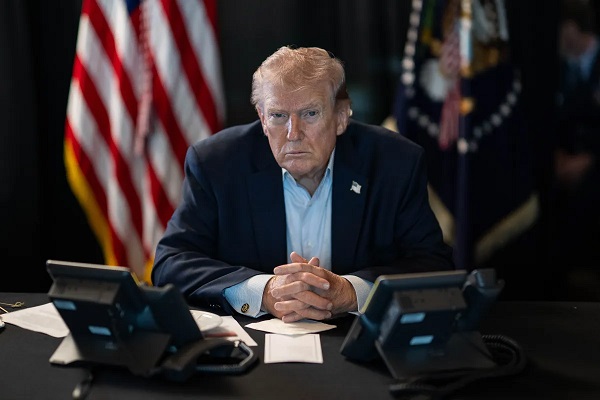
However, sentiment remained fragile after Donald Trump reiterated a hard deadline for Iran to reopen the Strait of Hormuz, warning of swift military escalation if conditions were not met. Iran’s rejection of a temporary ceasefire and push for a broader settlement, including sanctions relief and long-term security guarantees, highlighted the gap in negotiations. With the Strait remaining central to global oil flows, markets continue to price in a binary outcome, keeping volatility elevated despite the near-term rebound.
TODAY’S WATCHLIST
- Fed Goolsbee Speech
THE BIG STORY
On the other side, US President Donald Trump has hardened his position, issuing a firm deadline for Iran to comply with US demands, including abandoning nuclear ambitions and reopening the Strait of Hormuz. In a sharply worded warning, Trump indicated that failure to reach a deal could trigger sweeping military strikes targeting Iran’s power infrastructure and key assets. His remarks underscore a clear escalation path, with the administration signalling readiness for decisive action. The standoff leaves global markets on edge, as the Strait of Hormuz remains a vital artery for global oil flows. While diplomatic channels remain open, the gap between immediate ceasefire expectations and Iran’s demand for a lasting settlement suggests that a resolution may not be imminent, keeping geopolitical risk elevated in the near term.
Data Spotlight
The ISM Services PMI eased to 54.0 in March 2026 from 56.1 in February (highest since August 2022), missing expectations of 55 and indicating a moderation in services sector momentum. The slowdown was led by softer business activity (53.9 vs 59.9) and a contraction in employment (45.2 vs 51.8), marking the first decline in four months. However, inflationary pressures intensified, with the price-index rising sharply to 70.7 (from 63.0), the highest since October 2022, driven by higher oil and fuel costs. Supply-side frictions persisted, as supplier deliveries slowed (56.2 vs 53.9), reflecting logistics disruptions linked to the West Asia conflict and seasonal factors. While inventories (54.8 vs 56.4) and order backlogs (53.6 vs 55.9) moderated, new orders accelerated (60.6 vs 58.6), suggesting underlying demand resilience despite near-term headwinds.
Takeaway:
WHAT HAPPENED OVERNIGHT
- US stocks gain on ceasefire hopes and easing risk sentiment
- US stocks closed higher amid expectations of progress in US–Iran ceasefire discussions.
- The Dow Jones rose 0.36%, while the S&P 500 gained 0.45%, and the Nasdaq advanced 0.54%.
- Investor sentiment supported by potential reopening of Strait of Hormuz, a key global oil chokepoint.
- However, escalation risks persist as US signals stronger action if shipping disruption continues.
- Iran rejects immediate ceasefire proposal, demanding a permanent end to conflict.
- Soleno Therapeutics surged 32.3% on acquisition by Neurocrine Biosciences (all-cash deal).
- Crypto-linked stocks advanced tracking higher bitcoin prices. Coinbase up 1.9%; Strategy (MicroStrategy) gained 6.6%.
- US stocks closed higher amid expectations of progress in US–Iran ceasefire discussions.
- US Treasury yield rise amid West Asia conflict and sticky inflation signals
- The 10-year yield hovers around 4.33%, highest in 1 week as traders return post-holiday.
- Elevated yields driven by ongoing West Asia conflict (now in sixth week) and oil prices near 2022 highs.
- US signals potential strikes on Iran’s power infrastructure, while Iran targets energy assets in Gulf countries.
- Ongoing discussions between US, Iran and regional mediators on a 45-day ceasefire provide limited relief.
- ISM Services PMI prices index surges to 2022 highs, reflecting war-driven input cost pressures.
- Markets fully price Fed to hold rates in upcoming meetings, with expectations of unchanged policy through the year.
- The 10-year yield hovers around 4.33%, highest in 1 week as traders return post-holiday.
- US Dollar slips as ceasefire hopes ease risk premium
- The US dollar index fell below 100, paring earlier gains as optimism over a potential 45-day Iran ceasefire reduced safe-haven demand.
- Increased shipping through the Strait of Hormuz eased oil and inflation concerns.
- Mixed signals persist with Trump’s threat to target Iran’s power plants.
- Focus shifts to upcoming CPI data and FOMC minutes for policy direction.
- The US dollar index fell below 100, paring earlier gains as optimism over a potential 45-day Iran ceasefire reduced safe-haven demand.
- Oil edges higher as war rhetoric and ceasefire talks pull in opposite directions
- Brent crude settled up 0.68% to $109.77/barrel and WTI gained 0.78% to $112.40/barrel in choppy trade as conflicting signals kept markets range bound.
- The modest gains reflect a market in genuine two-way uncertainty with Tuesday's power plant ultimatum keeping a floor under prices while ceasefire talk caps the upside.
- Indirect talks between the US and Iran are reportedly ongoing, offering the first structured diplomatic channel of the conflict.
- Trump's Tuesday "Power Plant Day" threat and the escalating rhetoric are preventing any meaningful relief rally despite the diplomatic signals.
- At $112.40, WTI remains near its highest levels since the conflict began, the market is not yet pricing a ceasefire with any conviction.
- Monday's Oval Office press conference is the critical near-term catalyst a deal announcement could trigger an immediate double-digit oil selloff while a breakdown risks a move toward $120.
- Brent crude settled up 0.68% to $109.77/barrel and WTI gained 0.78% to $112.40/barrel in choppy trade as conflicting signals kept markets range bound.
Day’s Ledger*
Economic Data
- Euro Composite PMI
- Japan FX Reserves
- US Consumer Inflation Expectations
Corporate Actions
- Jan-Mar Earnings: Alka India
- GS Auto board to consider fund raising
- Pakka Ltd board to consider fund raising
Policy
- RBI MPC Policy Meeting Day-2
Fed Goolsbee Speech
Tickers to Watch
- Wipro inks billion-dollar revenue deal with Singapore's Olam Group
- Max Estates FY26 pre-sales dip slightly despite strong Q4 demand
- Aurobindo Pharma sets April 12 as record date for ₹8 billion buyback
- Oracle names Schneider Electric's Maxson as CFO amid soaring AI spending
- CBI flags ₹730 billion fraud in Anil Ambani Group probe; ED flags IBC issues
- Nykaa projects strongest net revenue growth in three years in Q4FY26
- Diamond Power Infra bags order worth ₹1 billion from Adani Electricity Mumbai
Must Read
- Global corporate tax system needs radical rethink, not tweaks: Devereux
- Current year more challenging amid West Asia crisis concerns: FM Sitharaman
- Sebi wants independent directors to adopt 'constructive approach'
- RBI MPC begins policy meet amid West Asia crisis; decision on Wednesday
- GeM records ₹18.4 trillion GMV since inception; MSMEs dominate FY26
- Iran rejects latest ceasefire proposal, seeks permanent end to war: Report
- Escalation Would Make Trump’s Epic Iran Mistake Worse
See you tomorrow with another edition of The Morning Edge.
Have a great trading day
𝐓𝐨𝐰𝐚𝐫𝐝𝐬 𝐒𝐦𝐚𝐫𝐭𝐞𝐫, 𝐆𝐫𝐞𝐞𝐧𝐞𝐫, 𝐈𝐧𝐝𝐢𝐠𝐞𝐧𝐨𝐮𝐬 𝐅𝐞𝐫𝐭𝐢𝐥𝐢𝐬𝐞𝐫𝐬
Fertiliser security is quietly becoming as strategic as energy security. With supply chains disrupted and a handful of countries controlling key nutrients, India’s dependence on imports is no longer just an economic issue, but a food security risk. The answer is not more of the same, but a shift towards smarter, greener and indigenous solutions, from balanced nutrient use and bio-fertilisers to precision agriculture and recycling of nutrients.
𝐆. 𝐂𝐡𝐚𝐧𝐝𝐫𝐚𝐬𝐡𝐞𝐤𝐡𝐚𝐫 writes, if soil health is the foundation of food security, can India afford to keep relying on volatile global supplies? Should policy push harder on reducing import dependence, or focus on efficiency and balance first? And in a world of repeated supply shocks, is fertiliser strategy now as critical as energy strategy?
(*Compiled from various media sources)
More From BasisPoint